

Trending Stories
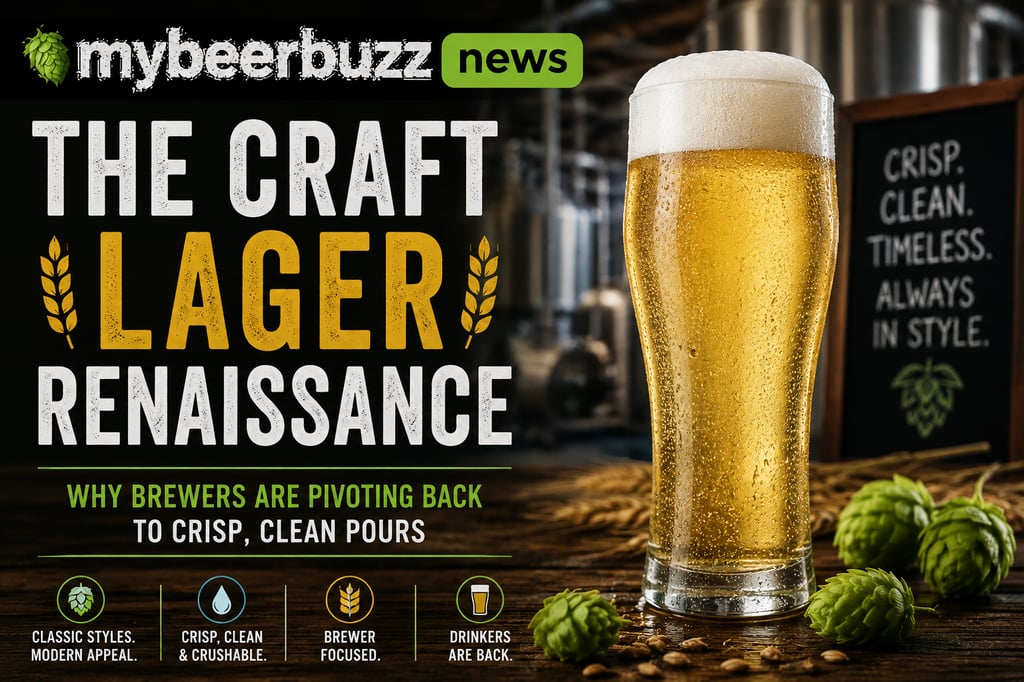
The Craft Lager Renaissance: Why Brewers Are Pivoting Back to Crisp, Clean Pours
Beer Education TEST
10 Barrel Mostly Down
10 Barrel Mostly Down Hopburst Northwest IPA Coming in 2026
Breweries
The Bruery Lumen Noctis
The Bruery Lumen Noctis Celestial Mechanics Collaboration Imperial Stout
Breweries
Anheuser-Busch Invests $23 Million in Fort Collins Brewery
Anheuser-Busch Invests $23 Million in Fort Collins, CO Brewery to Drive Local Economic Growth, Expands Local Manufacturing Skills Training
Breweries
Stone Pierce The Veil
Stone Pierce The Veil IPA Musical Collaboration Returns
Breweries
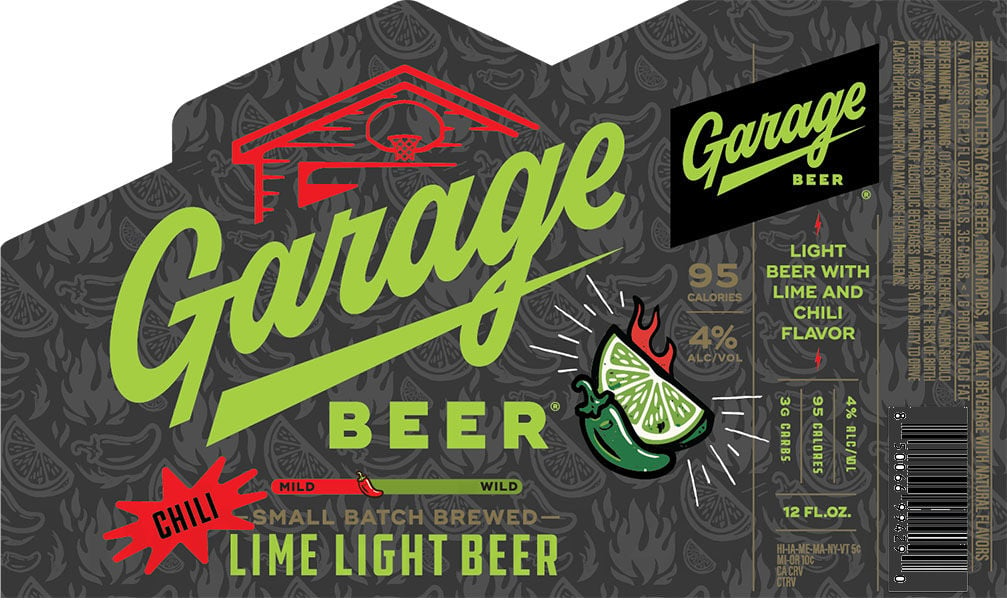
Garage Beer Chili Lime Light
Garage Beer Chili Lime Light Beer & Orange Light Beer
Breweries
Skip to content
  • Breaking
  • New Beer
  • Beer News
  • Education Icon
  • Beverages
  • Spirits
  • Resources
  • Reviews
  • Blogs
  • Travel
  • Beer Education
  • Travel Education

mybeerbuzz Oval header
Contact Us
Account
mybeerbuzz Oval header
Account
  • Breaking
  • New Beer
  • Beer News
  • Education
  • Beverages
  • Spirits
  • Resources
  • Reviews
  • Blogs
  • Travel
Home / Education / Beer Education / The Craft Lager Renaissance: Why Brewers Are Pivoting Back to Crisp, Clean Pours

The Craft Lager Renaissance: Why Brewers Are Pivoting Back to Crisp, Clean Pours

The Craft Lager Renaissance: Why Brewers Are Pivoting Back to Crisp, Clean Pours
Images Courtesy of mybeerbuzz.com
Bil Corcoran Story by: Bil Corcoran
Published: September 22, 2026 | Updated: August 28, 2026
Share this article
Share options

Share This Article

Comments 0

Leave a Reply Cancel reply

Your email address will not be published. Required fields are marked *

  • All

No Readers' Pick yet.

Table of Contents

  1. Introduction
  2. Quick Facts: The Craft Lager Movement
  3. The Great IPA Correction: Palate Fatigue and Market Shift
  4. The Art and Science of Lager Brewing
  5. Style Breakdown: From German Pilsners to Czech Dark Lagers
  6. The Taproom Test: Why Brewers Use Lagers to Prove Quality
  7. The Economics of Refreshment: Value and Sessionability
  8. Conclusion
  9. Frequently Asked Questions

Introduction

  • Craft Lager Renaissance
  • For over a decade, the craft beer landscape was defined by an arms race of intensity. Brewers and drinkers alike chased triple IPAs, pastry stouts loaded with lactose and adjuncts, and heavily fruited sours that pushed the boundaries of what a pint could hold. But as shelves grew increasingly saturated with heavy, high-ABV options, a subtle yet profound shift began to take root across taprooms and retail coolers. The pendulum has swung back. Welcome to the craft lager renaissance, a definitive movement where small, independent breweries are stepping away from the arms race of extremity to master the delicate art of crisp, clean, exceptionally drinkable beers.

    In this craft lager renaissance, drinkers are embracing a wave of refreshing options that highlight balance and craftsmanship.

    Quick Facts: The Craft Lager Movement

    FeatureDescription
    Primary CategoryCraft Lagers and Pilsners
    Key StylesGerman Pilsner, Munich Helles, Czech Dark Lager, Contemporary Italian Pilsner
    Common ABV4.2% – 5.5% (Sessionable Range)
    Brewing DifferenceBottom-fermenting lager yeast, colder temperatures, extended lagering/aging time
    Market DriverPalate fatigue from high-ABV IPAs, demand for “beer-flavored beer”
    Industry SignificanceServing quality and technical precision become the ultimate benchmark for modern breweries

    The Great IPA Correction: Palate Fatigue and Market Shift

    To understand why lagers are taking over tap lines, we must first look at what industry insiders call “The Great IPA Correction.” While IPAs, particularly hazy and tropical variations, remain a massive pillar of the market, their absolute, unyielding dominance has matured. Consumers who spent years burning out their palates with hop overload and cloyingly sweet adjuncts are experiencing severe palate fatigue.

    Drinker demographics are shifting. Enthusiasts who entered the craft beer movement via soft, sweet hazy IPAs are now looking for balanced options that allow for extended social drinking without the heavy, next-day sluggishness. This search for refreshment has created a massive opening for craft lagers, which deliver flavor and complexity without overwhelming the senses. Rather than abandoning flavor entirely for macro-brewed light lagers, consumers are willing to pay a premium price for a meticulously crafted, locally made pilsner or helles that executes tradition with modern creativity.

    The Art and Science of Lager Brewing

    Brewing a great lager is vastly different from throwing together a quick-turnaround ale. Ales are forgiving; their robust fermentation profiles and heavy hop additions can easily mask minor process flaws. Lagers, by contrast, leave absolutely nowhere to hide.

    Lager brewing requires bottom-fermenting yeast strains that work at much colder temperatures, followed by weeks—and sometimes months of cold lagering (aging) to smooth out harsh notes and clarify the liquid. This requires a significant investment of time, dedicated tank space, precise temperature control, and immense patience from the brewery. When a craft brewery chooses to dedicate a massive portion of its cellar capacity to lagers, it is making a clear statement about its technical prowess. Every detail matters, from water chemistry and malt selection to cellar hygiene, because any deviation instantly exposes off-flavors like diacetyl or sulfur.

    The craft lager renaissance is reshaping the beer landscape, encouraging breweries to innovate while honoring traditional brewing methods.

    Style Breakdown: From German Pilsners to Czech Dark Lagers

    The modern lager renaissance is not about recreating a single, uniform mass-produced American adjunct light lager. Instead, it is an exploration of historic European brewing traditions reimagined through a craft lens:

    Understanding the nuances of the craft lager renaissance requires a look at both historical styles and contemporary interpretations that are gaining popularity.

    The craft lager renaissance also highlights the importance of sessionability, allowing drinkers to enjoy flavorful options without overwhelming their palate.

    • German Pilsners: Characterized by a brilliant straw-gold clarity, a crisp snap of noble hops (like Hallertau or Tettnang), and a snappy, clean bitterness that begs for another sip.
    • Munich Helles: Malt-forward yet remarkably refreshing, offering gentle bready sweetness, low bitterness, and a smooth, soft finish.
    • Czech Dark Lagers (Tmavé Pivo): Proof that lagers do not have to be light in color to be refreshing. These beers feature rich, dark malts with notes of caramel, dark toast, and light cocoa, yet maintain a surprising lightness and sessionable body.
    • Contemporary Italian Pilsners: A modern craft favorite featuring traditional base lagers heavily accented with European noble hops via dry-hopping, offering an aromatic burst of floral and herbal complexity atop a crisp malt backbone.

    This shift toward a craft lager renaissance demonstrates a collective preference for quality and balance in the drinking experience.

    The Taproom Test: Why Brewers Use Lagers to Prove Quality

    Ask almost any professional brewer or seasoned beer geek what they order when walking into a brand-new craft brewery for the first time, and the answer is almost universally a pilsner or a helles.

    This phenomenon is known as “The Taproom Test.” Because lagers rely on absolute precision and transparency, they act as the ultimate report card for a head brewer’s technical skill. If a brewery can execute a flawless, crisp, clean craft lager free of off-flavors, you can trust that their more experimental or high-intensity portfolio is built on a rock-solid foundation of quality control.

    The Economics of Refreshment: Value and Sessionability

    Beyond flavor and tradition, the rise of the craft lager is deeply tied to shifting economic and lifestyle priorities. In an environment where consumers are increasingly selective about their discretionary spending, “value” no longer means buying the cheapest beer on the shelf. Instead, consumers define value as getting their money’s worth in terms of quality, satisfaction, and overall experience.

    A $9 or $10 pint of a perfectly balanced, locally brewed craft pilsner offers an approachable luxury. It is sessionable, meaning a drinker can comfortably enjoy two or three during an afternoon social gathering without feeling weighed down. This high degree of drinkability makes craft lagers vital for taproom business models, driving repeat orders and keeping patrons engaged longer.

    Conclusion

    The craft lager renaissance is much more than a temporary fad; it represents a maturation of the entire craft beer industry. By stepping away from the relentless pursuit of extreme ABVs and palate-shredding hop bombs, brewers are rediscovering the timeless art of balance, restraint, and precision. For craft enthusiasts, this movement offers the best of both worlds: the uncompromised independence and creativity of small-scale brewing paired with the effortless refreshment of a world-class, crisp pour.

    As we explore these styles, it becomes clear that the craft lager renaissance is about respecting tradition while crafting something uniquely modern.

    Related content from mybeerbuzz.com:

    As we examine the changing tides of the beverage industry across MyBeerBuzz, it is increasingly evident that technical mastery has overtaken sheer gimmickry.

    Whether you are catching up on the latest brewery acquisitions or exploring how Mexican-style lagers are playing a vital role in the great lager renaissance, the shift toward clean, heritage-driven styles signals a mature craft community that values drinkable perfection. To understand the full scope of how these choices are shaping our tap lists and coolers, you can also dive into our broader analysis on top beer trends.


    Frequently Asked Questions

    Q: What is the main difference between an ale and a lager?

    A: The primary difference lies in the yeast and fermentation temperature. Ales use top-fermenting yeast at warmer temperatures, while lagers use bottom-fermenting yeast that works at colder temperatures and requires extended aging (lagering).

    Q: Why are craft lagers often more expensive than mass-market lagers?

    A: Craft lagers are produced in smaller batches using premium, locally or globally sourced quality malts and hops. They also tie up expensive cellar tank space for weeks longer than ales due to the cold-conditioning process.

    Q: Are all craft lagers light in color?

    A: No. While styles like German Pilsners and Helles are pale and golden, traditional lager styles also include amber lagers (Vienna and Märzen) and dark lagers (Czech Tmavé), which offer rich malt complexity while retaining a crisp lager finish.


    zzubreebym

    In conclusion, the craft lager renaissance is a celebration of tradition and creativity, providing a space for brewers to thrive. Ultimately, the craft lager renaissance is about community and the shared joy of enjoying a great beer together. In this context, the craft lager renaissance signifies the commitment of brewers to bring forth exceptional quality in each pour. New taps featuring craft lagers are popping up across the country, a testament to the growing impact of the craft lager renaissance on the industry.

    The concept of value in beer is evolving, much like the craft lager renaissance, where quality is prioritized over quantity. As craft lagers become more accessible, the craft lager renaissance invites consumers to savor each sip with appreciation. The craft lager renaissance exemplifies the ongoing transformation of the craft beer scene, encouraging innovation while honoring the past.

    • ADVERTISEMENT

    • On SALE Now @ Amazon
    Bil Corcoran

    Bil Corcoran is the founder, editor, and driving force behind MyBeerBuzz.com, one of the longest-running independent craft beer news sites in the U.S. Since launching the platform in 2007, he has published more than 77,000 original posts covering breweries, trends, industry news, and beer culture.

    A true one-man operation, Bil oversees every aspect of the site—from writing and editing to design, development, and day-to-day operations. His work extends beyond digital publishing as the longtime producer, news anchor, and co-host of the WILK Friday BeerBuzz, a live weekly craft beer radio show. He is also a four-time recipient of the Pennsylvania Association of Broadcasters Excellence in Broadcasting Award for Outstanding Radio Feature.

    Bil holds a Bachelor of Science in Information Technology and a Master of Science in Organizational Management. Known for his deep industry perspective and independent voice, he continues to explore evolving topics such as the rise of non-alcoholic beer, consolidation in craft brewing, and the future of the industry.

    Follow Bil Corcoran on social media: Facebook, X, Threads, and Instagram.

    Facebook X Instagram YouTube Linkedin Pinterest
    Post Tags: #Education#Lager#mybeerbuzz#Northeastern PA#Pennsylvania
    RELATED NEWS
    The Rise of Craft Non-Alcoholic IPAs: How Brewers Are Mastering Flavor Without the Buzz

    The Rise of Craft Non-Alcoholic IPAs: How Brewers Are Mastering Flavor Without the Buzz

    Beer Education | TEST
    Top 100 Beer Descriptors for 2026: The Ultimate Guide to Craft Beer Terminology

    Top 100 Beer Descriptors for 2026: The Ultimate Guide to Craft Beer Terminology

    TEST | Beer Education
    The Death of Craft: Why 'Beer-Flavored Beer' and Macro-Craft Are Squeezing Out True Independents

    The Death of Craft: Why ‘Beer-Flavored Beer’ and Macro-Craft Are Squeezing Out True Independents

    Beer Education | TEST
    Crafting Perfection With The iGulu Master Mode Premium Card & Sea Salt Gose Kit (Review)

    Crafting Perfection With The iGulu Master Mode Premium Card & Sea Salt Gose Kit (Review)

    Reviews | TEST
    The Return of the Master Lager: Process Discipline, Fermentation Control, and Why Precision is Replacing Novelty in Craft Brewing

    The Return of the Master Lager: Process Discipline, Fermentation Control, and Why Precision is Replacing Novelty in Craft Brewing

    Beer Education | TEST
    mbb oval logo for footer

    Bringing Good Beers and Good People Together Since 2008
    © 2026 All Rights Reserved.

    ABOUT
    .
    CONTACT
    .
    ADVERTISING
    .
    SAMPLING

    DEPARTMENTS
    • Breaking
    • Beer News
    • New Beer
    • Education
    • Beverages
    • Spirits
    • Resources
    • Reviews
    • Blogs
    • Partner Features
    • Travel
    TRENDING BREWERIES
    • 10 Barrel
    • 21st Amendment
    • 3 Floyds
    • Abita
    • Alaskan
    • Alchemist
    • AleSmith
    • Allagash
    • Almanac
    • Anchor
    • Anderson Valley
    • Angel City
    • Anheuser-Busch
    • Avery
    • Bale Breaker
    • Ballast Point
    • Baxter
    • Bear Republic
    • Bell's
    • Black Raven
    • Blue Moon
    • Blue Point
    • Boulevard
    • Braxton
    • Breaker
    • Breckenridge
    • BrewDog
    • Brewery Vivant
    • Brooklyn
    • Bruery
    • Burial
    • Cantillon
    • Cape May
    • Capt Lawrence
    • Chimay
    • Chuckanut
    • Cigar City
    • Creature Comforts
    • Crooked Stave
    • Crux
    • DC Brau
    • Deschutes
    • Destihl
    • Dock St
    • Dogfish Head
    • Double Mtn
    • Drakes
    • DuClaw
    • Elysian
    • Epic
    • Evil Twin
    • Firestone Walker
    • Flying Dog
    • Founders
    • Free Will
    • Funky Buddha
    • Genesee
    • Gigantic
    • Golden Road
    • Goose Island
    • Great Divide
    • Great Lakes
    • Ground Breaker
    • Guinness
    • Harpoon
    • Heavy Seas
    • Hi-Wire
    • Hill Farmstead
    • Hoppin' Frog
    • Hopworks
    • Idle Hands
    • Indeed
    • Iron Hill
    • Ithaca
    • Jacks Abby
    • Jester King
    • Karl Strauss
    • Lagunitas
    • Lakefront
    • Lakewood
    • Lawsons
    • Left Hand
    • Leinenkugel's
    • Long Trail
    • Lost Abbey
    • Maui
    • Melvin
    • Mikkeller
    • MillerCoors
    • Modern Times
    • Monday Night
    • Narragansett
    • New Belgium
    • New Glarus
    • New Holland
    • New Realm
    • Night Shift
    • Ninkasi
    • North Coast
    • Oakshire
    • Odell
    • Off Color
    • Offshoot
    • Ommegang
    • Oskar Blues
    • Pelican
    • Perennial
    • Prairie
    • Reubens
    • Revolution
    • Rogue
    • River Horse
    • Russian River
    • Saint Arnold
    • Samuel Adams
    • Schlafly
    • Shiner
    • Sierra Nevada
    • Sixpoint
    • Ska
    • Sly Fox
    • Smuttynose
    • Southern Tier
    • Stone
    • Summit
    • Sun King
    • Surly
    • Susquehanna
    • SweetWater
    • Terrapin
    • Tired Hands
    • Toppling Goliath
    • Tröegs
    • Uinta
    • Victory
    • Wallenpaupack
    • Westbrook
    • West Sixth
    • Weyerbacher
    • Wicked Weed
    • Widmer
    • Yards
    • Yuengling
    mybeerbuzz.com Black Hop Cone logo 512px x 512px
    • Write for Us
    • Advertise
    • Contact Us
    • About Us
    • Partners
    • Radio
    • Press Releases
    • Sampling
    • Disclaimer
    • FAQ
    • Privacy Policy
    • Copyright
    • Sitemap
    • News Sitemap

    Follow Us:

    • X
    • Facebook
    • Instagram
    • Pinterest
    • YouTube
    • Threads
    • Bluesky
    • Link
    • Tumblr
    mbb oval logo for footer

    Bringing Good Beers and Good People Together SInce 2008
    © 2026 All Rights Reserved.


    • Write for Us
    • Advertise
    • About Us
    • Contact Us
    • Partners
    • Radio
    • Press Releases
    • Sampling
    • FAQ
    • Disclaimer
    • Copyright
    • Privacy Policy
    • Sitemap
    • Breaking
    • New Beer
    • Beer News
    • Beverages
    • Spirits
    • Resources
    • Reviews
    • Blogs
    • Partner Features
    • Travel
    • 10 Barrel
    • 21st Amendment
    • 3 Floyds
    • Abita
    • Alaskan
    • Alchemist
    • AleSmith
    • Allagash
    • Almanac
    • Anchor
    • Anderson Valley
    • Angel City
    • Anheuser-Busch
    • Avery
    • Bale Breaker
    • Ballast Point
    • Baxter
    • Bear Republic
    • Bell's
    • Black Raven
    • Blue Moon
    • Blue Point
    • Boulevard
    • Braxton
    • Breaker
    • Breckenridge
    • BrewDog
    • Brewery Vivant
    • Brooklyn
    • Bruery
    • Burial
    • Cantillon
    • Cape May
    • Capt Lawrence
    • Chimay
    • Chuckanut
    • Cigar City
    • Creature Comforts
    • Crooked Stave
    • Crux
    • DC Brau
    • Deschutes
    • Destihl
    • Dock St
    • Dogfish Head
    • Double Mtn
    • Drakes
    • DuClaw
    • Elysian
    • Epic
    • Evil Twin
    • Firestone Walker
    • Flying Dog
    • Founders
    • Free Will
    • Funky Buddha
    • Genesee
    • Gigantic
    • Golden Road
    • Goose Island
    • Great Divide
    • Great Lakes
    • Ground Breaker
    • Guinness
    • Harpoon
    • Heavy Seas
    • Hi-Wire
    • Hill Farmstead
    • Hoppin' Frog
    • Hopworks
    • Idle Hands
    • Indeed
    • Iron Hill
    • Ithaca
    • Jacks Abby
    • Jester King
    • Karl Strauss
    • Lagunitas
    • Lakefront
    • Lakewood
    • Lawsons
    • Left Hand
    • Leinenkugel's
    • Long Trail
    • Lost Abbey
    • Maui
    • Melvin
    • Mikkeller
    • MillerCoors
    • Modern Times
    • Monday Night
    • Narragansett
    • New Belgium
    • New Glarus
    • New Holland
    • New Realm
    • Night Shift
    • Ninkasi
    • North Coast
    • Oakshire
    • Odell
    • Off Color
    • Offshoot
    • Ommegang
    • Oskar Blues
    • Pelican
    • Perennial
    • Prairie
    • Reubens
    • Revolution
    • River Horse
    • Rogue
    • Russian River
    • Saint Arnold
    • Samuel Adams
    • Schlafly
    • Shiner
    • Sierra Nevada
    • Sixpoint
    • Ska
    • Sly Fox
    • Smuttynose
    • Southern Tier
    • Stone
    • Summit
    • Sun King
    • Surly
    • Susquehanna
    • SweetWater
    • Terrapin
    • Tired Hands
    • Toppling Goliath
    • Tröegs
    • Uinta
    • Victory
    • Wallenpaupack
    • Westbrook
    • West Sixth
    • Weyerbacher
    • Wicked Weed
    • Widmer
    • Yards
    • Yuengling
    • Cider
    • Seltzer
    • Whiskey
    Scroll to top
    Search
    • Breaking
    • New Beer
    • Beer News
    • Education
      • Beer Education
      • Travel Education
    • Beverages
    • Spirits
    • Resources
    • Reviews
    • Blogs
    • Travel