




How Mexican-Style Lagers Play A Role In The Great Lager Renaissance
 Story by:
Bil Corcoran
Story by:
Bil Corcoran
Introduction: A Crisp Comeback Nobody Expected
For more than a decade, craft beer seemed locked in a never‑ending race toward bigger, bolder, hoppier, and stronger. Imperial IPAs, pastry stouts, fruited sours, and triple‑dry‑hopped beers dominated talking points, tap lists, and shelf space. But quietly, and now unmistakably, lagers are back. Not just any lagers, but clean, low‑alcohol, highly drinkable lagers, Mexican‑style lagers leading the charge.
The modern lager renaissance is not nostalgia alone; it is a consumer‑driven correction. Drinkers want balance again. They want refreshment, sessionability, and beer that fits real life. And no style meets those demands more perfectly than the Mexican‑style lager.
Once dismissed as “simple” or “boring,” Mexican‑style lagers are now central to the broader craft lager revival, bridging mass‑market familiarity and craft precision to the beer-drinking audience. From 12‑packs to brewery flagships, from Cinco de Mayo seasonals to year‑round best sellers, the Mexican‑style lager has become one of the most important beer styles of the modern era.
Table of Contents
- What Is the Great Lager Renaissance?
- Quick Reference Table: Lagers vs Mexican‑Style Lagers
- Why Craft Beer Drinkers Rediscovered Lagers
- A Brief History of Lagers and Their Original Dominance
- Why Historic Lager Styles Fell Out of Fashion
- How Modern Craft Lagers Differ From Historic Lagers
- The Origins of the Mexican‑Style Lager
- Why Mexican‑Style Lagers Are Exploding in Popularity
- Sessionability, Lower ABV, and Everyday Drinking
- Drinkability as the New Luxury
- How Mexican‑Style Lagers Differ From Traditional European Lagers
- 20 Mexican‑Style Lager Examples (mybeerbuzz.com)
- Frequently Asked Questions About Mexican‑Style Lagers
- Top 10 Best‑Selling Mexican‑Style Lagers
- Best Food Pairings for Mexican‑Style Lagers
- Final Thoughts: Why Mexican‑Style Lagers Matter
- GABF Medals For Mexican-Style Lagers
Quick Reference Table: The Lager Revival at a Glance
| Category | Traditional Lagers | Modern Craft Lagers | Mexican‑Style Lagers |
|---|---|---|---|
| ABV | 4.2%–5.5% | 4.5%–6.0% | 4.0%–5.5% |
| Body | Light to Medium | Light and Refined | Light, Crisp |
| Adjuncts | Rare | Rare | Corn (Maize) |
| Drinkability | High | Very High | Extremely High |
| Popularity Trend | Declined (2000s) | Rising | Exploding |
Why Craft Beer Drinkers Rediscovered Lagers
The modern beer consumer is not the same person they were in 2012. Drinkers are older, more experienced, and less impressed by novelty alone. They want beer they can drink more than one of—and drink often.
Several trends fueled this shift:
- IPA and Hazy IPA fatigue
- Rising interest in moderation
- Increased health awareness
- Growth of beer‑adjacent social drinking
- The popularity of outdoor, warm‑weather occasions
Lagers, and especially Mexican‑style lagers, meet all of these needs without sacrificing flavor.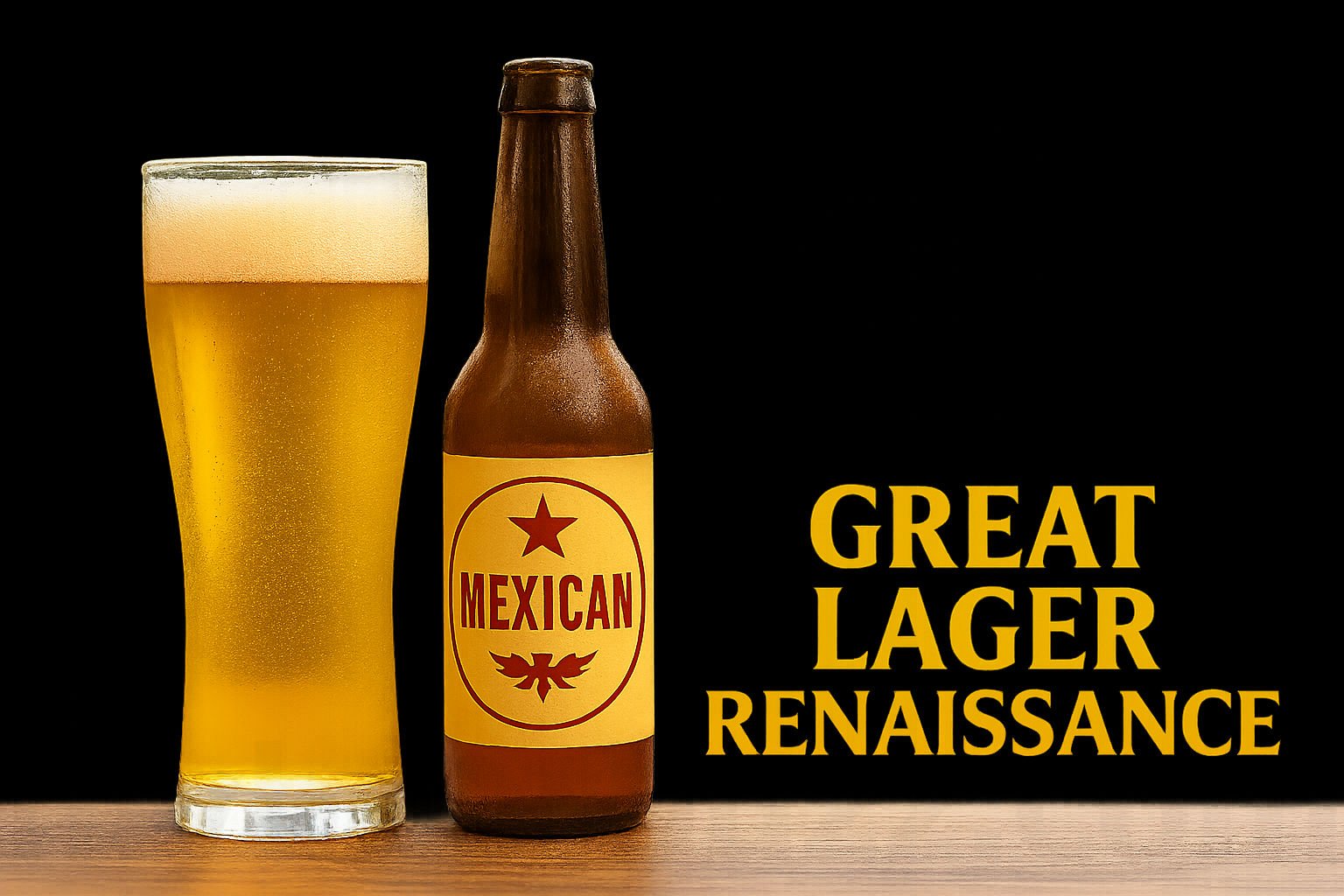
A Brief History of Lagers and Their Original Dominance
Lagers once ruled the beer world. From the late 1800s through most of the 20th century, lager brewing defined beer culture globally. German immigration brought lager yeast to North America, and by the early 1900s, light lagers dominated U.S. consumption.
Prohibition, industrialization, and consolidation shaped lagers into mass‑market products, clean, cold, consistent, and broadly appealing.
Ironically, this success eventually blurred distinctions and led craft beer to rebel against lagers altogether.
Why Historic Lager Styles Fell Out of Fashion
By the 1990s and early 2000s, lagers were associated with:
- Corporate sameness and Macro beer mass production
- Flavor neutrality
- Low perceived craftsmanship
Craft beer responded by embracing ales, hops, yeast expression, and experimentation. Lagers didn’t disappear, but they were sidelined; sometimes because they were less popular, sometimes because they were harder to brew, and sometimes because the cellaring/lagering equipment needed to produce them was too costly.
How Modern Craft Lagers Differ From Historic Lagers
Modern craft lagers are deliberately brewed, not industrially simplified.
Key differences include:
- Extended cold fermentation
- Premium malts and water chemistry
- Precise hopping
- Transparency in ingredients
- Emphasis on balance over blandness
Mexican‑style lagers benefit enormously from these refinements.
The Origins of the Mexican‑Style Lager
Mexican lagers trace their roots to 19th‑century German and Austrian brewing traditions brought during European influence in Mexico. Vienna lager techniques were adapted to warmer climates and local ingredients, most notably corn (maize).
This adaptation produced beers that were:
- Lighter in body
- More refreshing
- Highly stable in heat
- Very drinkable and sessionable
Brands like Modelo, Corona, and Pacifico became global standards long before craft brewing embraced the style.
Why Mexican‑Style Lagers Are Exploding in Popularity
Several forces converge here:
- Modelo Especial becoming the best‑selling beer in the U.S.
- Beer drinkers embracing lighter, cleaner styles
- Craft brewers recognizing lagers as skill showcases
- Cultural relevance and year‑round appeal
Mexican‑style lagers strike a rare balance: approachable, yet craft‑credible.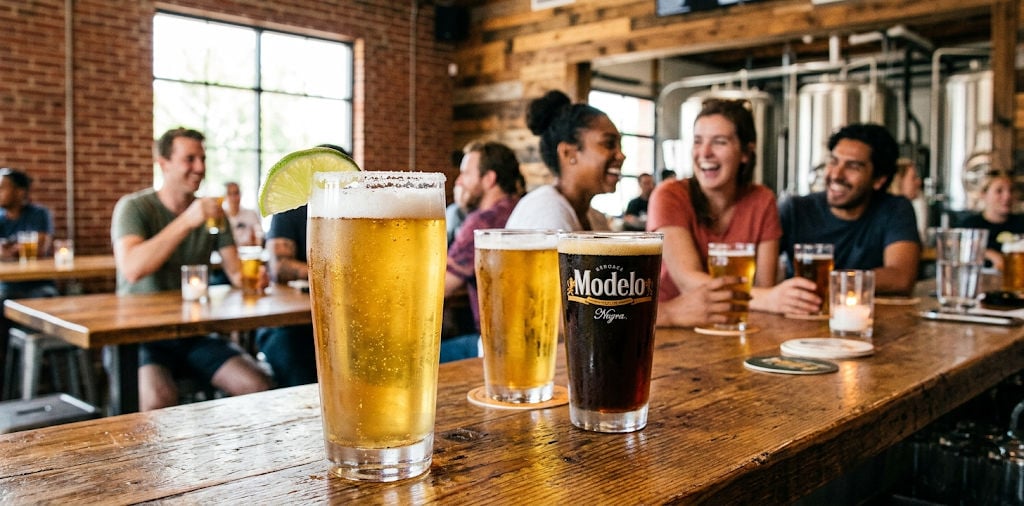
Sessionability, Lower ABV, and Everyday Drinking
Most Mexican‑style lagers fall between 4.0% and 5.5% ABV, making them ideal for:
- Social gatherings
- All‑day events
- Food‑forward occasions
- Responsible consumption
This aligns perfectly with modern beer habits.
Drinkability Is the New Luxury
In today’s beer world, drinkability is a flex.
Mexican‑style lagers excel here:
- Crisp carbonation
- Soft malt sweetness
- Clean fermentation
- Minimal bitterness
They invite another sip instead of demanding contemplation.
How Mexican‑Style Lagers Differ From Traditional Lagers
Compared to German or Czech lagers, Mexican‑style lagers are:
- Lighter in body
- Often brewed with corn
- Slightly sweeter
- Less hop‑forward
They prioritize refreshment over intensity.
20 Mexican‑Style Lager Examples (from mybeerbuzz.com)
- Ska Brewing – Mexican Logger
- New Realm Brewing – Tijuana Mañana
- Odell Brewing – El Kernel
- Lakefront Brewery – El Wiscono
- Von Ebert Brewing – Dawn Mexican Lager
- Von Ebert Brewing – Dusk Mexican Dark Lager
- Chuckanut Brewery – Mexican‑Style Lager
- Mast Landing Brewing – Lawn Games
- Indeed Brewing – Mexican Honey Lager
- East Brother Beer Co. – Mexican Lager
- New Belgium – Mexican Lager (Voodoo Ranger offshoot)
- Firestone Walker – 805 Cerveza
- Elysian Brewing – Loser Edition Mexican Lager
- Lone Tree Brewing – Mexican Lager
- Cervecería Colorado – Venga
- Sun King Brewing – Pachanga
- Alvarado Street Brewing – Claro
- Great Divide Brewing – Lager with Lime
- Founders Brewing – Solid Gold (borderline style)
- Sierra Nevada – Cerveza
(All referenced from individual coverage pieces on mybeerbuzz.com.)
Frequently Asked Questions (FAQ)
Is Mexican‑style lager the same as light lager?
No. Mexican‑style lagers often use corn and have more flavor expression than light lagers.
Do Mexican‑style lagers require lime?
No. Lime is optional and cultural, not structural.
Are Mexican‑style lagers considered craft beer?
Yes—when brewed independently and with intent.
Why are breweries making so many lagers now?
Drinkers want balance, sessionability, and food‑friendly beer.
Top 10 Best‑Selling Mexican‑Style Lagers
- Modelo Especial
- Corona Extra
- Corona Light
- Pacifico
- Dos Equis Lager Especial
- Tecate
- Victoria
- Modelo Negra (related style)
- Estrella Jalisco
- Sol
Best Food Pairings for Mexican‑Style Lagers
- Street tacos
- Grilled meats
- Citrus‑heavy seafood
- Nachos and quesadillas
- Spicy cuisine
- Summer cookouts
Their crispness cuts fat and heat effortlessly.
 Final Thoughts: Why Mexican‑Style Lagers Matter
 Final Thoughts: Why Mexican‑Style Lagers Matter
The lager renaissance isn’t a trend, it’s a recalibration. Mexican‑style lagers sit at the center of that shift, offering drinkability, cultural relevance, and technical excellence in one glass.
They aren’t replacing bold beer, they’re restoring balance…and judging by tap lists, shelf space, and sales data, Mexican‑style lagers aren’t just back, they never left, and now they’re leading the future of beer by a clear mandate from their drinking audience.
Recent GABF Results:
- The Brewers Association formally defined Mexican‑Style Lager categories in the early 2020s, splitting them into variants such as:
- Mexican‑Style Light Lager
- Mexican‑Style Pale Lager
- Mexican‑Style Amber Lager
- Before and during this transition, Mexican‑style lagers often competed (and won) under:
- American‑Style Light Lager
- International Light Lager
- American‑Style Lager
Mexican-Style Lager GABF Gold Medalists
| Beer | Brewery | Year | GABF Category |
|---|---|---|---|
| Mexican Lager | Lone Tree Brewing | 2021 | American‑Style Light Lager |
| Classic City Lager | Creature Comforts | 2022 | American‑Style Lager |
| Mexican Logger | Ska Brewing | 2023 | Mexican‑Style Lager |
| Mexican‑Style Lager | Chuckanut Brewery | 2024 | Mexican‑Style Pale Lager |
| Dawn Mexican‑Style Lager | Von Ebert Brewing | 2025 | Mexican‑Style Pale Lager |
Mexican-Style Lager GABF Silver Medals
| Beer | Brewery | Year | GABF Category |
|---|---|---|---|
| Mexican Lager | Lone Tree Brewing | 2023 | American‑Style Light Lager |
| Venga | Cervecería Colorado | 2021 | International Light Lager |
| Pachanga | Sun King Brewing | 2022 | American‑Style Lager |
| El Kernel | Odell Brewing | 2024 | Mexican‑Style Pale Lager |
| Dusk Mexican Lager | Von Ebert Brewing | 2025 | Mexican‑Style Dark Lager |
Mexican-Style Lager GABF Bronze Medals
| Beer | Brewery | Year | GABF Category |
|---|---|---|---|
| Cerveza | 10 Barrel Brewing | 2021 | American‑Style Lager |
| Dominga (lager‑adjacent entry) | New Belgium Brewing | 2022 | International‑Style Lager |
| Cerveza | Sierra Nevada Brewing | 2022 | American‑Style Lager |
| 805 Cerveza | Firestone Walker | 2023 | International Light Lager |
| Lager With Lime | Great Divide Brewing | 2024 | Mexican‑Style Light Lager |
| Lawn Games | Mast Landing Brewing | 2025 | Mexican‑Style Pale Lager |
zzubreebym



Comments 0
No Readers' Pick yet.