





What Are the Dimensions of a Standard Beer Bottle?
 Story by:
Bil Corcoran
Story by:
Bil Corcoran
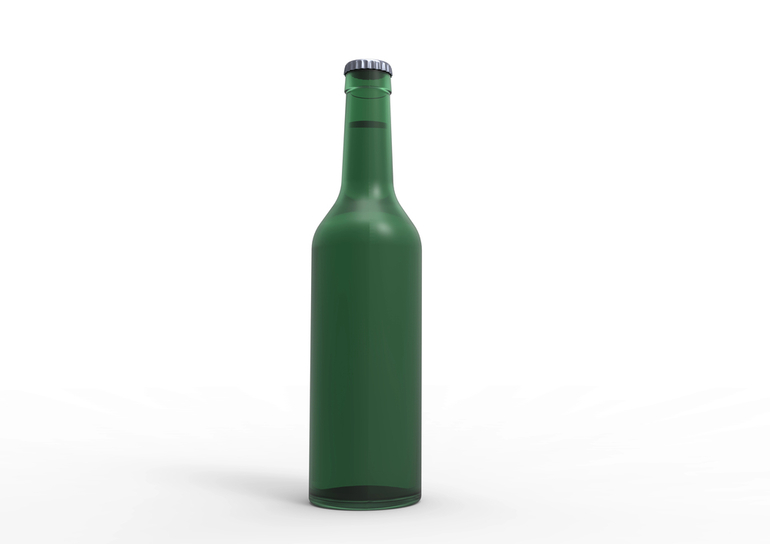
In the U.S., the average 12 oz. bottle of beer is 2.4 in. in diameter and 9.1 in. tall. That’s approximately 231mm high and 61mm wide, in metric. It’s a familiar bottle to have 12 US fluid ounces or 355 millilitres (mL) in it. Its convenience of packaging, transportation, chilling, and serving makes it one of the most commonly observed beer bottle types adopted by breweries, as a result of its large size. In the eyes of the craft beer connoisseur, it’s a manageable size that can be enjoyed for daily drinking or for any special seasonal releases, offering the perfect balance of convenience and classic appeal. There is, however, no standardized beer bottle size all over the world.
Standard capacities vary country to country, and height and diameter can vary from bottle to bottle, even when the capacity is the same, depending upon the manufacturer. For example, a European 330 ml bottle will probably be shorter and fatter than an American longneck bottle with a capacity of 355 ml. Specialty sizes such as growlers, Belgian-style bottles, and bombers come in a lot bigger sizes. Understanding these distinctions will enable you to make the most suitable decision when it comes to choosing the right glassware to fit the job, labeling, displaying products, or making beer bottles for an event. Employ safe packaging materials, such as a reusable wine bottle carrier, some of which may help to retain them in place and decrease the chance of them breaking. Bottle shapes are also not uniform, so they have to be checked always to guarantee that the carrier is safe and fit to handle the bottle.
Standard Beer Bottle Dimensions at a Glance
The 12-oz longneck, or Industry Standard Bottle (ISB), is the most famous standard beer bottle in use in the United States.
It is normally made in the following sizes:
- Capacity: 12 US fl oz, or 355 ml
- Length: 9.1 inches (231 mm)
- Body diameter: ~ 61 mm or 2.4″
- Circumference: 7.5″ or 191 mm
- Closure: A crown cap, which is usually the case.
- The body is narrow, cylindrical, thick at the shoulders, with a long neck, and sloping shoulders.
These are not exact dimensions, but are guidelines for an average 12oz bottle. The thickness, shape, and size of the bottle might differ slightly depending on the type of bottle, its intended use, and the thickness of the glass.
Common Beer Bottle Sizes and Approximate Dimensions
| Bottle type | Capacity | Approximate height | Approximate diameter |
| US longneck | 12 oz or 355 ml | 9.1 in | 2.4 in |
| European standard | 330 ml or 11.2 oz | 8–9 in | 2.3–2.6 in |
| Canadian longneck | 341 ml or 11.5 oz | 8.5–9 in | 2.4 in |
| European pint bottle | 500 ml or 16.9 oz | 9.5–10.5 in | 2.6–2.9 in |
| Bomber | 22 oz or 650 ml | 11–12 in | 2.9–3.3 in |
| Belgian-style bottle | 750 ml or 25.4 oz | 11.5–12.5 in | 3–3.5 in |
| Malt liquor bottle | 40 oz or 1.18 L | 11.5–13 in | 3.5–4 in |
| Growler | 64 oz or 1.89 L | 10.5–12 in | 5–6 in |
These measurements are approximate. A change in the external dimensions of a bottle does not necessarily mean that the capacity of the bottle has changed, as they can be decorated with glass, embossed and branded, fitted with swing-top closures, have a thickened base, and an unusual shoulder profile.
What is the Standard Size of a Beer Bottle?
The typical size of one beer in the U.S. is 12 oz or about a 355 ml bottle. Including some of the most prevalent sizes and dimensions, It’s typically available in packs of 6, 12, 18, or 24. The tight body helps to make it easy to hold, refrigerate, and transport, and is comfortable to fit into traditional retail packaging, whilst the long neck helps to aid the beer’s temperature, enabling consumers to better enjoy the beverage.
The Americans have 12 oz as the standard, but there are other options available for single-serving sizes. Beers are shipped internationally in some 330ml bottles, and other breweries bottle specific beer styles in 16 oz, 500ml, or larger bottles to fit the beer drinking experience they desire. The type of beer may dictate the size of the bottle – breweries can serve everything from everyday beers to barrel-aged specialties in a style appropriate to the beer, not necessarily a standard bottle size.
Why Can Two 12-oz Beer Bottles Have Different Dimensions?
Bottle capacity describes how much liquid a container is designed to hold. It does not completely determine the bottle’s height, width, or shape.
Two 12-oz bottles may have visibly different dimensions because of variations in:
- Body diameter
- Neck length
- Shoulder shape
- Base thickness
- Glass weight
- Internal headspace
- Embossed designs
- Closure type
Compared to a stubby-shaped bottle, this long-neck-shaped bottle is taller and narrower, and the same capacity is shorter and wider. They are approximately the same size (12 oz); they may be packaged differently per carton, by bottle carrier, or in a different manner. That’s why it’s better to work together with a supplier’s technical drawing or physical sample to ensure accurate dimensions. Average dimensions are adequate for general planning purposes, but are not intended to be production dimensions.
Standard Beer Bottle Sizes by Country
Beer bottles come in different sizes. Traditions, rules, and tastes across the world bring about differences in the size of Brewery bottles.
United States
The standard size of the American longneck is 12 U.S. fluid ounces, or about 355 ml. Typically has a height of 9.1 inches and a diameter of 2.4 inches.
American breweries also commonly use:
- 7 oz pony bottles
- 12 oz longnecks
- 16 oz bottles
- 22 oz bombers
- 32 oz growlers
- 40 oz malt liquor bottles
- 64 oz growlers
Historically, the 22oz bomber is the size for craft and specialty releases, but a few breweries will prefer 500 mL or 750 mL instead.
Canada
The average size of a beer bottle in Canada is 341 mL or 11.5 US fl. oz. In the early 1990s, Canadian breweries switched to the same longneck 341 mL bottle of beer, as the Canadian stubby had been losing popularity. However, in today’s day and age, Canadian beers are available in a few different sizes: 330ml, 341ml, 355ml, 473ml, and also in larger specialty formats. The type of bottles prepared is dependent upon the brewery, brand, and distribution market.
United Kingdom
In general, beer bottles in the UK will be 330ml or 500ml in volume. There are also smaller bottles of 275ml for some lagers and stronger alcohol. The 500ml bottle tends to be used for British ales and old-fashioned beers. It has a little more weight than the average 12-ounce bottle sold in the U.S. (approximately 16.9 US fluid ounces), and will likely require a taller or wider pack.
Continental Europe
The sizes of beer bottles vary between different countries in Europe and different breweries; 330ml and 500ml sizes are the most common.
Some of the noteworthy illustrations are:
- Belgium: 330 ml (per serving) and 750 ml (specialty beers only).
- Germany: 330ml, 500ml is Replenishable.
- This is in addition to other formats, and 300 ml bottles are also popular in the Netherlands.
- France: 330 ml, 500 ml, and 750 ml bottles
- Italy and Spain: An individual serving is usually a 330 ml bottle.
So, in Europe, one shouldn’t treat the standard beer bottle as if it were one. The amount of use refers to the size distribution for each market, which is determined by local return systems, local brewing practices, and packaging preferences.
Australia
Australian beer bottles are available in these sizes: 330ml, 355ml, 375ml, and 750ml. Samples may also use a different classification description of bottle shapes and sizes for different geographical areas, such as the description of the tallies “stubby” or “longneck,” which could mean a different length or size; tallies or King Brown, which could be a description of the shape; tallies or a different name for the same size. A stubby is smaller and broader than a long-neck bottle, which comes in 750ml and is sold in Australia, but is smaller than the 12oz long neck bottle sold in America.
What Is a Longneck Beer Bottle?
Longnecks are beer bottles with a long, narrow neck, curvy shoulders, and a cylindrical shape. In North America, the standard formula for longnecks is 12 oz (355 ml).
The design is popular due to a number of practical benefits:
- It is comfortable to hold.
- Its narrow neck can help control the pour.
- It works with standard crown closures.
- Its body provides space for a front, back, or wraparound label.
- Its familiar proportions fit common cases, coolers, and retail displays.
- Note that brown glass can help limit the amount of light that can affect the beer’s flavor.
It is not all tall beer bottles that have a long neck. A long-necked bottle, 500 mL or 750 mL, specialty bottle, may also be long-necked, but has varying dimensions and uses.
What Is a Stubby Beer Bottle?
Used for serving beer, a stubby is similar in size to a longneck beer, but has a shorter, stouter body and a very short neck. The volume of a stubby will vary from market to market, and may include around 330 ml, 341 ml, 355 ml, or 375 ml. A compact design may be more easily packed and less tippable. It is wider in the body; however, the body may need to be packaged differently than a typical longneck. Stubbies are ubiquitous in the beer world in Canada and Australia, and even a couple of craft beers/taking cognoscentive and heritage beers make use of the shape in the USA with a distinct purpose and historical mindset.
What is a ‘Bomber’ Beer Bottle?
A bomber is a large beer bottle that is traditionally 22 US fluid ounces (650 ml). It is 11–12 inches tall and about 3 inches across the body. American craft brewers adopted bombers for their limited-edition, barrel-aged, and stronger beers, making them a popular choice alongside standard packs and bombers available in the craft beer market. The larger bottle size enabled sharing of the product and provided a more premium look than a 12 oz. size bottle. In contemporary usage, it is no longer used as rigorously as before, as other large-sided bottles may be known as this. But a 750 ml Bottle made in Belgium is not a 22 oz bomber by virtue of a different capacity.
How Large Is a 750 ml Beer Bottle?
Approximately 25.4 US fluid ounces (2+ ½ oz) or just over 2 pounds of beer will fill one 750ml beer bottle. Normally it’s 11.5 to 12.5 inches tall, and it’s 3 to 3.5 inches in diameter.
Here are some examples of what the format can be used for:
- Belgian ales
- Lambics
- Farmhouse ales
- Bottle-conditioned beers
- Barrel-aged releases
- Celebration beers
- Limited-edition products
There’s an array of beer bottles that are styled as wine or Champagne bottles, and these are 750 ml. They are available in a range of specialty closures, including a crown cap, cork, or cork and cage. They can thus be quite large and small.
How Beer Bottle Dimensions Affect Packaging
When it comes to beer bottle packaging, simply having the capacity isn’t sufficient. A 12 oz longneck can be hard to securely carry in a carrier if it has a Stubby or a wide 750 ml specialty bottle.
When ordering packaging, check the following:
Bottle Height
Measure the distance from the base of the bottle to the top of the bottle. This will even decide if the bottle will go in a box, tote, refrigerator shelf, or display.
Maximum Diameter
Don’t assume that the bottle is the same width from top to bottom – use the widest point of the body. Fitted carton dividers and molded inserts will be especially sensitive to the maximum diameter.
Bottle Circumference
Circumference applies to labels for wrap, bottle sleeves, and branded decorations. Using multiplication with the number π, a simple cylindrical bottle can be estimated. Any bottle that is not rectangular in shape or has a small end and a large end must be physically measured.
Neck and Closure
A crown cap, swing top, screw cap, cork, or cork-and-cage closure may change the bottle’s overall height and the amount of space required above it.
Weight
Glass thickness can significantly affect shipping weight. Large-format and refillable beer bottles often use heavier glass than disposable single-serving bottles.
Number of Bottles
If you’re configuring a 6-pack, 12-pack, or presentation layout, consider the internal dimensions of the bottles you’ll use, and whether there is an offer to fill bottles with dividers or protective inserts inside. Businesses should consider the size of the bottles when ordering barware, en-bulk ordering, or custom beer packaging, to ensure they are appropriate to use for their beer tasting program or their custom beer trays.
How to Measure a Beer Bottle Correctly
If the bottle does not have the exact measurement in the supplier specification, record the physical measurements using a ruler, measuring tape, or caliper.
- Measuring the total height of the bottle: Place the empty bottle with closed cap on a flat surface and then measure from the bottom of the bottle to the top of the cap/closure.
- Find the maximum diameter. Take the widest dimension of the bottle body.
- Measure the label panel: including height and width of the label area that is straight-sided enough to fit a label without wrinkling.
- MEASURE THE NECK: Record the height and diameter of the neck if a neck label, seal, or decorative tag will be used on the bottle.
- Inspect closure: Even if a pry-off crown cap, twist-off cap, swing top, cork, etc., a different method of closure is used, confirm.
- Provide clearance: Packaging needs to accommodate loading, dividers, and protective material; space should not be wasted on excess cushioning or movement.
For a large order, measure several bottles rather than relying on one sample. Small manufacturing tolerances can affect the final fit of labels and tightly constructed packaging.
Choosing the Right Beer Bottle Format
The different sizes of bottles will vary depending on the beer, who the intended customer is, the event, the method of distribution, and the presentation of the beer in the bottle. Bottles of 12 oz or 330 ml are suitable for individual and multipacks. The 500mL bottle is a larger size and is known for many European beers. Special releases can be in a premium, shareable format with bombers and 750 mL bottles.
While 12 oz is considered all-around the standard portion size in America, this isn’t the only single-serving size. Some breweries will have beers available in 330 mL bottles that are for export. Others will have special beers and limited releases in 16 oz, 500 ml, or bigger bottles. These can be made according to serving traditions, beer style, and tasting experience, providing craft beer lovers with additional opportunities to experience beers in the style of serving that is best suited for each beer.
Key Takeaways
- A standard US 12-oz beer bottle is approximately 9.1 inches tall and 2.4 inches in diameter.
- The standard American capacity is 12 oz or 355 ml.
- Canada commonly uses 341 ml bottles.
- 330 ml and 500 ml bottles are widely used in Europe and the UK.
- A 22 oz bomber holds approximately 650 ml.
- Belgian and other specialty beers are often packaged in 750 ml bottles.
- Bottle capacity does not guarantee exact external dimensions.
- Always check the manufacturer’s specifications before ordering labels, carriers, boxes, or fitted displays.
Frequently Asked Questions
Still have questions about beer bottle dimensions? Here are quick, practical answers to some of the most common questions, starting with bottle circumference.
What is the Circumference of a Standard Beer Bottle?
A standard 12-oz longneck with a diameter of approximately 2.4 inches has a circumference of about 7.5 inches. The actual circumference may vary slightly depending on the bottle’s shape.
How Tall is a Beer Bottle in Centimeters?
A typical 12 oz longneck beer bottle is approximately 23.1 cm tall. Other beer bottles may range from about 20 cm for compact bottles to more than 30 cm for large specialty formats.
Are Beer Bottles and Beer Cans the Same Size?
Standard beer bottles and cans may hold the same 12 oz or 355 ml volume, but their external dimensions differ. A bottle is usually taller and narrower at the top, while a can has straight sides and a flat top.
What Size Label Fits a Standard 12 oz Beer Bottle?
Label dimensions depend on the bottle’s straight-sided panel. Many 12-oz longnecks can accommodate a front label around 3.5 to 4 inches wide and 3 to 4 inches tall, but the bottle supplier’s printable-area specifications should be checked before printing.
How Many Glasses can be poured from a Beer Bottle?
A 12 oz bottle provides one typical American serving. A 500 ml bottle may provide one large serving or two smaller pours, while a 750 ml bottle can provide two to three servings, depending on glass size.
Is a 330 ml Beer Bottle Smaller than a 12 oz Bottle?
Yes. A 330 ml bottle contains approximately 11.2 US fluid ounces, while a standard 12 oz bottle contains approximately 355 ml. The difference is 25 ml, or about 0.8 US fluid ounces.
Understanding Standard Beer Bottle Measurements
Standard beer bottle height is about 9.1 inches, and diameter is 2.4 inches for the typical American 12-ounce (longneck) beer bottle. But the term “standard” varies from market to market. Often the Canadian size is 341 ml, but 330ml and 500ml are found in most parts of Europe, as well as the UK. These capacities are helpful general references, but the outside dimensions will vary from bottle to bottle depending upon the shape, glass thickness, and the closure used. For all labelling, storage, serving, and transport packaging, always check the measurements of the particular bottle.



Comments 0
No Readers' Pick yet.