






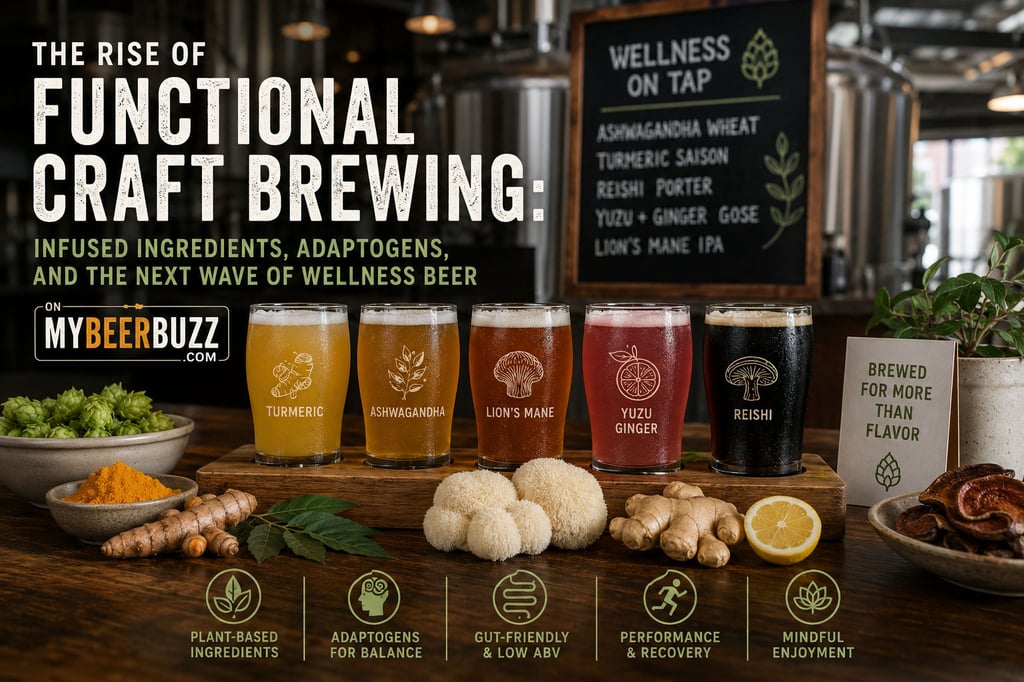
The Rise of Functional Craft Brewing: Infused Ingredients, Adaptogens, and the Next Wave of Wellness Beer
 Story by:
Bil Corcoran
Story by:
Bil Corcoran
Table of Contents
- Introduction: Beyond Alcohol-Free—The Era of Functional Craft
- The Science of Functional Brewing: Ingredients and Adaptogens Explained
- Regulatory and Compliance Landscape: Navigating TTB Guidelines and Health Claims
- Recipe Formulation and Production Challenges
- Taproom Economics and Consumer Demographics
- Distribution, Retail Positioning, and Cold-Chain Realities
- Future Outlook: Will Functional Beer Outpace Traditional Craft?
- Frequently Asked Questions (FAQ)
Key Points Table
| Section Focus | Primary Insight | Strategic Target |
| The Era of Functional Craft | Merging brewing craft with health-focused adaptogens and wellness additives. | Health-conscious demographics and wellness consumers |
| Scientific Integration | Incorporating water-soluble extracts without destabilizing flavor or clarity. | Master brewers and quality control teams |
| Regulatory Compliance | Adhering to federal labeling standards without making unauthorized health claims. | Brewery compliance and legal advisors |
| Production & Distribution | Overcoming flavor clashes and securing shelf space in natural grocers. | Operations and sales directors |
1. Introduction: Beyond Alcohol-Free—The Era of Functional Craft
The craft beverage landscape is undergoing a profound paradigm shift, evolving past the initial wave of non-alcoholic substitutions into an era defined by active wellness enhancement. While removing alcohol successfully captured the immediate demand for moderation, forward-thinking independent breweries are now looking at what comes next: functional craft beer. By infusing traditional and innovative brewing matrices with adaptogens, nootropics, botanical terpenes, and functional mushrooms, independent foundries are transforming a simple social beverage into a targeted tool for stress relief, cognitive focus, and physical recovery. This strategic convergence of craft brewing and functional nutrition represents a powerful new frontier for taproom innovation.
This evolution is fueled by a fundamental change in consumer behavior, particularly among millennial and Gen Z drinkers who increasingly prioritize holistic well-being over high-ABV indulgence. For independent craft breweries seeking to increase brand authority, elevate domain visibility, and attract high-value backlinks from lifestyle and health publications, exploring functional brewing offers an unprecedented opportunity. Rather than simply imitating macro-brewery offerings, craft pioneers are leveraging their agility to experiment with complex herbal and botanical integrations that mass-market producers cannot easily replicate at scale.
Ultimately, the rise of functional craft beer is not a fleeting novelty; it is a structural repositioning of the independent brewery as a pillar of community health and lifestyle optimization. By understanding the science, regulations, and market dynamics driving this movement, craft producers can future-proof their operations, command premium price points, and secure long-term relevance in an increasingly health-conscious marketplace.
2. The Science of Functional Brewing: Ingredients and Adaptogens Explained
Transitioning functional concepts from paper to a production-scale brewing vessel requires a sophisticated understanding of bioactive chemistry. Crafting a wellness-oriented beverage goes far beyond simply dumping health supplements into a finished fermented liquid. Instead, master brewers must carefully evaluate a diverse toolkit of active additives, including ashwagandha root for stress relief, L-theanine for mental clarity and relaxation, medicinal mushrooms like cordyceps and lion’s mane, and botanical terpenes that mimic complex botanical aromatics. Each of these compounds interacts uniquely with water, ethanol matrices, and hop acids, demanding precise control over every stage of the brewing process.
Integrating these delicate compounds into a complex wort matrix without destabilizing flavor or clarity is one of the greatest technical hurdles in functional brewing. Many adaptogenic powders and herbal extracts carry intense earthy, bitter, or astringent notes that can quickly throw a traditional beer profile out of balance. To prevent muddy flavors or unwanted haze, brewers typically favor highly soluble, standardized liquid extracts or purified isolate powders. Timing is equally critical: while some robust plant extracts can tolerate hot-side kettle additions, delicate nootropics and heat-sensitive amino acids are frequently introduced on the cold side during secondary conditioning, or via precision post-fermentation dosing, to safeguard their molecular integrity.
Furthermore, stability testing and shelf-life considerations dictate whether a functional brew will succeed commercially. Traditional commercial brewing relies heavily on thermal pasteurization to eliminate spoilage organisms and lock down shelf stability. However, exposure to sustained high temperatures during flash or tunnel pasteurization can trigger active ingredient degradation, destroying the potency of sensitive vitamins, amino acids, and botanical adaptogens. To counter this, advanced foundries utilize rigorous micro-filtration, cold-chain logistics, or specialized aseptic processing methods. By investing in comprehensive stability assays and protective packaging, such as UV-blocking amber glass or specialized cans, brewers ensure that the health benefits claimed on the label remain fully bioactive from the cellar tank to the final consumer.
3. Regulatory and Compliance Landscape: Navigating TTB Guidelines and Health Claims
Navigating the federal and state regulatory landscape is arguably the most complex hurdle when bringing a functional craft beer to market. In the United States, the Alcohol and Tobacco Tax and Trade Bureau (TTB), alongside the Food and Drug Administration (FDA), maintains strict oversight over beverage alcohol labeling, ingredient safety, and marketing language. Unlike standard malt beverages, functional beers containing adaptogens, nootropics, or botanical extracts trigger multi-agency scrutiny. Brewers cannot simply formulate a new wellness recipe and slap unverified health claims on the can; doing so risks severe regulatory penalties, mandatory product recalls, or federal label rejections that can stall a commercial launch indefinitely.
The most critical regulatory tightrope involves distinguishing between general wellness marketing and illegal therapeutic or medical claims. Under federal guidelines, alcoholic and malt beverages are strictly prohibited from featuring language that suggests the product diagnoses, cures, mitigates, treats, or prevents any disease. For instance, while marketing copy can legally highlight the presence of adaptogenic herbs known for promoting relaxation or daily balance, claiming that a functional brew “cures chronic anxiety” or “lowers blood pressure” crosses a hard legal line into unapproved drug claims. Compliance teams must meticulously review every piece of consumer-facing text, from website descriptions and social media posts to can art and neck tags, to ensure all wellness descriptions remain aspirational and lifestyle-oriented rather than medical.
To maintain compliance and protect brand equity, independent craft foundries must proactively collaborate with regulatory attorneys and industry compliance experts before finalizing formula sheets and label designs (COLAs). These specialists help navigate the nuances of the Federal Food, Drug, and Cosmetic Act alongside TTB malt beverage regulations, ensuring that all functional ingredients are either approved food additives or generally recognized as safe (GRAS) for consumption in alcoholic or fermented matrices. Furthermore, transparent labeling practices, such as explicitly stating the milligrams per serving of active botanicals and providing a complete ingredient deck, build vital consumer trust while satisfying federal disclosure mandates. By treating regulatory compliance as an integral phase of product development rather than an afterthought, independent brewers can successfully commercialize innovative wellness beers while safeguarding their licenses and market reputation.
4. Recipe Formulation and Production Challenges
Developing a commercially viable functional craft beverage requires overcoming significant sensory hurdles, chief among them being bitterness clashes and earthy off-notes inherent to botanical extracts. Many powerful adaptogens, such as ashwagandha and medicinal mushroom powders, carry a deeply earthy, herbaceous, or lingering bitter profile that can clash aggressively with traditional malt backbones. To resolve this, master brewers use sophisticated hop selection as an architectural tool. By leaning into citrus-forward hop varieties, such as Cascade or Citra, or utilizing precision botanical terpenes rich in linalool and geraniol, formulators can mask unwanted herbal pungency while rounding out the sensory experience.
Equally critical to the formulation phase is sourcing high-grade, food-safe, and water-soluble functional extracts. Crude herbal powders often fail to dissolve completely, leading to unsightly sedimentation, pipeline clogging, and inconsistent dosing across packaging runs. Forward-thinking foundries source standardized, highly purified liquid extracts or micronized soluble isolates that integrate cleanly into the liquid matrix. This ensures that every serving delivers an exact, reliable milligrams-per-serving dose of active ingredients without leaving chalky residues or altering the clarity of the finished beverage.
To mitigate financial and operational risk, rigorous pilot-batch testing protocols must precede any full-scale commercial release. Because adaptogens and botanical compounds interact dynamically with varying pH levels, carbonation volumes, and residual sugars, benchtop trials allow brewers to catch over-extraction and off-flavors early. Small-scale sensory panels evaluate whether an ingredient’s intensity threatens the drink’s overall balance, adjusting dosage rates incrementally. By establishing strict pilot evaluation standards, independent brewers can fast-track product development, eliminate costly scaling mistakes, and deliver a polished wellness beverage that satisfies both consumer expectations and quality benchmarks.
 5. Taproom Economics and Consumer Demographics
 5. Taproom Economics and Consumer Demographics
The commercial success of functional craft beer is deeply anchored in a powerful demographic shift, driven primarily by Gen Z and millennial consumers who are actively reevaluating their relationship with alcohol. These younger cohorts view wellness, mental clarity, and physical health as core lifestyle pillars, frequently seeking out beverages that offer functional benefits like stress relief, enhanced focus, or post-workout recovery without the negative effects of a hangover. Unlike older generations who typically viewed non-alcoholic or specialty options as compromises, younger patrons embrace the “sober curious” movement, treating functional craft brews as sophisticated social alternatives that fit seamlessly into active, health-conscious routines.
From a taproom economics perspective, introducing functional wellness brews unlocks high-margin revenue streams by capturing previously untapped customer segments. Traditional high-ABV flagships often experience shorter dwell times if a patron is driving or pacing their alcohol intake; however, offering an appealing, adaptogen-infused option extends customer visits, boosts per-capita spending, and invites designated drivers to fully participate in the social ritual. Because specialized extracts, nootropics, and premium organic ingredients increase production costs, breweries can successfully command elevated price points, often matching or exceeding traditional barrel-aged or specialty release tiers, by clearly communicating the functional value and premium sourcing of the ingredients on tap menus.
Forward-thinking taprooms successfully integrating functional craft lines alongside traditional flagships have found that clear, education-forward merchandising is key. Rather than hiding wellness options on a separate menu, progressive taprooms feature dedicated tap handles that highlight active botanical benefits, drawing immediate curiosity from patrons. Case studies across regional taprooms reveal that these functional lines do not cannibalize traditional beer sales; instead, they diversify the catalog, attract new demographic groups who might otherwise bypass a brewery entirely, and cement the taproom’s reputation as an inclusive, forward-thinking community hub.
6. Distribution, Retail Positioning, and Cold-Chain Realities
Securing optimal retail positioning for functional craft beverages requires a strategic departure from traditional alcohol-only aisles. While legacy beer distribution models rely heavily on liquor stores, convenience outlets, and standard beer distributors, functional craft brews thrive best at the intersection of beverage alcohol and natural wellness. Forward-thinking breweries are aggressively targeting placement in natural food stores, specialty grocers, and national chains like Whole Foods. In these retail environments, functional beers are frequently merchandised alongside premium kombuchas, adaptogenic sparkling waters, and functional wellness tonics. This alternative placement captures health-conscious consumers who may not typically browse the traditional beer aisle, dramatically expanding the brand’s total addressable market.
Packaging considerations play a vital role in standing out within these crowded wellness and cold-case sets. To appeal to the modern wellness consumer, functional craft beers demand sleek, contemporary packaging formats, such as slim 12-ounce cans featuring clean, minimalist typography and vibrant, modern color palettes. Furthermore, clear and transparent labeling is non-negotiable. Consumers purchasing functional beverages expect immediate clarity regarding active ingredients; labels must explicitly state the exact milligrams per serving of adaptogens, nootropics, or botanical extracts. This transparency not only builds consumer trust and satisfies regulatory expectations but also highlights the premium value of the product compared to standard malt beverages.
Distribution partnerships represent another critical pillar for long-term success. Traditional beer distributors are often optimized for high-volume, ambient-temperature logistics and conventional retail accounts, which can present a mismatch for delicate wellness formulations. Consequently, independent craft foundries are increasingly partnering with specialty distributors who successfully bridge the gap between traditional beverage alcohol and functional wellness channels. These hybrid distributors understand the nuances of cold-chain management, which is vital for preserving the potency of sensitive herbal extracts and preventing secondary fermentation or microbial spoilage. By maintaining strict temperature control from the packaging line to the retail cooler, breweries protect product integrity and active ingredient efficacy.
Ultimately, mastering distribution, retail placement, and cold-chain logistics ensures that a functional craft line arrives at the point of sale in pristine condition. By positioning products where wellness-focused shoppers already browse, adopting premium packaging with clear milligram dosing, and leveraging specialized distribution networks, independent craft foundries can successfully scale their functional portfolios and secure a lasting competitive advantage in the modern beverage marketplace.
7. Future Outlook: Will Functional Beer Outpace Traditional Craft?
Industry analysts project that over the next five to ten years, functional beverages and wellness-oriented low-ABV options will capture an increasingly vital share of the global beverage market, which is scaling steadily toward a projected valuation exceeding $1.3 trillion. While traditional craft flagships will always retain a dedicated consumer base, traditional volume growth has matured. In contrast, market data highlights that non-alcoholic and functional wellness segments are expanding rapidly as younger consumer demographics prioritize active health, cognitive clarity, and moderation. Rather than completely replacing traditional beer, functional brews are establishing an independent, high-growth category that bridges the gap between craft alcohol and functional nutrition.
This surging market trajectory has not gone unnoticed by major beverage conglomerates and institutional investors. As agile independent startups prove consumer demand for adaptogen-infused and wellness-focused brews, major macro-brewers facing stagnating core portfolios are expected to pursue aggressive M&A strategies. Acquiring independent functional beverage pioneers offers multinational giants an expedited path to capturing health-conscious Gen Z and millennial markets without needing to build authentic wellness credibility from scratch. Consequently, independent foundries that successfully patent unique recipes, secure reliable supply chains, and build dedicated follower bases will position themselves as prime acquisition targets in an consolidating industry.
For independent craft foundries looking to future-proof their production lines, the strategic imperative is clear: diversification is no longer optional. Breweries must view innovation not as a periodic experiment, but as an ongoing operational commitment. By investing in scalable processing capabilities, mastering cold-chain logistics, and maintaining absolute transparency regarding active ingredient dosages, independent operators can protect their margins against raw material inflation and shifting consumer habits. Ultimately, those who successfully merge uncompromising craft quality with targeted functional wellness will lead the next golden era of independent brewing.
8. Frequently Asked Questions (FAQ)
What are functional craft beers?
Functional craft beers are malt or non-alcoholic beverages infused with science-backed wellness ingredients, such as adaptogens, nootropics, medicinal mushrooms, and botanical terpenes, designed to deliver targeted health benefits like relaxation or focus.
Do functional beers contain illegal health claims?
No. To comply with federal regulations, commercial labels and marketing copy must strictly frame wellness benefits around general lifestyle and relaxation, avoiding unauthorized medical or therapeutic claims.
How do brewers manage bitter adaptogens?
Master brewers use strategic hop selections, such as citrus-forward or herbal varieties, alongside high-purity, water-soluble extracts to mask earthy off-notes without compromising flavor balance.
What is the projected market outlook for functional beverages?
Industry analysts project rapid market expansion over the next decade as health-conscious millennials and Gen Z consumers increasingly prioritize wellness and mindful moderation.
zzubreebym



Comments 0
No Readers' Pick yet.