







Beer Production By-Products: What Happens To All That Liquid Waste?
 Story by:
Bil Corcoran
Story by:
Bil Corcoran
On the surface, the path of beer is straightforward. You grab a six-pack, drink it, and move on. What goes on out of the shelf is seldom thought of by a drinker. Within a brewery, however, the tale goes on much after the beer is off the tanks. Brewing is based on water, grain, yeast, and energy, not all of which make it into a finished pour. The flow of materials behind each batch is a complicated but important factor that determines the effectiveness of a brewery.
A large percentage of inputs in the brewing sector is converted into by-products and not packaged beer. Estimates in the industry indicate that nearly 20% of all volume produced in the production process is spent grain, excess yeast, and liquid waste, and the total of this on a global scale is 40 million tons annually. These products are no longer considered mere dumping issues. Others have found a stock in the area of agriculture, energy, and food systems, providing a better understanding of the way in which the modern breweries are managing their resources and scaling back their footprint outside the taproom.
The Water Problem
Brewing needs way more water than most people realize. For every gallon of beer a brewery makes, it creates 5 to 8 gallons of wastewater, mostly liquid food waste from grain, yeast, and fermentation. Your 12-ounce beer? That took 5 to 8 gallons of water. All of it went to soaking the grain, cooling things down, washing equipment, and keeping everything running.
The beverage industry as a whole generates 26% of all food waste, which makes it a surprisingly significant contributor to the global waste challenge. It’s not just a brewery thing either. Every company working with liquids and processing creates similar byproducts, though breweries tend to be more open about their operations and are often the first to try solutions. The real question isn’t why so much waste gets created in the first place. It’s what happens to all of it and whether it can actually be used for something valuable.
The Scale of Brewery Byproducts
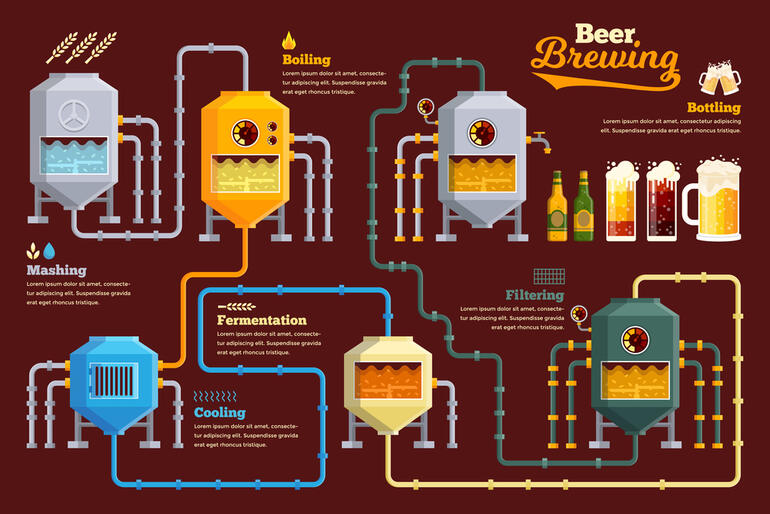
When human beings mention the term by-products, they are likely to give a connotation of something nasty or dangerous. In a brewery, there is a lack of reality in that impression. The majority of brewing by-products are clean organic substances, but do not make it to the finished recipe. They are also very attached to ingredients that contribute to the character of beer, even after their initial intention to brew beer is complete. Spent grain is the largest source, which is left behind after the extraction of sugars and flavor compounds. It retains nutrients, aroma, and texture, which is more of a damp cereal than waste.
In addition, it is produced during cooling and fermentation, and day-to-day operations, which have traces of grain, yeast, and other natural solids. The fermentation vessels are then deposited with yeast sediment and trub, which is thick with proteins and nutrients, and needs to be processed and then reused. Once you add the hop material that was left behind, plus the water used to clean the tanks and lines, the amount becomes large. All these materials are hazardous; they are just the ingredients of the brewing process that do not come to the glass but are of value in their own right.
Where It Actually Goes
So now you know what breweries are dealing with. The question is what happens to all of it. The reality is that most of this stuff finds another use instead of getting thrown away. Spent grain is the main thing, and farmers snap it up as animal feed since it’s cheap and has good nutrition. Breweries often work with the same local farms year after year, so the grain left from brewing turns into cattle feed. Some breweries just hand it over for free, which means less disposal cost for them, free feed for the farmer, and everyone in the community looks better for it.
Wastewater’s trickier because you can’t dump it anywhere without treating it first. Most breweries have their own treatment setup that pulls out solids and junk so the water meets environmental rules before it leaves the property. Some are starting to recycle wastewater too, treating it clean enough to use again in brewing. It’s not everywhere yet, but it’s getting there, and the technology works better every year. Yeast and trub end up in nutritional supplements (brewer’s yeast powder is loaded with B vitamins and amino acids) or as biosolids for fertilizer. Hop materials go into cosmetics and wellness products beyond just animal feed. CO2 from fermentation gets captured and either used in-house or sold to industries that need pressurized gas. Each part of the process is finding a use somewhere else in the economy.
What’s Holding Breweries Back?
Not every brewery’s got this figured out. Smaller ones don’t have the money for fancy treatment systems or water recycling. They also don’t have the connections to farms and companies that want their waste. Distance is a real problem too: if you’re nowhere near farmland, shipping spent grain costs a lot. Storage fills up fast, and regulations are different everywhere, which makes it harder for smaller breweries to keep up. The thing is, breweries are fixing this because it saves money, not only because it’s good for the planet. Less waste means better profit margins. And the tech’s getting cheaper and easier to use.
What’s Changing:
Biodigestion systems (anaerobic digesters) that convert waste into biogas for heating or power are becoming less expensive upfront
Waste management companies are specializing in brewery byproducts, handling scale operations, and creating easier outlets for smaller breweries
Water recycling systems are dropping in price as adoption spreads, making them feasible for more operations
Why You Should Actually Care
On the one hand, converting by-products into brewing may not appear to be closely related to the straightforward objective of having a good beer. However, how a brewery treats the leftovers is a good clue as to the manner in which it is run generally. The beer market is still developing in the context of stricter regulations, an increase in environmental demands, and consumer awareness. The breweries have begun to compete not only with regard to the taste and creativity, but also regarding their responsiveness and conscientiousness in conducting business.
Listening to such details is an additional touch to the experience at the taproom. Questions about where the spent grain is used, the reuse of water, and local partners, among others, can help to know the extent of knowledge of a brewery about its own operations. Independent, smaller breweries are often in direct contact with farmers or processors who reuse the by-products and have tighter local relations. Most waste-cutting strategies also contribute to better beer, as they effectively use water and materials that are used wisely, enhancing the consistency and control of quality. Once a brewery cares about the efficiency in the background, this consideration usually transfers to every single opened bottle.
The Shift
Breweries can never help but produce by-products, and how they are managed is evolving rapidly. Waste materials, once exiting the brewery as waste, are getting a second life. The spent grain would be diverted into animal feed, wastewater is reused to aid in cleaning or other production, and excess yeast is converted into supplements and other products. In the industry, an increasing emphasis is being placed on minimizing disposal and maximizing the value of all the inputs that come into the brewhouse.
This will reflect a shift to a more circular mode of production as opposed to a unitary one. Not everything will move forward, and certain material will still be left behind, but the course is established. To drinkers, this transition makes this experience richer. Each beer is more than just what tastes like it represents: water consumption, raw materials, and a set of decisions on what to do to the brew once it is finished. Perhaps you would stop to reflect that greater process which links the pint in your hand with a larger, changing system.



Comments 0
No Readers' Pick yet.