
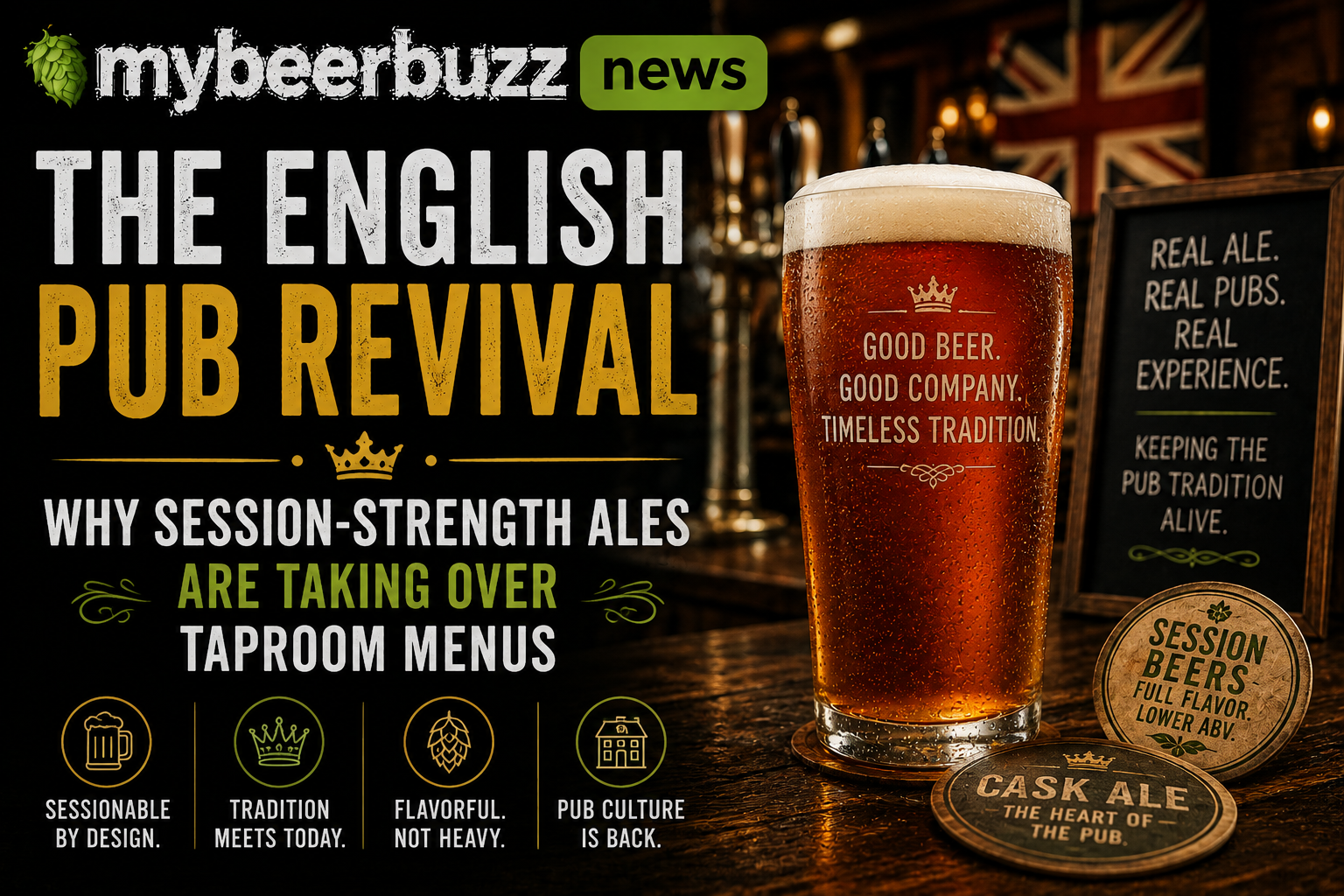


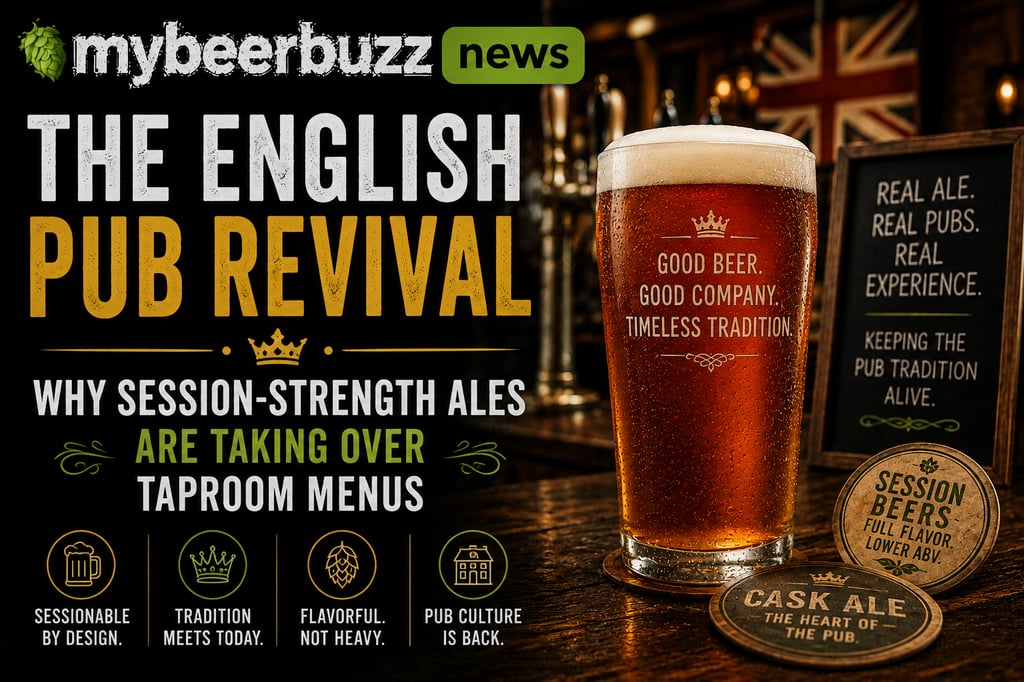
The English Pub Revival: Why Session-Strength Ales Are Taking Over Taproom Menus
 Story by:
Bil Corcoran
Story by:
Bil Corcoran
Table of Contents – The English Pub Revival
- Introduction
- Quick Facts: The Session Ale Movement
- The Shift Toward Social Longevity: Why Session Ales Matter
- Anatomy of Traditional British Pub Styles
- The Magic of Cask Conditioning: Real Ale Realities
- Brewing Complexity at Lower ABVs
- The Taproom and Pub Experience
- Conclusion
- Frequently Asked Questions
Introduction
For years, the American craft beer scene measured success in extremes, higher IBUs, triple-digit ABVs, and adjunct-heavy formulations designed to shock the senses. But as taprooms evolve into community living rooms, a quieter, more harmonious revolution is unfolding.
Drinkers are trading high-octane double IPAs and pastry stouts for something fundamentally more hospitable: session-strength craft ales. Rooted in the timeless traditions of the British pub, styles like ordinary bitters, English dark milds, and extra special bitters (ESBs) are making a massive comeback, proving that flavor and drinkability are not mutually exclusive.
Quick Facts: The Session Ale Movement
| Feature | Description |
| Primary Category | Session-Strength British Ales |
| Key Styles | Ordinary Bitter, Best Bitter, English Dark Mild, ESB (Extra Special Bitter) |
| Common ABV | 3.5% – 4.8% (Sessionable Range) |
| Core Ingredients | Maris Otter malt, English ale yeast, traditional noble or English hops (Fuggles, Goldings) |
| Market Driver | Demand for moderation, community-focused social drinking, and malt-forward balance |
| Significance | Redefines taproom culture around longevity, hospitality, and everyday approachability |
The Shift Toward Social Longevity: Why Session Ales Matter
The modern consumer’s relationship with alcohol has fundamentally matured. The desire for mindful consumption means that drinkers want to spend hours at a local taproom catching up with friends, attending trivia nights, or listening to live music without feeling overwhelmed by heavy, high-ABV pours after a single round.
Session-strength craft ales bridge this gap perfectly. Ranging typically between 3.5% and 4.8% ABV, these beers are engineered for conviviality. They allow a patron to enjoy two or three pints over an afternoon or evening while remaining entirely engaged, comfortable, and clear-headed. It is a return to beer’s historic roots as a beverage of moderation and social cohesion.
Anatomy of Traditional British Pub Styles
The English pub revival is not a monolith; it is an exploration of heritage styles that focus on malt complexity and smooth drinkability rather than aggressive hop or fruit overloads:
- English Dark Mild: Often clocking in under 4.0% ABV, these beers are ruby-brown gems offering subtle notes of caramel, light chocolate, and toasted nuts with a surprisingly crisp, dry finish.
- Ordinary and Best Bitters: Featuring a coppery hue, these ales balance gentle, earthy, floral English hop bitterness with a bready, biscuity malt backbone. They are refreshing, snappy, and endlessly complex.
- Extra Special Bitters (ESBs): Sitting at the higher edge of session strength (around 5.0% ABV), ESBs lean slightly more into hop assertion while maintaining a robust, malt-forward structure that anchors the style.
The Magic of Cask Conditioning: Real Ale Realities
To truly understand the British pub revival in contemporary craft, one must look at the cellar technique that defines it: cask conditioning. Unlike forced-carbonation draft systems, “real ale” undergoes a secondary fermentation inside the cask, served naturally unpasteurized and unfiltered via gravity or a traditional beer engine at cellar temperature (around 50°F to 55°F).
This gentle carbonation produces a creamy, velvety mouthfeel and allows delicate malt and yeast esters to shine without being masked by harsh, stinging carbonic acid. Independent craft breweries installing cask engines are finding eager audiences hungry for this authentic, historic texture.
Brewing Complexity at Lower ABVs
Brewing a great high-ABV beer can sometimes rely on brute force, adding massive grain bills or heavy adjuncts to create body and flavor. By contrast, brewing an exceptional 3.8% session ale requires master-level technical skill.
Because there is less alcohol and sugar to lean on, brewers must utilize high-quality base malts (like traditional Maris Otter) and precise mash schedules to build a rich, satisfying body that defies the low ABV. Every component of the recipe must work in absolute harmony, leaving zero room for technical errors.
The Taproom and Pub Experience
The rise of session ales has profoundly transformed the physical atmosphere of modern taprooms. Instead of revolving exclusively around high-turnover crowds chasing limited-release bottle drops, taprooms are fostering slower, more conversational neighborhood spaces.
Conclusion
The English pub revival and the rise of session-strength ales represent a mature, confident chapter for the craft beer movement. By embracing moderation, heritage techniques, and malt-forward balance, brewers are creating spaces where quality and community go hand in hand. For the modern enthusiast, a pint of ordinary bitter or dark mild is more than just a drink; it is an invitation to slow down, stay awhile, and enjoy the true craft of hospitality.
Frequently Asked Questions
Q: What exactly defines a “session” beer?
A: Generally, a session beer is any lower-alcohol style—typically under 5.0% ABV—that is specifically formulated to allow a drinker to consume multiple units over an extended social period without heavy intoxication.
Q: Are English bitters actually bitter like an IPA?
A: No. Despite the name “bitter,” English session ales feature a balanced, earthy bitterness from traditional hops that is counterbalanced by a prominent bready, biscuity malt profile, making them far smoother and less aggressive than American IPAs.
Q: What is cask conditioning?
A: Cask conditioning is a traditional method where beer undergoes a secondary fermentation inside its final shipping container (the cask). It is served naturally without high forced carbonation, resulting in a softer, creamier mouthfeel and nuanced flavor profiles.
zzubreebym



Comments 0
No Readers' Pick yet.