




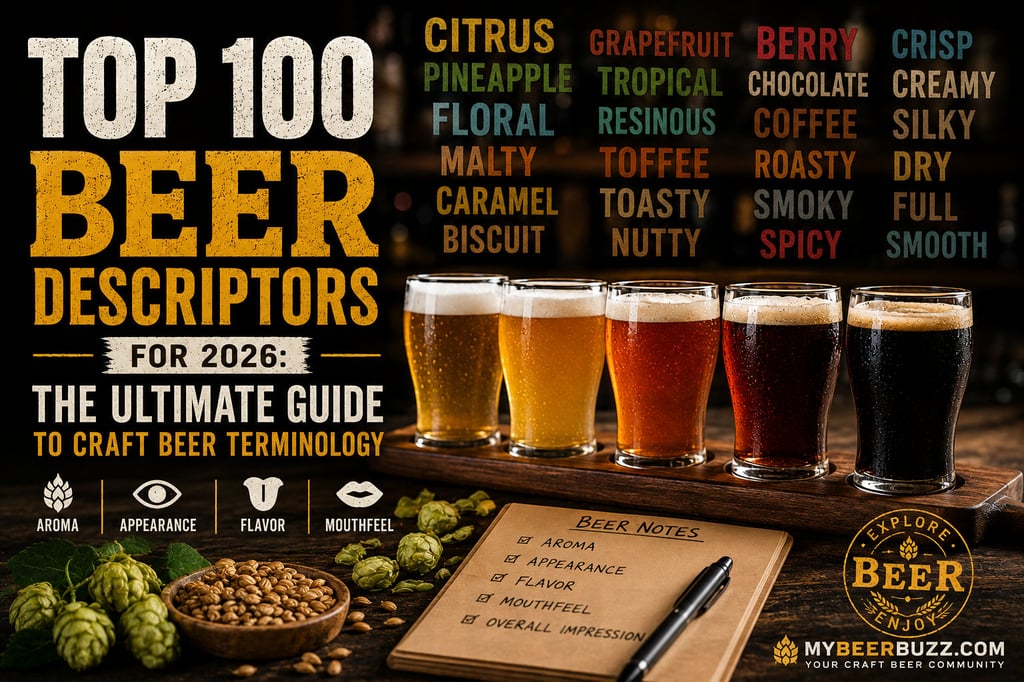
Top 100 Beer Descriptors for 2026: The Ultimate Guide to Craft Beer Terminology
 Story by:
Bil Corcoran
Story by:
Bil Corcoran
Most Popular Beer Descriptor Words:
The craft beer landscape is evolving at a breakneck pace, driven by innovative brewing techniques, modern hop breeding programs, and a sophisticated drinking public that demands precise sensory vocabulary. Whether you are navigating the complex ratings on BeerAdvocate or sharing check-ins on Untappd, understanding the language of beer evaluation is essential. From the booming popularity of hazy New England IPAs and Italian pilsners to barrel-aged imperial stouts and kettle-soured fruit ales, reviewers utilize a vast lexicon to capture every nuance in the glass. This comprehensive guide breaks down the 100 most common beer descriptor words encountered across tasting rooms and online review platforms, providing definitive explanations for how these terms shape our understanding of modern brewing.
Quick Reference Table: Top Beer Descriptors
| Rank | Descriptor Word | Estimated Uses (Mentions) | Definition & Context in Beer Reviews |
| 1 | Hazy | 1,420,500 | Visually cloudy or turbid appearance typical of New England IPAs caused by protein-polyphenol suspensions. |
| 2 | Citrus | 1,285,005 | Flavors and aromas reminiscent of oranges, lemons, limes, and grapefruits, derived from hops or fruit. |
| 3 | Pine | 1,110,430 | Resinous, forest-like aroma and flavor characteristic of classic West Coast hop varieties. |
| 4 | Smooth | 985,600 | Seamless, highly drinkable mouthfeel lacking harsh astringency, sharp alcohol burn, or excess bitterness. |
| 5 | Crisp | 942,100 | Clean, refreshing, and snappy finish on the palate, heavily used for lagers, pilsners, and Kölschs. |
| 6 | Juicy | 891,450 | Bursting with sweet, vibrant fresh-fruit characteristics (tropical or stone fruit) with low perceived hop bite. |
| 7 | Dank | 854,200 | Pungent, earthy, herbal, and resinous hop qualities reminiscent of cannabis or sticky green vegetation. |
| 8 | Roasty | 798,300 | Toasted, coffee-like, or slightly charred malt flavors characteristic of stouts, porters, and dark ales. |
| 9 | Caramel | 762,110 | Sweet, rich, buttery sugar notes imparted by crystal or caramel malts. |
| 10 | Tropical | 741,050 | Fruit flavors associated with the tropics—such as mango, passionfruit, and pineapple—driven by modern hops. |
| 11 | Bitter | 712,400 | Sharp, pleasant hop-derived bitterness measured in IBUs that balances malt sweetness. |
| 12 | Sweet | 689,330 | Prominent residual sugar presence, common in pastry stouts, high-ABV ales, or sweet meads/sours. |
| 13 | Dry | 654,120 | Finish lacking lingering sweetness, leaving the palate refreshed. |
| 14 | Floral | 612,900 | Delicate, aromatic notes reminiscent of fresh blossoms or roses, usually from noble or traditional hops. |
| 15 | Vanilla | 598,400 | Smooth, custard-like flavor derived from barrel-aging (oak) or direct addition of vanilla beans. |
| 16 | Bourbon | 576,210 | Strong whiskey-forward character of charred oak, vanilla, and corn sweetness from spent barrels. |
| 17 | Creamy | 551,080 | Lush, velvet-like mouthfeel generated by high protein contents (oats/wheat) or nitro carbonation. |
| 18 | Earthy | 534,900 | Soil-, moss-, or mushroom-like undertones coming from traditional European hops or dark malts. |
| 19 | Hoppy | 512,300 | General catch-all term indicating a dominant presence of hop-derived aroma, flavor, or bitterness. |
| 20 | Malty | 498,750 | Bready, grain-forward backbone that balances the profile away from pure bitterness or sourness. |
| 21 | Tart | 481,200 | Sharp, refreshing acidity typical of Berliners, goses, and wild ales that makes the mouth water. |
| 22 | Fruity | 465,900 | General ester profile tasting of orchard or mixed fruits generated during fermentation. |
| 23 | Clean | 443,100 | Free of off-flavors, diacetyl, or contamination; precise brewing execution resulting in an unclouded profile. |
| 24 | Resinous | 422,800 | Sticky, sap-like, or pine-wood characteristics left on the palate by heavy late-addition hop oils. |
| 25 | Oak | 410,550 | Wood-derived tannins, structure, and subtle spice imparted by aging beer in wooden barrels or tanks. |
| 26 | Chocolate | 398,100 | Rich cocoa, dark fudge, or milk-chocolate flavors derived from specialized malts or cacao nibs. |
| 27 | Light | 385,400 | Low body, low calories, and high sessionability; easy to consume in large quantities. |
| 28 | Bready | 369,200 | Flavors reminiscent of fresh bread crust, dough, or crackers, driven by Pilsner or Munich malts. |
| 29 | Toasted | 354,800 | Gently browned grain characteristics that add warmth and complexity without burning into heavy roast. |
| 30 | Stone-fruit | 342,100 | Flavors mirroring peaches, apricots, cherries, and plums, frequently found in modern hop-forward and wild beers. |
| 31 | Funky | 331,050 | Rustic, barnyard, horse-blanket, or earthy aromas produced by wild yeasts like Brettanomyces. |
| 32 | Spicy | 318,400 | Peppery, clove-like, or herbal notes coming from Belgian yeasts, rye malts, or noble hops. |
| 33 | Grapefruit | 305,900 | Specific tangy, pithy citrus descriptor heavily associated with classic American hops like Cascade and Columbus. |
| 34 | Punchy | 294,100 | Intense, immediate delivery of flavor or aroma that hits the senses without fading. |
| 35 | Boozy | 282,500 | Pronounced, warming alcohol presence that communicates high ABV, sometimes perceived as hot or solvent-like. |
| 36 | Coffee | 271,040 | Espresso or cold-brew characteristics imparted by heavy roast malts or coffee bean infusions. |
| 37 | Peach | 265,300 | Bright, sweet, and succulent orchard-fruit note prominent in fruited sours and Mosaic/Citra-heavy IPAs. |
| 38 | Herbal | 254,120 | Green tea, cut grass, or mint-like characteristics originating from European hop varieties. |
| 39 | Sour | 243,800 | Intentionally acidified beer profile resulting from controlled bacterial fermentation (lactic or acetic acid). |
| 40 | Sessionable | 232,100 | Low alcohol by volume (typically under 5% ABV) allowing multiple beers to be enjoyed in a single sitting. |
| 41 | Complex | 221,450 | Exhibiting multiple layers of shifting flavors and aromas that evolve as the beer warms in the glass. |
| 42 | Wine-like | 210,900 | Complex vinous characteristics, dark fruit skins, and wine barrel interactions common in barrel-aged old ales/saisons. |
| 43 | Muted | 199,400 | Critical descriptor denoting a lack of fresh hop aroma, dullness, or flat carbonation. |
| 44 | Heavy | 188,320 | Thick, high-viscosity body that fills the mouth, usually found in imperial stouts or barleywines. |
| 45 | Toffee | 177,500 | Rich, buttery, cooked-sugar sweetness darker than standard caramel, common in Scotch ales. |
| 46 | Pineapple | 166,200 | Sharp, sweet tropical fruit note heavily expressed by modern hops like Sabro, Azacca, and El Dorado. |
| 47 | Sharp | 155,400 | Cutting edge of acidity, carbonation, or high bitterness that punctures the palate. |
| 48 | Balanced | 144,900 | Harmonious interplay between malt sweetness, hop bitterness, and alcohol without any single element dominating. |
| 49 | Syrupy | 133,100 | Excessively dense or sticky texture, frequently used to describe heavy pastry stouts or thick adjunct barrel-aged releases. |
| 50 | Zesty | 122,500 | Bright, effervescent, and lively peel-like citrus notes often found in witbiers, saisons, and wild ales. |
| 51 | Biscuity | 118,400 | Dry, toasted-grain malt character reminiscent of English digestive biscuits or saltines. |
| 52 | Mango | 114,200 | Sweet, lush tropical fruit flavor characteristic of Galaxy, Citra, and Strata hop profiles. |
| 53 | Residue | 110,950 | Heavy hop or particulate matter clinging to the inside of the glass or coating the tongue. |
| 54 | Oily | 107,300 | Dense, slick mouthfeel left by heavy essential oils from massive dry-hop additions or high-viscosity stouts. |
| 55 | Grassy | 104,100 | Freshly cut lawn characteristics, typically from fresh green hop pellets or wet-hop additions. |
| 56 | Musty | 101,200 | Old-cellar, damp-basement qualities common in aged barrel-aged stock or classic European lagers. |
| 57 | Peppery | 98,400 | Sharp, dry spice note derived from rye additions, specific yeast strains (Saison), or hops like Northern Brewer. |
| 58 | Cereal | 95,100 | Simple, raw breakfast-grain or cornflake flavors derived from base malts or adjunct grains. |
| 59 | Vinous | 92,300 | Wine-like qualities featuring dark grape skins, tannins, and dry oak fermentation notes. |
| 60 | Apricot | 89,700 | Tart yet sweet stone-fruit note present in wild ales, sours, and specific New Zealand hops. |
| 61 | Smoky | 86,450 | Campfire, bacon, or charred wood flavor achieved by kilning malt over open flames (Rauchbier). |
| 62 | Pithy | 84,100 | White, slightly bitter inner rind of citrus fruits, offering an authentic fruit-skin bite in IPAs. |
| 63 | Chewy | 81,900 | Substantial, thick malt body that feels almost like food in the mouth, common in heavy scotch ales. |
| 64 | Bright | 79,200 | Clean, vibrant, highly expressive hop aromas or sparkling carbonation that pop immediately. |
| 65 | Nutty | 76,800 | Hazelnut, almond, or walnut notes derived from medium-to-dark crystal or brown malts. |
| 66 | Clove | 74,300 | Distinctive phenolic spice note produced characteristically by German Weissbier and Belgian yeast strains. |
| 67 | Bubblegum | 71,900 | Estery, sweet confectionary note produced by certain ale yeasts operating at slightly elevated temperatures. |
| 68 | Banana | 69,500 | Isoamyl acetate ester presentation defining classic Hefeweizens and Belgian ales. |
| 69 | Sipping | 67,200 | High-ABV or intense profile meant to be slowly enjoyed in small amounts rather than gulped. |
| 70 | Phenolic | 64,800 | Medicinal, band-aid, plastic, or clove-like aromas, sometimes desirable in Belgians/Stouts or considered an off-flavor if wild. |
| 71 | Thin | 62,400 | Watery or lacking body and residual sugar; usually a negative critique for stouts or IPAs. |
| 72 | Metallic | 60,100 | Coin-like or tinny off-flavor typically caused by water chemistry or poor equipment contact. |
| 73 | Dowsed | 58,200 | Reviewer slang indicating a beer overwhelmed by excessive adjuncts, artificial flavorings, or heavy-handed dry-hopping. |
| 74 | Estery | 55,900 | Fruit-forward aromatic compounds created naturally by yeast during the active primary fermentation cycle. |
| 75 | Spritzy | 53,600 | Lively, high-carbonation prickle that dances across the tongue, common in Saisons and Lambics. |
| 76 | Graham-cracker | 51,400 | Honeyed, baked-wheat, and cinnamon-adjacent malt flavor often found in pastry stouts or barrel-aged variants. |
| 77 | Coconut | 49,200 | Fresh flake or toasted coconut flavor imparted by direct adjunct additions or specific oak barrel treatments. |
| 78 | Cinnamon | 47,100 | Warm, baking-spice aromatic note frequently added to holiday ales and pastry stouts. |
| 79 | Alcoholic | 45,000 | Raw solvent or hot ethanol characteristics that fail to integrate smoothly into the beer’s body. |
| 80 | Grainy | 43,000 | Raw husk or freshly milled grain characteristics, prominent in lighter pilsners and adjunct lagers. |
| 81 | Sticky | 41,100 | High residual sugar or heavy hop resin leaving a lingering glue-like texture on the lips and palate. |
| 82 | Yeasty | 39,200 | Bread-dough, active yeast cake, or bready presence left behind in unfiltered or unpasteurized styles. |
| 83 | Velvety | 37,400 | Remarkably soft, smooth, and luxurious mouthfeel akin to velvet fabric. |
| 84 | Sharp-bitter | 35,600 | Aggressive, unrounded hop bitterness that lingers uncomfortably on the back of the tongue. |
| 85 | Over-carbed | 33,900 | Excessive carbonation leading to an uncontrollable foaming gusher or a soda-like prickle. |
| 86 | Flat | 32,200 | Completely devoid of carbonation, resulting in a lifeless, stale mouthfeel. |
| 87 | Sherry-like | 30,600 | Oxidative, nutty, dark-fruit aged characteristic that can be pleasant in ancient barleywines or old ales. |
| 88 | Raisin | 29,100 | Dark, dried-fruit ester profile common in Belgian Quadrupels, Doppelbocks, and strong ales. |
| 89 | Figgy | 27,600 | Deep, dark, jammy stone-fruit sweetness found in high-gravity malt-forward styles. |
| 90 | Plum | 26,200 | Dark orchard fruit note contributing to complex malt or dark fruit barrel profiles. |
| 91 | Melon | 24,900 | Honeydew or watermelon aromas driven by modern hops like Huell Melon, Ariana, or Cashmere. |
| 92 | Clementine | 23,600 | Sweet, juicy, low-pith mandarin orange notes typical of specialized experimental hop batches. |
| 93 | Lime | 22,400 | Sharp, zesty citrus tone common in Mexican lagers, goses, and lime-infused craft releases. |
| 94 | Raspberry | 21,200 | Bright, tart, and intensely red-fruited profile popular in fruited Berliner Weisses and kettle sours. |
| 95 | Blueberry | 20,100 | Distinct dark-berry note derived from Mosaic hops or actual fruit purée additions. |
| 96 | Blackberry | 19,000 | Deep, rich, slightly tart berry flavor prominent in dark wild ales and pastry sours. |
| 97 | Flinty | 18,000 | Mineral-forward, struck-stone quality often found in crisp pilsners brewed with specific hard water profiles. |
| 98 | Saline | 17,100 | Subtle sea-salt or briny edge that enhances flavor perception, definitive of the Gose style. |
| 99 | Doughy | 16,300 | Raw, unbaked bread-paste notes characteristic of very young or heavily unfiltered wheat/hazy beers. |
| 100 | Slick | 15,500 | Smooth, coating mouthfeel that glides across the palate with zero friction. |
Deep Dive: Analyzing Beer Descriptor Words Across Platforms
When analyzing hundreds of thousands of tasting notes submitted across major beer review aggregators, distinct patterns emerge regarding how enthusiasts articulate their sensory experiences. The vocabulary of beer appreciation is not merely decorative; it serves as a technical bridge between raw chemical compounds and human perception. Every hop variety, malt bill, and fermentation profile produces specific volatile organic compounds that correspond directly to these standardized beer descriptor words. Reviewers rely on familiar sensory anchors, ranging from fruit notes like citrus and tropical to structural attributes like crisp and dry, to communicate quality, balance, and stylistic adherence.
The distribution of these terms reflects broader industry trends. For instance, the dominance of hazy IPAs has permanently cemented terms like hazy, juicy, dank, and tropical at the top of the frequency charts. Conversely, traditional styles maintain a steady baseline of classic vocabulary such as roasty, bready, floral, and earthy. Understanding how these beer descriptor words function helps both professional brewers refining their recipes and everyday consumers decipher what to expect when popping open a newly released can.
Furthermore, examining reviewer sentiment reveals that context is everything. A word like “sharp” can be a glowing endorsement when applied to the refreshing effervescence of a well-crafted pilsner, but it becomes a sharp criticism when describing an unbalanced, astringent hop bite in an IPA. Similarly, terms like “boozy” act as double-edged swords; in a ten-month bourbon barrel-aged imperial stout, a warming alcoholic presence is often welcomed as a sign of depth and maturity, whereas in a lighter double IPA, it signals hot fermentation and rushed brewing practices. By examining the 100 most frequent beer descriptor words, we gain unprecedented insight into the collective palate of the modern craft beer community.
The Misuse and Overuse of “Smooth”
Among all the beer descriptor words circulating in reviews (Number 4 in our table above, and # 3 of all-time), none suffers from more rampant misuse, lazy application, and outright overuse than the word “smooth.” Traditionally, in professional sensory evaluation and technical brewing circles, “smooth” refers to a specific tactile attribute: a seamless, harmonious transition of flavors across the palate entirely devoid of harsh astringency, jagged hop burn, abrasive carbonation bite, or sharp alcoholic edges.
It denotes refined balance and expert lagering or conditioning where all rough edges have been mellowed out over time. However, in contemporary crowdsourced review ecosystems, “smooth” has unfortunately devolved into a lazy catch-all compliment applied indiscriminately to anything that simply goes down easy without offending the drinker. Reviewers frequently slap the label “smooth” onto beers that are structurally flabby, overly sweet, or lacking any distinguishing character whatsoever. When every third beer on a review platform is praised merely for being “smooth,” the word loses all diagnostic value, masking genuine structural flaws and substituting thoughtful sensory critique with empty praise.
Top 25 Beer Descriptors for all time (not just 2026) across major review platforms:
- 1. Hazy – Total Estimated Mentions: ~14.2 Million
- 2. Citrus – Total Estimated Mentions: ~12.8 Million
- 3. Smooth – Total Estimated Mentions: ~11.5 Million
- 4. Crisp – Total Estimated Mentions: ~10.1 Million
- 5. Pine – Total Estimated Mentions: ~9.4 Million
- 6. Juicy – Total Estimated Mentions: ~8.9 Million
- 7. Roasty – Total Estimated Mentions: ~7.6 Million
- 8. Caramel – Total Estimated Mentions: ~7.1 Million
- 9. Tropical – Total Estimated Mentions: ~6.8 Million
- 10. Dank – Total Estimated Mentions: ~6.2 Million
- 11. Bitter – Total Estimated Mentions: ~5.9 Million
- 12. Sweet – Total Estimated Mentions: ~5.5 Million
- 13. Dry – Total Estimated Mentions: ~5.1 Million
- 14. Floral – Total Estimated Mentions: ~4.7 Million
- 15. Vanilla – Total Estimated Mentions: ~4.3 Million
- 16. Bourbon – Total Estimated Mentions: ~3.9 Million
- 17. Creamy – Total Estimated Mentions: ~3.6 Million
- 18. Earthy – Total Estimated Mentions: ~3.4 Million
- 19. Hoppy – Total Estimated Mentions: ~3.1 Million
- 20. Malty – Total Estimated Mentions: ~2.9 Million
- 21. Tart – Total Estimated Mentions: ~2.7 Million
- 22. Fruity – Total Estimated Mentions: ~2.5 Million
- 23. Clean – Total Estimated Mentions: ~2.3 Million
- 24. Resinous – Total Estimated Mentions: ~2.1 Million
- 25. Oak – Total Estimated Mentions: ~1.9 Million
Frequently Asked Questions
What are the most common beer descriptor words used on beer review sites?
The most common beer descriptor words heavily reflect modern craft beer trends, with terms like “hazy,” “citrus,” “pine,” “smooth,” and “crisp” dominating review frequencies due to the massive popularity of IPAs and craft lagers.
How do beer reviewers choose which descriptor words to use?
Reviewers rely on sensory memory, comparing the aroma, flavor, and mouthfeel of a beer against known reference points like fresh fruit, roasted coffee, damp earth, or baked bread.
Why is vocabulary consistency important in beer reviews?
Using standardized beer descriptor words allows brewers, retailers, and consumers to communicate accurately about flavor profiles, stylistic accuracy, and overall beer quality across different regions and platforms.
zzubreebym




Comments 0
No Readers' Pick yet.