



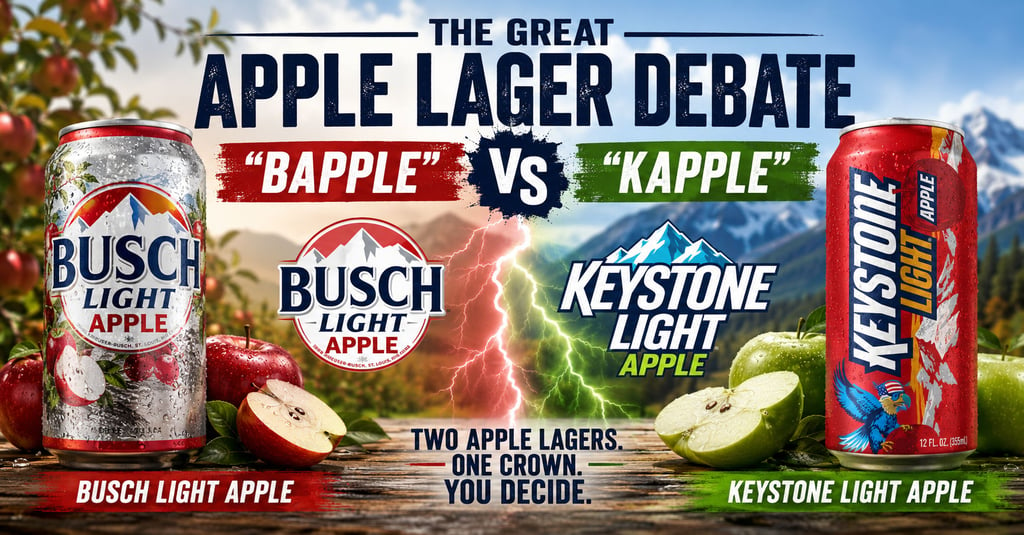
The Great Apple Lager Debate – “Bapple” vs “Kapple” Busch Light Apple Takes On Keystone Light Apple
 Story by:
Bil Corcoran
Story by:
Bil Corcoran
Busch Light Apple vs Keystone Light Apple — The Ultimate 2026 Apple Lager Showdown
Introduction
The American beer landscape is in the middle of a full‑scale flavor revolution, and nowhere is that more obvious than in the explosive resurgence of fruit‑flavored lagers, especially apple lagers. What started as a seasonal novelty has evolved into a full‑blown cultural moment, driven by nostalgia, drinkability, sessionability, and the mass‑market appeal of crisp, fruit‑forward light beer. And at the center of this movement sits the now‑legendary debate: Busch Light Apple (“Bapple”) vs Keystone Light Apple (“Kapple”).
Both beers tap into the same flavor universe, bright apple sweetness, light lager crispness, and easy‑drinking refreshment, but they come from two different corners of the macro‑lager world. Busch Light Apple has already built a cult following and a massive seasonal footprint. Keystone Light Apple, meanwhile, is the rising challenger, newer, harder to find, and already generating buzz as the “next big flavored lager” from Molson Coors.
This deep dive breaks down everything: the resurgence of fruit lagers, the sensory profiles, the brewing details, ABV, calories, carbs, protein, pricing, distribution, sales momentum, and the cultural phenomenon behind “Bapple” and “Kapple.” We’ll also explore the top 10 apple lagers in the U.S., the broader fruited‑lager category, and what flavored lagers we may see next from Busch Light and Keystone Light.
TABLE OF CONTENTS
- Introduction
- Quick Reference Table
- Why Fruit‑Flavored Lagers Are Surging
- Apple Lagers vs Shandies vs Radlers
- Busch Light Apple (“Bapple”)
- Keystone Light Apple (“Kapple”)
- Pricing, Distribution & Sales Momentum
- Top 10 Apple Lagers in the U.S.
- Other Fruit‑Flavored Lagers to Watch
- What Flavored Lagers Might Be Next
- Frequently Asked Questions
- Top 10 Best‑Selling Fruited Lagers
- Summary & Final Thoughts
QUICK REFERENCE TABLE: BAPPLE VS KAPPLE
| Beer | ABV | Calories | Carbs | Protein | Flavor Profile | Distribution | Est. Price |
|---|---|---|---|---|---|---|---|
| Busch Light Apple (“Bapple”) | 4.1% | ~130 | ~11g | ~1g | Crisp apple, light lager, semi‑sweet finish | Seasonal, wide U.S. footprint | $18–$22 per 12‑pack |
| Keystone Light Apple (“Kapple”) | 4.1% | ~120 | ~10g | ~1g | Sweeter apple, softer malt, candy‑apple edge | Limited, early‑stage rollout | $14–$18 per 12‑pack |
THE RISE OF FRUIT‑FLAVORED LAGERS & THE CULT OF “BAPPLE”
Why Fruit‑Flavored Lagers Are Surging Again
The resurgence of fruit‑flavored lagers, especially apple lagers—isn’t an accident. It’s the result of several converging trends:
1. Drinkers Want Flavor Without Heaviness
Consumers are shifting away from heavy craft styles and toward sessionable, crushable, low‑ABV beers that still deliver flavor. Apple lagers hit the sweet spot: bright fruit, crisp finish, and easy all‑day drinkability.
2. Nostalgia Is Driving Beer Trends
Apple flavors tap into childhood memories: apple juice, apple candy, apple soda, fall festivals, cider mills. That nostalgia translates into instant emotional appeal.
3. The Hard Cider Boom Paved the Way
Cider introduced millions of drinkers to apple‑based beverages. Apple lagers offer a lighter, less sweet, more beer‑forward alternative.
4. Macro Brands Are Innovating Again
Busch Light, Keystone Light, Natural Light, and others are aggressively exploring flavored extensions to capture younger drinkers and compete with seltzers.
5. Social Media Loves a Gimmick
“Bapple” and “Kapple” are meme‑ready. They’re fun to say, fun to post, and fun to argue about. Viral culture fuels sales.
Apple Lagers vs Shandies vs Radlers
To understand the appeal of apple lagers, it helps to compare them to other fruit‑beer categories:
Shandy
A shandy is typically beer + lemonade. It’s citrus‑forward, sweet, and refreshing. Apple lagers are less sugary and more beer‑driven.
Radler
A radler is beer + fruit soda (often grapefruit). It’s lighter and more carbonated than a shandy. Apple lagers are more malt‑balanced.
Apple Lager
A true apple lager is lager beer + natural or artificial apple flavoring. It’s crisp, clean, and closer to a flavored light beer than a cider.
Apple lagers sit in a unique space: more beer than cider, more fruit than lager, more sessionable than shandy or radler.
BUSCH LIGHT APPLE (“BAPPLE”) — THE ORIGINAL CULT FAVORITE
Busch Light Apple is the beer that ignited the modern apple‑lager craze. First released as a limited seasonal, it quickly became a viral phenomenon, selling out in many markets and inspiring a passionate fanbase.
Why It’s Called “Bapple”
The nickname “Bapple” emerged organically from fans on social media. It’s short, catchy, meme‑friendly, and perfectly fits the playful Busch Light brand identity.
Flavor Profile
Busch Light Apple is built on the classic Busch Light base but infused with a crisp, bright apple flavor. Expect:
- Fresh apple aroma
- Light malt backbone
- Semi‑sweet apple mid‑palate
- Clean, refreshing finish
- High carbonation
- Zero heaviness
It tastes like a hybrid of light lager + apple soda + fall orchard air.
ABV, Calories, Carbs & Protein
- ABV: 4.1%
- Calories: ~130
- Carbs: ~11g
- Protein: ~1g
This keeps it firmly in the light beer category while still delivering flavor.
Brewing Details
While exact recipes are proprietary, Busch Light Apple uses:
- Light lager malt base
- Apple flavoring (natural & artificial)
- High carbonation
- Cold fermentation for crispness
The apple flavor is layered on top of the lager rather than fermented from apple sugars, keeping the beer light and clean.
Distribution Footprint
Busch Light Apple has enjoyed wide U.S. distribution, especially in:
- Midwest
- Great Lakes
- Plains
- Mountain West
- Southeast
It remains a seasonal release, typically appearing in summer.
Estimated Pricing
- $18–$22 per 12‑pack
- $24–$28 per 24‑pack
Pricing varies by state and retailer.
Sales Momentum
Busch Light Apple has been a massive seasonal success, often selling out and generating strong repeat demand. It remains one of the most successful flavored lager extensions in recent macro‑beer history.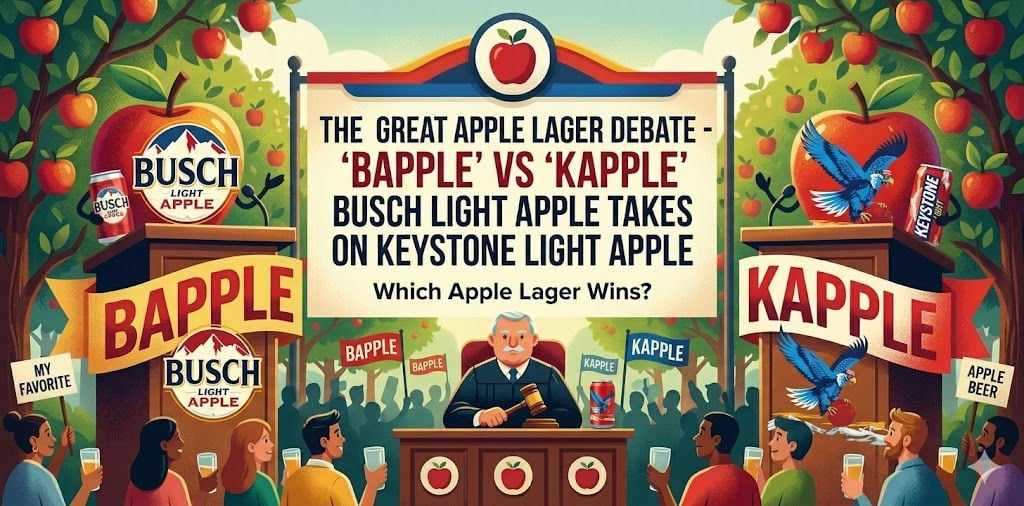
KEYSTONE LIGHT APPLE (“KAPPLE”) — THE NEW CHALLENGER
Keystone Light Apple is the newcomer, the challenger brand, the beer that Molson Coors hopes will capture the same magic Busch Light Apple created. It’s newer, harder to find, and already generating curiosity.
Why It’s Called “Kapple”
Just like “Bapple,” the nickname “Kapple” emerged from fans online. It’s simple: Keystone + Apple = Kapple. The name stuck instantly.
Flavor Profile
Keystone Light Apple leans slightly sweeter and more candy‑apple‑like than Busch Light Apple. Expect:
- Bright, sweet apple aroma
- Softer malt profile
- Slightly sweeter mid‑palate
- Smooth, rounded finish
- Less carbonation bite than Bapple
If Busch Light Apple is crisp and orchard‑fresh, Keystone Light Apple is juicier, sweeter, and more candy‑forward.
ABV, Calories, Carbs & Protein
- ABV: 4.1%
- Calories: ~120
- Carbs: ~10g
- Protein: ~1g
It’s slightly lighter than Bapple in calories and carbs.
Brewing Details
Keystone Light Apple uses:
- Keystone Light’s ultra‑smooth base lager
- Apple flavoring (likely artificial + natural)
- Lower bitterness
- Softer carbonation
The result is a smoother, sweeter apple lager.
Distribution Footprint
Keystone Light Apple is not yet widely available. Early rollout markets include:
- Select Midwest states
- Select Mountain states
- Limited Southeast distribution
Its scarcity is part of its mystique.
Estimated Pricing
- $14–$18 per 12‑pack
- $20–$24 per 24‑pack
Keystone Light Apple is positioned as the value‑priced apple lager.
Sales Momentum
Because Keystone Light Apple is new and limited, full sales data isn’t available. However:
- Early markets report strong sell‑through
- Social media buzz is growing
- Curiosity is driving trial purchases
It’s too early to compare it directly to Busch Light Apple, but the potential is clear.
TOP 10 APPLE LAGERS IN THE U.S. (INCLUDING CRAFT)
- Busch Light Apple
- Keystone Light Apple
- Yuengling Raging Eagle Apple
- Angry Orchard Crisp Apple Lager (limited collab variants)
- Jack’s Abby Apple Lager (seasonal)
- Narragansett Fresh Apple Lager
- Leinenkugel Apple Spice Lager (seasonal)
- Genesee Apple Lager (regional)
- Upslope Apple Lager (craft seasonal)
- Shiner Apple Lager (limited)
OTHER FRUIT‑FLAVORED LAGERS TO WATCH
- Lemon lagers
- Cherry lagers
- Peach lagers
- Berry lagers
- Pineapple lagers
- Watermelon lagers
- Mango lagers
- Pickle lagers
These styles are gaining traction as macro brands chase flavor‑seeking drinkers.
WHAT FLAVORED LAGERS MIGHT BE NEXT?
Using mybeerbuzz.com as a guide for trend‑spotting, the next likely flavored lagers from Busch Light or Keystone Light could include:
- Busch Light Peach
- Busch Light Cherry
- Busch Light Berry
- Keystone Light Lemon
- Keystone Light Peach
- Keystone Light Watermelon
Both brands are clearly exploring seasonal fruit extensions, and apple is only the beginning.
FREQUENTLY ASKED QUESTIONS
Is Busch Light Apple stronger than Keystone Light Apple?
No. Both are 4.1% ABV.
Which one is sweeter?
Keystone Light Apple (“Kapple”) is generally sweeter.
Which one is more widely available?
Busch Light Apple (“Bapple”).
Are these beers similar to cider?
They are lighter, less sweet, and more beer‑forward than cider.
Are apple lagers seasonal?
Yes—most are summer or fall seasonals.
TOP 10 BEST‑SELLING FRUITED LAGERS
- Busch Light Apple
- Bud Light Lime
- Bud Light Orange
- Keystone Light Apple
- Natural Light Pineapple Lemonade
- Leinenkugel Summer Shandy (lager‑adjacent)
- Michelob Ultra Lime Cactus
- Modelo Chelada Limón y Sal
- Corona Refresca (lager‑adjacent)
- Yuengling Raging Eagle
SUMMARY & FINAL THOUGHTS
The Great Apple Lager Debate—Busch Light Apple (“Bapple”) vs Keystone Light Apple (“Kapple”)—is more than a flavor comparison. It’s a snapshot of where American beer is heading: lighter, fruitier, more playful, more seasonal, and more social‑media‑driven than ever before.
Whether you prefer the crisp orchard snap of Bapple or the sweeter candy‑apple smoothness of Kapple, both beers represent the future of flavored lagers. And as the category grows, we’ll see even more fruit‑forward lagers, more seasonal releases, and more macro‑brand experimentation.
So try them. Compare them. Debate them. Share them. And while you’re at it, keep the conversation going by exploring non‑alcoholic IPAs, hoppy NA pale ales, and the broader world of modern sessionable beer.
Beer is evolving—and apple lagers are leading the charge.


Comments 0
No Readers' Pick yet.