







Miele Washer Error Codes: What They Mean and What to Do Next
 Story by:
Guest Contributors
Story by:
Guest Contributors
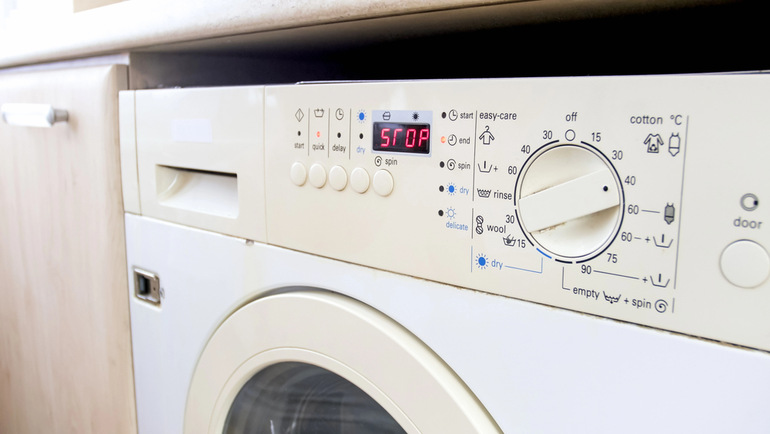
Miele washing machines are engineered to a higher standard than the majority of washing machines in their category, which means that a portion of that engineering comes into play in the way the machine notifies you of faults. Whereas a Miele washer will show you error codes directly on the control panel, instructing you to stop and simply wait, allowing you to figure out the problem yourself.
If you have one of these machines in your home in Boulder, it’s important to know what those codes mean, as it can mean the difference between a self-service and a needless service call. That kind of expertise can also lend a helping hand in maintaining regular living, even if it’s doing the laundry before a relaxing night of cold beer or preventing an appliance malfunction from ruining that afternoon at home. However, some faults truly need to be addressed on the ground, and knowing when to stop troubleshooting and book professional appliance repair Boulder saves both time and the risk of making a minor problem worse.
How Miele Error Codes Work
The fault codes displayed on the digital panel are a mix of letters and numbers, as seen on Miele. The fault codes of Miele are indicated in a combination of letters and numbers on the digital panel. Some codes will reset themselves when the condition has been corrected;d, others need to be reset on the control board memory by the technician or manually. When any error code appears, the first thing to do is to write down the error code exactly as it is displayed and then switch the power off for 2 minutes, then switch it back on. If the code is issued again upon reset, then a direct approach is needed to resolve the cause of the code.
F10 and F11 , Water Intake Faults
If it is not filling with water at all, the machine is set to F10, and if the drum is filling too slowly and not filling to the required water level in the expected time, the machine will be set to F11. Both codes refer to the water supply side of the machine. First, make sure that the water supply valve is completely open behind the machine and that the inlet hose to the machine is not kinked or pinched. The next item to check would be the inlet filter screen in the hose connection on the rear of the machine. Although mineral concentrations are not high in the water supply as in Boulder, over time, sediment accumulation inside the water supply can cause the water to become partially blocked without any external indication.
The inlet hose is usually the source of this problem; the trouble can be solved by removing the inlet hose and cleaning it under running water with a soft brush, helping maintain a smoother shop experience for businesses that rely on their washing machines for regular cleaning and laundry. If the hose and filter are clear but F10 or F11 returns, the water inlet valve itself may be failing. A valve that does not open fully restricts flow below the level the machine expects. Testing the valve requires a multimeter to check for correct voltage and continuity.
F20, Drainage Fault
If the machine can’t empty the drum within the expected time frame, F20 will appear. The drain pump filter is the first to examine. In most Miele models, it’s located behind a small access panel at the lower front of the machine, and lint, small clothing items, and coins gradually build up in this filter. Remove the cap of the filter and set a towel and a shallow container under the filter so that all the water drains out at once. Clean the filter thoroughly with a suitable cleaning tool and check the filter housing for any remaining debris.
Also, inspect the drain hose along its full length for kinks or blockages before restarting. If the filter is clear and the hose is unobstructed but F20 persists, the drain pump motor may have failed, or a small object may be lodged in the pump impeller, preventing it from spinning. Accessing the pump directly requires partial disassembly and is generally a job for a technician familiar with Miele’s internal layout.
F30 and F3, Temperature and Heating Faults
F30 means the water has failed to reach the desired temperature in the specified time, and F31 means the water is getting too hot; the machine has detected high temperatures and has stopped the cycle as a safety measure. The most common cause of an F30 is a heating element failure; this can be confirmed with a continuity test using a multimeter. No continuity indicates that the element is burned out and should be replaced. While troubleshooting the washer, it’s also worth keeping the surrounding area clean with an appropriate cleaning tool to prevent dust and debris from accumulating around the appliance.
The NTC temperature sensor is a smaller, more affordable component that could also cause F30, as well, giving false readings to the control board as it drifts out of calibration or if it fails. F31 is less frequent, and it will mean that there is a problem with the NTC sensor, which is reading temperatures incorrectly, or there is a problem with the control board allowing the heating element to operate without stopping when it should.
F51 Door Lock Fault
F51 is the code that is displayed if the machine is unable to verify that the door is securely closed before a cycle is initiated. As a safety precaution, Miele washers simply do not operate when the door lock is not confirmed; therefore, this error does not allow the cycle to begin at all. Be sure the door is fully closed and clicks shut when it is closed. If the door is fully closed and F51 returns, it is likely that the door lock interlock mechanism has failed. A common wear part on heavily used machines, and if you find the right part, replacing it is manageable on most Miele machines.
F53 and F63 , Motor Faults
F53 is a fault for the tachometer of the motor, which measures the drum speed and informs the control board. F63 is a motor control fault that is more general. The two codes refer to the drive system and need professional diagnosis. Glass and towel washing, or anything else that you do regularly upon gathering your friends, becomes easily apparent when laundry is building up if you are a beer drinker. Promptly cleaning the washer helps prevent the need to do so routinely, particularly after a beer tasting, ggame-day evento r a late night with friends.
These faults are less common but require more effort to resolve. Without proper diagnostic equipment, working through the motor faults may lead to a misdiagnosis of the reason for the fault and to unnecessary replacement of components. Miele’s drive systems are more sophisticated than those found on standard washing machines, and a technician experienced with the brand will have access to the correct diagnostic tools and replacement parts.
F70, Overflow Fault
F70 triggers when the machine detects water levels higher than they should be, activating the overflow protection system. This is often caused by a faulty water inlet valve that does not close fully between fills, allowing water to continue entering the drum when it should not. A detergent issue producing excessive suds can also trigger F70 by interfering with the water level sensor readings. Check that you are using the correct HE-rated detergent in the recommended quantity. If the fault appears regardless of detergent, the inlet valve needs to be tested and likely replaced.
Resetting a Miele Washer
A complete reset may resolve an electrical code that does not seem to have a mechanical fault. For most Miele models, this requires pressing the start button for five seconds or a particular sequence of pressing buttons as described in the owner’s manual. If the fault code is occurring again in the same cycle or two, the problem with the component should be fixed, not reset again.
Especially consider this in the kitchen or entertainment areas where you might have a dishwasher washing up glasses, beer pitchers, etc., post-party. Understanding the machine’s washer capacity can also help when planning cleanup after larger gatherings, protecting against overloading. While a temporary reset may get things moving again, it is important to investigate all the errors that occur again before the next round of cleaning up.



Comments 0
No Readers' Pick yet.