



Does Beer Expire? How Long Does Beer Last? Shelf Life, Storage Tips, and Signs It Has Gone Bad
 Story by:
Bil Corcoran
Story by:
Bil Corcoran
Beer doesn’t expire or pose any health hazards to drink, but it does tend to lose its flavour, aroma, and carbonation over time. With proper storage, most beer bottles will last for months after the date of bottling, but they just won’t be as fresh as before. That’s a difference that is important to beer lovers. The freshness will affect the product’s hop aroma, malt character, and balance, but not its ability to be consumed in the can or bottle, but rather in the best that the product tastes in the bottle or can in which it is consumed. Beer is one of the oldest alcoholic drinks around, and when it comes to beer, it’s always a question: Does it go bad? Yes, but not like milk, meat, or other perishable foods. In addition to alcohol, hops, carbonation, and modern brewing techniques, beer has a lot to offer in terms of keeping it fresh. It doesn’t go ‘bad’ per se; it changes over time.
The hop flavour diminishes, malt flavours fade, the carbonation dissipates, and stale flavour is introduced by oxidation, which can make a very good beer a disappointment. How much fun a beer offers will depend on the type, alcohol content, package, how it is stored, and how old it is. A good hazy IPA can lose its style in several months, and a good imperial stout or barleywine can show great development over several years, if conditions are optimum. In addition, custom corkscrews are barware accessories that can enhance the experience for guests at restaurants, tasting rooms, and wine brands offering both beer and wine. The beer “aging” process is a vitally important one to understand if you want to enjoy beer to the best of your ability, if you don’t want to waste a good beer, and if you want to know when to open an older beer.
Key Takeaways
- If you drink it after a while, beer will not go bad, but it will not taste as fresh and flavorful.
- The three major factors that affect the quality of the beer are: heat, oxygen, and sunlight.
- Some good beers taste better after a few years; there are others that, when they were hops-forward, should be drunk fresh.
- Beer should be stored in a cool, dark area, as this will help to maintain the quality of the beer.
- The beer’s expiration date listed on the print is more of an indicator of best freshness.
What Does It Mean When Beer “Expires”?
The word expire really doesn’t refer to food safety, but to quality for most commercial beer. Beer has several natural preservatives, as opposed to fresh dairy products. Alcohol kills most harmful microorganisms, hops contain antimicrobial compounds, and modern breweries are careful to package their beer in a way to reduce contamination. However, beer undergoes several chemical changes over the course of time, which alter the taste of the beer. The greatest process is oxidation.
There are small amounts of oxygen trapped in the beer when it is being packaged, or released over time, which react with compounds in the beer. This helps gradually remove the hoppy flavor from the beers and lends a stale and papery taste to them, as well as dulling the crispness that is characteristic of fresh beer. The freshness, cleanliness, and balance in the fresh beer are excellent. Older beers will get less effervescent, less refreshing, sweeter, and less vigorous. Hence, the emphasis is on freshness dates rather than expiration dates in breweries.
Can you drink Expired Beer?
In most cases, yes. Unless a commercial beer has been mishandled, the beer generally will not spoil after its best-before date. Illness is usually not the worst thing that can happen; it’s usually poor flavor. Commercial brewers are highly sanitised, have a pasteurising process, a quality control programme, and a method of managing the amount of oxygen that will be added to the beer to ensure that the beer is microbiologically stable. The pH is acidic, the carbonation is present, and the hop compounds are present to make the growth of harmful bacteria difficult. If the package is in good condition, however, safety will be assured.
Avoid drinking beer if you notice:
- A broken seal
- A leaking bottle or can
- Rust around the opening
- Mold under the cap
- A swollen or bulging can
- Signs of contamination
- An unusual odor unrelated to normal beer aromas
These situations suggest packaging failure rather than normal aging.
Does Beer Ever Become Dangerous?
While uncommon, beer can occasionally become unsafe if contamination occurs after packaging.
Possible causes include:
- Damaged cans allow bacteria inside
- Broken bottle seals
- Poorly sanitized homebrewed beer
- Wild yeast contamination
- Improperly stored draft beer
- Mold enters opened containers
The brewing process discourages the growth of microorganisms in commercially packaged beer, making it unlikely to develop microorganisms that are harmful to humans. Old beer is almost always a quality problem, not a safety problem, if the container is not broken or damaged and is sealed.
In How Many Days Does Beer Expire?
The shelf life is dependent on many factors of beer style, alcohol content, packaging, and storage temperature, and varies significantly.
Generally speaking:
| Beer Style | Peak Freshness | Unopened Shelf Life |
| Hazy IPA | 1–3 months | 4–6 months |
| IPA | 3–6 months | 6–9 months |
| Pale Ale | 4–6 months | 6–9 months |
| Pilsner | 4–6 months | 6–9 months |
| Lager | 6 months | 9–12 months |
| Blonde Ale | 6 months | 9–12 months |
| Wheat Beer | 4–6 months | 6–9 months |
| Amber Ale | 6–9 months | About 1 year |
| Brown Ale | 6–12 months | About 1 year |
| Porter | 1 year | 2 years |
| Stout | 1–2 years | 2–3 years |
| Imperial Stout | 2–5 years | 5+ years |
| Belgian Strong Ale | 2–5 years | 5+ years |
| Barleywine | 5–10 years | 10+ years |
| Sour Beer | Several years | Often improves with age |
| Non-Alcoholic Beer | 3–6 months | Usually less than 1 year |
These estimates assume proper storage away from heat and sunlight.
Why Some Beers Last Longer Than Others
- Not every beer ages at the same rate.
- Several characteristics determine longevity.
Alcohol Content
- Higher alcohol acts as an additional preservative.
- A 10% imperial stout naturally withstands aging much better than a 4.5% lager.
- This is why strong Belgian ales, barleywines, and imperial stouts are commonly cellared for years.
Hop Content
- Ironically, heavily hopped beers often age faster.
- Fresh hop oils are extremely volatile. Citrus, tropical fruit, pine, and floral aromas begin fading shortly after packaging.
- This is why breweries often recommend drinking fresh IPAs within a few months.
Residual Sugar
- In some instances, the complexity of sweeter beers even increases with aging.
- Oxidation can result in sweet caramel honey to caramel notes, dried fruit (toffee, figs, etc.), sherry, or port.
- These qualities can work well with rich dark beers, and can be detrimental in lighter beers.
Yeast Activity
- Beers that were conditioned with live yeast can continue to evolve in the bottle.
- Some Belgian beers tend to improve in taste and complexity over time.
Does Beer Last Longer in Cans or Bottles?
Packaging plays a surprisingly important role.
Aluminum Cans
- Cans generally provide the best protection.
- They absorb 100% of the ultraviolet rays, significantly restrict the exposure of oxygen, cool rapidly, and minimize the chances of light damage.
- Today, many craft brewers limit their brews to cans only for a number of these reasons.
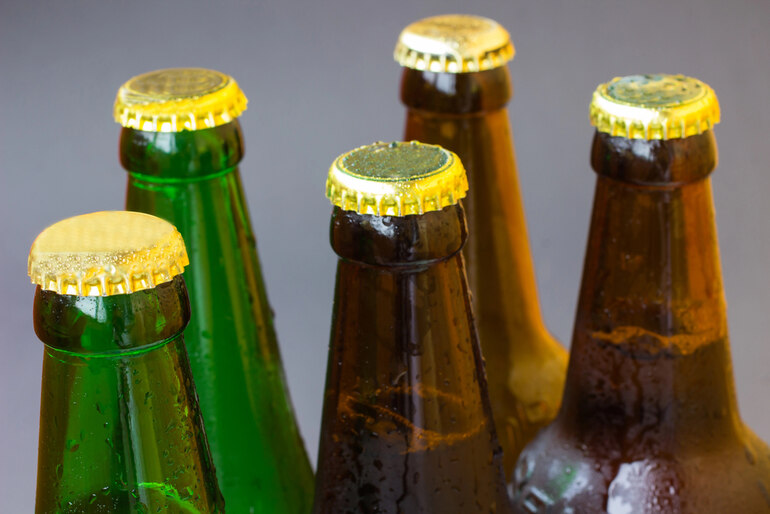
Brown Bottles
- Brown glass blocks nearly all the ultraviolet radiation and provides good protection.
- Considered the standard for quality beer packaging for many years.
Green Bottles
- Green bottles allow considerably more UV light to enter.
- This increases the chance of developing the well-known “skunky” aroma if exposed to sunlight.
Clear Bottles
- Clear glass offers almost no protection against light.
- These beers should be stored away from sunlight immediately after purchase.
Growlers
Traditional growlers should usually be consumed within one to three days after filling because oxygen enters during dispensing.
Crowlers
- Crowlers generally remain fresh longer than growlers because they are sealed immediately after filling.
- They are typically best consumed within several weeks.
Does Refrigeration Make Beer Last Longer?
Yes. The effect of low temperature on beer’s chemical reactions, which accelerate ageing, is very pronounced. Both refrigeration slows down oxidation and helps to preserve hop aroma, as well as increases carbonation time. It’s important to keep the temperature the same. Frequently transporting between a hot garage and a cold refrigerator causes acceleration of ageing through the action of expanding and contracting of liquid, moving oxygen around in the beer inside the container. Stable storage conditions allow you to keep the desired brewer’s hoppy or delicate style. Very few people drink beer outside of the fridge, and it’s the best way to ensure the consistency and original flavour of the beer the moment it is consumed.
Does Beer Go Bad After Opening?
When the beer is opened, it accelerates the aging process. Once the bottle or can is opened, CO₂ will start to leak and oxygen will flow into the bottle or can. The delicate flavor compounds in the beer are even more likely to be damaged by the oxygen that will cook away the hop flavors and accelerate the onset of staling. Opened beer should be drunk as soon as possible to experience it at its best, compared to unopened beer.
As a rule of thumb:
- Serve immediately, for optimum taste.
- Beer is normally quite good after 24 hours if it is kept under refrigeration, but with a slightly flat flavor.
- Beers will get very “flat” and “stale” after 1-2 days.
- After a couple of days, the flavor can become lifeless, oxidized, and stale.
If you can’t drink all the beer, halt the can or bottle, and refrigerate immediately. This will not stop oxidation, but will slow it down and help keep the carbonation and freshness.
Signs Beer Has Gone Bad
Once you’re able to recognize signs, it’s generally not too difficult to notice older beers. Unusual beer flavour and/or aroma decreases the beer quality; excessive pressure, carton damage, and/or mould should result in the beer being discarded.
Little foam: When there is little foam or no foam at all (or a very flat bottle) in a new beer, then the beer may have been aged or may not have been well sealed.
Oxidation makes flavors paper-like or papery, such as stale crackers, old paper, and wet cardboard. If the beer has a strong papery flavor, then it is likely to be quite stale.
Hop-forward beers will “bleach” out of hop aroma: These beers can become bland and lose their hoppy aroma from citrus to tropical fruit, pine, resin, herbs, and flowers. Older IPAs and pale ales can be lacking in body, cloyingly sweet, or overly malty.
Sulfurous smell: Some compounds in the hop could be responsible for a foul odor when they are lit up. The transparent or green glass bottles will be particularly sensitive.
Sour notes: This is when beer has a vinegar-like taste, and it ought not to be more acidic after the brewing process than when it was first brewed or to get rotten.
A strong metallic, chemical, or solvent-like flavour is probably caused by Poor Storage, Contamination, Damaged packing, or Baking defects.
Unexpected turbidity: Courtesy of beer, there are some beers that are naturally cloudy. Cloudy beer, however, if it becomes cloudy for the first time or if the new cloudiness has an unusual appearance, is accompanied by an unusual taste or scent, or lacks the usual “bite,” could indicate trouble has arisen, particularly if the beer tastes or smells bad.
Floating or unusual sediment: This may occur in normal yeast sediment, bottle-conditioned, and unfiltered beers. If the stringy growth, the fuzzy material, the weird clumps, or the visible mold isn’t normal, then they aren’t.
Packaging issues: Bulging or leaking cans, cracks in bottles, mold around the cap, unusual or unexplained leakages, and missing caps or bottles. Beer should be thrown out without being cracked and opened.
Over-carbonated: Beer can gush if it is too warm in storage, shaken, over-carbonated, or contaminated. Handle it with care, especially when it’s popped at an unusual rate, or the beer has an abnormal appearance and aroma.
Why Beer Goes Bad
The reason that beer typically goes bad is due to the changes in flavour compounds rather than being suddenly deemed unhealthy. Several environmental and packaging factors can hasten this:
Oxidation: Any exposure to oxygen can result in changing the flavor and aroma of the beer over time, even if it is in small quantities within the package. Fading hop aromas, dull malt flavors, and papery, cardboard-like, or stale flavors can occur.
Heat: high levels of heat increase chemical reactions that cause aging. Beer stored in a hot vehicle or warm room will tend to become less fresh than beer stored in a consistently cool environment.
Light: Exposure to light, especially sunlight or U/V lighting, reacts with compounds from the hops, causing their aromatic compounds to become sulfurous and are known as skunky. Clear, green bottles will not block as much light as brown glass, and can completely block light.
Failure to maintain CO2: Sealing failures or defective seals can result in beer losing its carbonation, making it shallower, thinner, and less fragrant. A poor seal will also allow oxygen to leak in, and this could accelerate staling.
Microbial contamination: Commercial beer generally does not contain any harmful microorganisms; the rate of contamination is low in unopened beer. However, if any damage should occur to the packaging or during handling, unwanted yeast or bacteria can contaminate.
Time: Beer will change even under the ideal storage conditions. The hop flavours become less potent, the fresh flavour goes out of it, and oxidation is more noticeable. The vast majority of beers meant to be enjoyed every day are aged for freshness, although some clearly stronger and more characterful varieties can also become more complex as they age.
Which Beers Age Well?
Not all beers have to be consumed right away. Some of the bottle-conditioned or high alcohol, malt-forward, or traditionally fermented styles may evolve in complexity with proper storage.
To be sure, these are some of the breweries known for great aging wines:
Imperial stouts, which have the characteristics of chocolate, coffee, roasted malt, vanilla, molasses, and dark fruit, can change in character as they age to become more refined and characterized.
Barleywines: They can take on relatively heavy malt tastes as they mature, sometimes reminiscent of caramel, toffee, raisins, figs, dates, dried fruit, and sherry.
Belgian quadruples are potent beers that can mature into a more delicate character as the fruit, spice, malty, and bready notes develop.
Belgian dark strong beer: Strong beers are preferred and widely bottled in Belgium, and will often be bottle-conditioned with time, allowing for mellowing.
Traditionally made beers (also known as spontaneously fermented) take on earthy, fruity, tart, and cellar-like qualities in the bottle.
High-strength old ales: These will mellow with time and fall apart to flavors of toffee, dried fruit, leather, nuts, or sherry.
Baltic porters: They boast a robust malt profile with a moderately high alcohol, and can mature to offer charming nuances of dark fruit, chocolate, caramel, and roasted grain.
Belgian tripels: If the fresh and spicy flavors of a tripel develop a fruity aftertaste when mature, some of these could be suitable for aging.
Though it doesn’t always work, an aging beer isn’t entirely a good thing. Results will vary depending on the product, packaging, storage plus preference. If they can, ask if they recommend the beer for aging and discuss an aged beer versus a fresh beer if they will.
Which Beers Should Always Be Drunk Fresh?
Some beers lose their defining characteristics relatively quickly and are best enjoyed as close to their packaging date as possible. These include:
- Hazy IPA
- Double IPA
- Triple IPA
- American IPA
- New England IPA
- Session IPA
- Pale ale
- Wheat beer
- Kölsch
- Pilsner
- Blonde ale
A lot of them require fresh hop oils and bright citrus, tropical fruit, or pine aromas that fade with use in hop-forward styles. Beers with light to medium bodies, such as pilsners, Kölsch, wheat beers and blonde ales, are liked for their crisp malt body, high carbonation levels, and pure flavors, but can lose some of their sharpness over the years. These styles are fresher, more aromatic, and more bracing, and reflect more of the brewer’s intentions. Always read the instructions on the pack that is there, or the “best by” date, and store the beer in a cool, dark location.
How to Store Beer Properly
One of the easiest ways to retain the flavor, aroma, and carbonation of beer is proper storage.
Store beer upright: Bottles and cans should be stored vertically. Upright storage helps sediment settle in the bottom of the container while reducing contact of the beer with air inside it.
Keep beers in a cool area: Cold temperatures retard oxidation and other chemical changes. For most common everyday beer types, refrigeration works well, typically for IPAs, pales, pilsners, and any other types meant for fresh consumption.
Don’t allow beer to be exposed to light: Avoid sun or intense artificial light. For storage, never place in a windowsill, at a counter, or on an open shelf; cool basements, a refrigerator, or dark cabinets are better.
Minimize exposure to heat: Do not leave beer in a parked car, hot garage, close to an oven or radiator, or outdoors in hot weather. Flavor can quickly break down in heat.
Stable temperature: Storing at a constant temperature helps maintain good quality. Do not keep shifting beers from hot to cold temperatures or fluctuating the temperature of beers.
Inspect the cans or bottles for damage: Do not buy and store cans or bottles that leak, have cracks, bulges, are heavily dented near the seal, or are otherwise damaged.
Prioritize new styles: Rotate: Try to drink hoppy and fruity/mild beer styles first. Hold on to the stronger, malty beers that can benefit from careful aging for longer storage.
As in so many other aspects, heed the brewery’s advice: They may have recommendations on the package for storage instructions or best-by dates, or they may give an oven-ready or aging recommendation, depending on the type of beer and the brewer.
Can Beer Go Bad in Different Situations?
Beer can react differently to heat, freezing temperatures, light, and temperature fluctuations.
When summer arrives, it is certainly noticeable how much beer quality degrades after being left in a hot car for several hours. If the container is in good condition, the beer might be safe, but heat will cause excessive oxidation and make the fresh hop flavor and aroma less apparent.
Overnight beers: If the weather is cool and the beer is in an unopened container, it will stay safe to drink. But repeated temperature changes, rain, freezing temperatures, and direct sunlight may cause damage to the beer or the container.
Beer expands during freezing and can cause cans to bulge or bubble and bottles to crack. Other things that may be subject to deterioration during freezing include carbonation, clarity, texture, and flavor. Throw away beers that have a broken seal, leak, or significant swelling.
Beer in a garage: Garages tend to have significant swings in temperature from day to day and from month to month. In most cases, brew areas aren’t designed for long-term beer storage unless they are air-conditioned and dark.
Strong: A basement with consistent temperature and darkness can be a good place to store strong beers for aging. Keep away from damp locations where labels or packages may be harmed, and refrain from temperatures that are too warm.
Unopened beer: Beer kept at ambient temperature can usually be kept for a short time in an ambient temperature cupboard. For fresh, hop-forward, and delicate styles, however, refrigeration enables longer maintenance of the desired style.
Repeated warming and cooling of beer: While moderate temperature changes have a minimal effect on a sealed beer, repeated temperature fluctuations or extreme ones can have a deleterious effect on beer aging. The ideal is to keep it cool consistently for quality preservation.
Does Non-Alcoholic Beer Expire Faster?
Generally, yes. Non-alcoholic beer. Since it has little or no alcohol, it does not serve as a preservative and thus does not have the shelf life of regular beer. Several alcohol-free beers also depend on subtle drinks and scents, which dissipate more rapidly over time. Commercial non-alcoholic beers will keep for around 3-6 months; some will keep longer after pasteurization. Please note that shelf life is different depending on the manufacturer and the type of production; always check the best-before date on the manufacturer’s advice. Non-alcoholic beer should be stored in the fridge and should be used within a day after the bottle/can is opened, just as regular beer.
Does Homebrewed Beer Expire?
Homebrewed beer is created and matured in a similar way to matured commercial beer, although the brewing process and sanitation will have a far greater impact on the aging process. Well-brewed and sanitized/brewed home fermentation can also enjoy a long shelf life (months), while not sanitized/brewed homebrew can spoil much earlier.
Several factors influence how long homebrew lasts:
- Brewing sanitation
- Bottle sanitation
- Oxygen exposure during bottling
- Storage temperature
- Beer style
- Alcohol content
Hop-forward homebrews typically age for several months, and stickier varieties like barleywines and imperial stouts will continue to mature and polish through the years. If a bottle has too much gushing in it, smells strongly of vinegar, begins to mold, or if there is anything floating in it that wouldn’t normally be there, the bottle may be contaminated, and you should throw it out.
How to Read Beer Date Codes
However, the printed date isn’t always a true indication. Brewery labels provide various indications to let consumers know the beer was made or packaged, as well as the time that the beer is meant to last.
Best before: Signifies how long the brewery believes this beer will have the most enjoyable flavor. The date is not a safety date, but mostly a quality date. If prepared properly and not opened, a beer will still be safe to drink afterwards, but the taste and smell may be affected.
Bottled on date: This indicates the date the beer was added to bottles. It is convenient for consumers to estimate its age, and useful for purchasing hop-forward styles that do not last long.
Brewed on Date: This is indicative of when the beer was made, but this can be different depending on the brewery. Since it is followed by fermentation, conditioning, and packaging, a packaged-on date will generally be more useful for freshness evaluation.
Packaged-on date: Beer sealed into its final container at this date for distribution. Often, the best date to consider the freshness of IPAs, pale ales, pilsners, and other difficult-to-brew styles is.
Expiration or use-by date: (less often – some beers may have an expiration or use-by date. If the brewery provides guidance, look to see if it addresses peak quality, product stability, or something else.
Julian date code: I see some breweries utilize a numerical production code that is based on the day of the year. The three-digit number usually refers to the number of the day in the year, which falls between 001 and 365 (or 366, in a leap year). For example:
- 001 means January 1.
- 150 means May 30 in a standard year or May 29 in a leap year.
- 365 means December 31 in a standard year.
Julian codes can also consist of an additional set of digits to show the production year, factory, batch, or packaging line. Beer formats may vary across brewers, so be sure to refer to the producer’s website and/or ask them in case the barcode isn’t certain. Knowing what these labels mean can assist you in picking fresh beer, especially in stores that carry out low-volume trade.
Common Myths About Beer Expiration
There are a number of misconceptions about beer expiration. These are some of the most popular myths and their truths:
Myth: Beer doesn’t spoil. Unopened, properly stored beer will be good for quite a while if you’re drinking it, but not for all time. Its aroma, flavour, and carbonation slowly evolve as it ages.
MYTH: There is no alcoholic product made that spoils. Different microorganisms are sensitive to alcohol and won’t grow where there is a certain amount of it, but this will not prevent oxidation, light breakdown, carbonation loss, or other mechanisms of quality loss.
Myth #1: Beers do not expire. Cans are a good barrier to light, and beer ages even in a can. It will lose its taste and scent after some time, especially when stored at elevated temperatures.
Myth: Aging isn’t completely halted by refrigeration. Chemical reactions that cause staling will occur at a reduced rate during cold storage, but will not be completely prevented. Even cold beer goes stale over time.
Falseness: All beer gets better with age. Careful aging can be useful in certain strong or malt-forward or traditionally fermented styles. The majority of lagers, pilsners, wheat beers, pale ales, and IPAs should be drunk fresh.
MYTH: Skunky beer is not good for you! Typically, a skunky aroma isn’t related to some dangerous bacteria, but rather a result of light on hop-derived compounds. The prior comment refers to the taste, and the stinky odor doesn’t necessarily mean it’s unhealthy to consume, although it might.
Myth: The printed date is a hard (rather than soft) safety time limit. Most beer dates refer to the best brew date, which means that it is not the same as the day the beer should no longer be consumed. When assessing an older beer, it may be more important to consider storage conditions and the integrity of the packaging.
Myth: The older they get, the more alcoholic beer becomes. The alcohol content of commercial beers sealed in a good container will not significantly change during average storage. Fermentation, swelling, or excessive pressure from any unexpected source may instead be a packaging or a contamination issue.
Beer Freshness Tips From Brewers
Professional brewers spend enormous effort preserving freshness from the brewery to your glass. You can do the same at home by following a few simple habits.
- When purchasing packaged or canned-on items, inspect the packaging or the can for any signs of damage or dents.
- Buy beer from stores that have high turnover.
- Store beer in the refrigerator as soon as possible after purchase.
- Don’t store beer in direct sunlight.
- Do not store bottles or cans lying on their side.
- Consume hop-forward beers within a few months of initial consumption.
- An advantage provided by high-alcohol aging beers is the ability to be stored for extended periods of time if you like.
- Do not alternate temperatures while storing.
These small steps help preserve the flavors the brewer intended you to experience.
Frequently Asked Questions
Not all beers age alike when it comes to shelf life. The most important thing is whether or not the beer is pasteurized, and even if it is, or is not, kept fresh for long.
Does Pasteurized Beer Last Longer than Unpasteurized Beer?
Generally, yes. The purpose is to decrease the amount of viable microorganisms, which may have an influence on the stability of a product, increasing the quality-keeping period of packaged beer. Unpasteurized beers usually necessitate an ongoing refrigeration procedure and could possess a shorter suggested lifespan.
How Long Does Beer Last in a Keg?
Untapped, if beer is stored on a shelf with proper cooling, quality may be maintained for several months, depending on the quality of the beer and its date of packing. After being tapped with CO2, beer can keep for weeks. A manual party pump will allow oxygen to enter kegs, which should be used within 1 day.
Can You Use Expired Beer for Cooking?
Yes, there can be times when beer passes its “best before” date, and it can still be used in stews, in batters, marinades, breads, and sauces, provided there are no signs of it being contaminated. Be sure that the beer doesn’t have an unpleasant or strong skunky/sour/metallic odor, as it can alter the flavor of the dish.
Why does Old Beer Sometimes Taste Sweeter?
Fresh hop aromas and/or bitterness can reduce with age and promote the awareness of malt sweetness within the beer. Caramel, toffee, dried fruit, and sherry-like flavors can also be caused by oxidation, especially in those strong beers, malt-forward.
Does Beer Spoil Faster at High Altitude?
The length of a beer’s shelf life is not significantly affected by the altitude. But when the pressure in the atmosphere is low, the packaged beer bubbles more strongly when it is opened. The main factors influencing the freshness of the product are still storage temperature, light, O2 presence, and packaging.
Keeping Beer Fresh for the Best Drinking Experience
Though beer does expire in the sense that it may go stale in terms of freshness, aroma, and flavor, this does not mean that the beer is no longer safe to drink. The date printed on a bottle or box does not indicate a “safe” date as much as when the majority of commercially brewed beers will be freshest. This knowledge allows beer enthusiasts to enjoy the other styles of beer with greater appreciation and allows them to experience the beer as the brewer intended, without any changes to its balance of mouthfeel, flavor, or aroma.
Enjoyment time of a beer depends on beer style, alcohol content, packaging, and storage. Imperial stouts and barleywines are more complex, often will drink better for a longer period, and can be consumed for 2-3 years after that as they mature. Hop-forward beers should be drunk as fresh as possible, and other robust beers, such as imperial stouts and barleywines, can be consumed for several years after that while they mature. Beer is best preserved by excluding heat, oxygen, and light. When in doubt, trust your instincts! If a beer seems sealed and unopened, generally it’s a safe bet to be safe to taste it unless it has any indication of it being opened or damaged. If it no longer has some of its original flavor, knowing how beer ages can help you determine if the beer addition is worth drinking or if you need to drink a beer that isn’t 25 years old.




Comments 0
No Readers' Pick yet.