


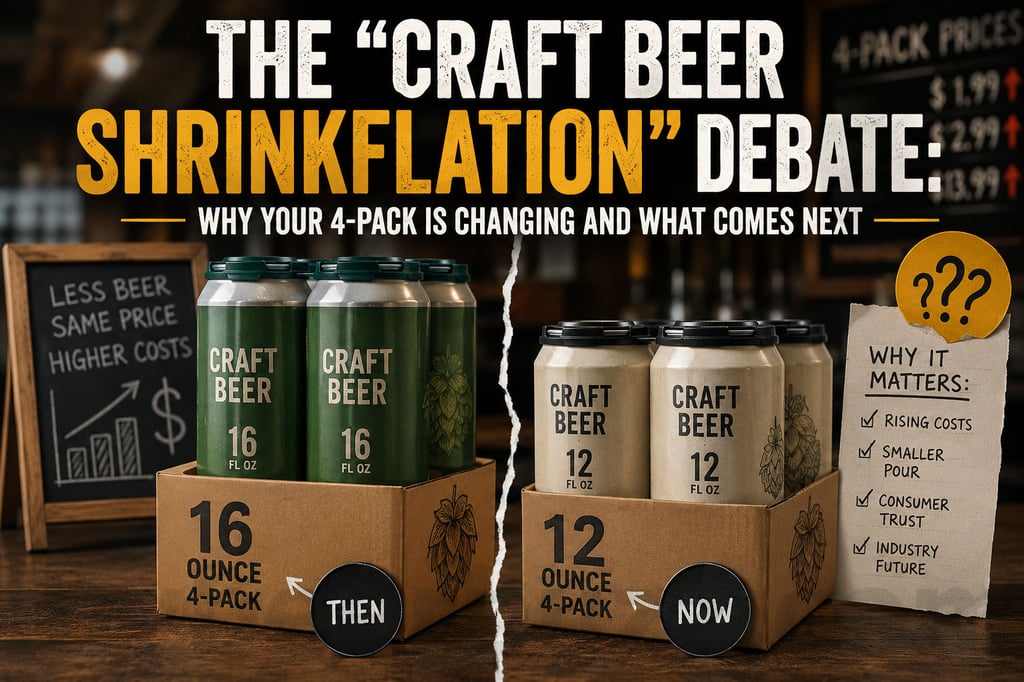
The “Craft Beer Shrinkflation” Debate: Why Your 4-Pack is Changing and What Comes Next
 Story by:
Bil Corcoran
Story by:
Bil Corcoran
Is the Era of the ‘Craft’ 4-Pack Over? Why Breweries Are Changing Their Strategy.
Table of Contents
- Introduction: The Hangover of the Hype Cycle
- The Economics of the 12oz Can: Right-Sizing the Pour
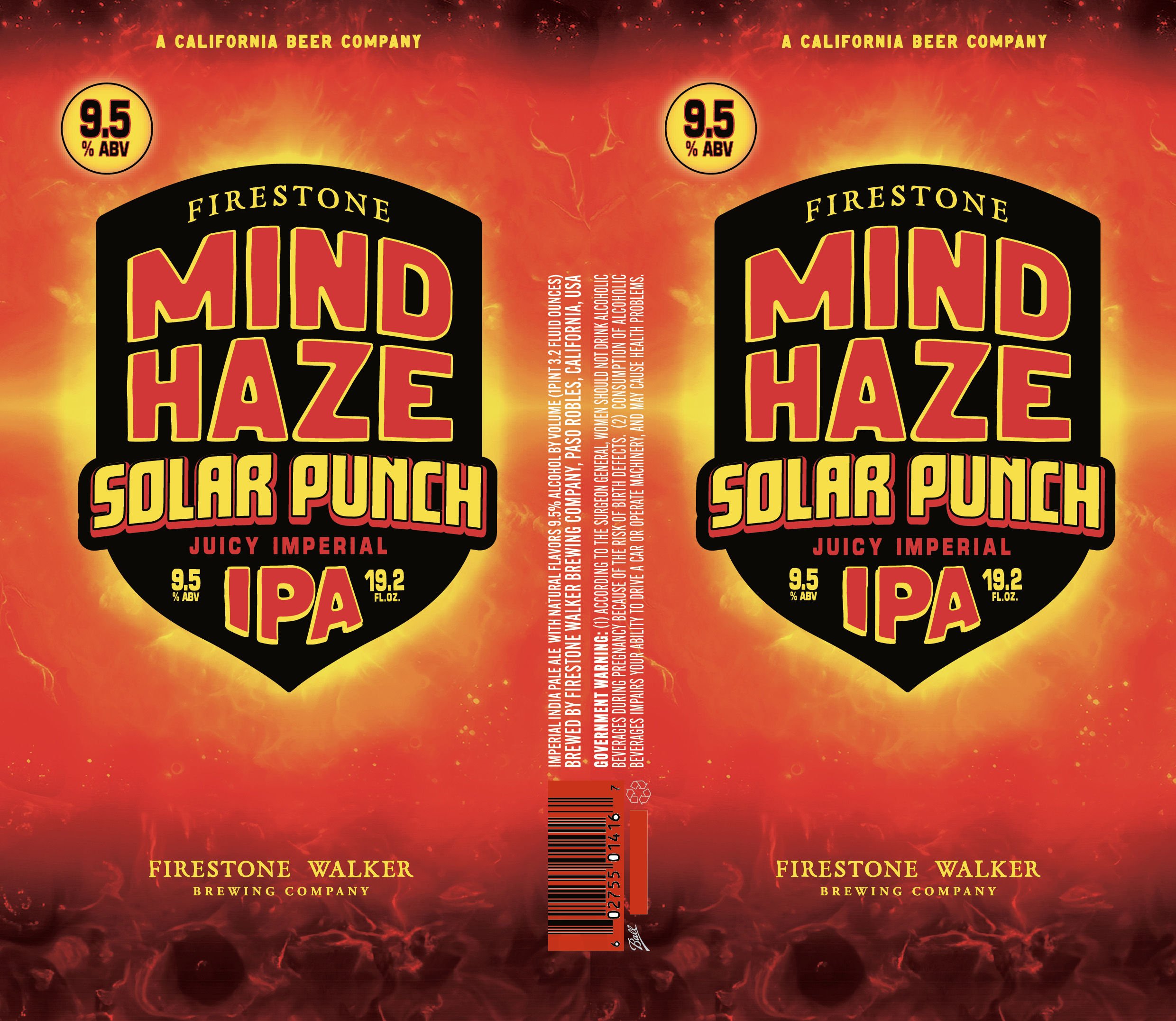
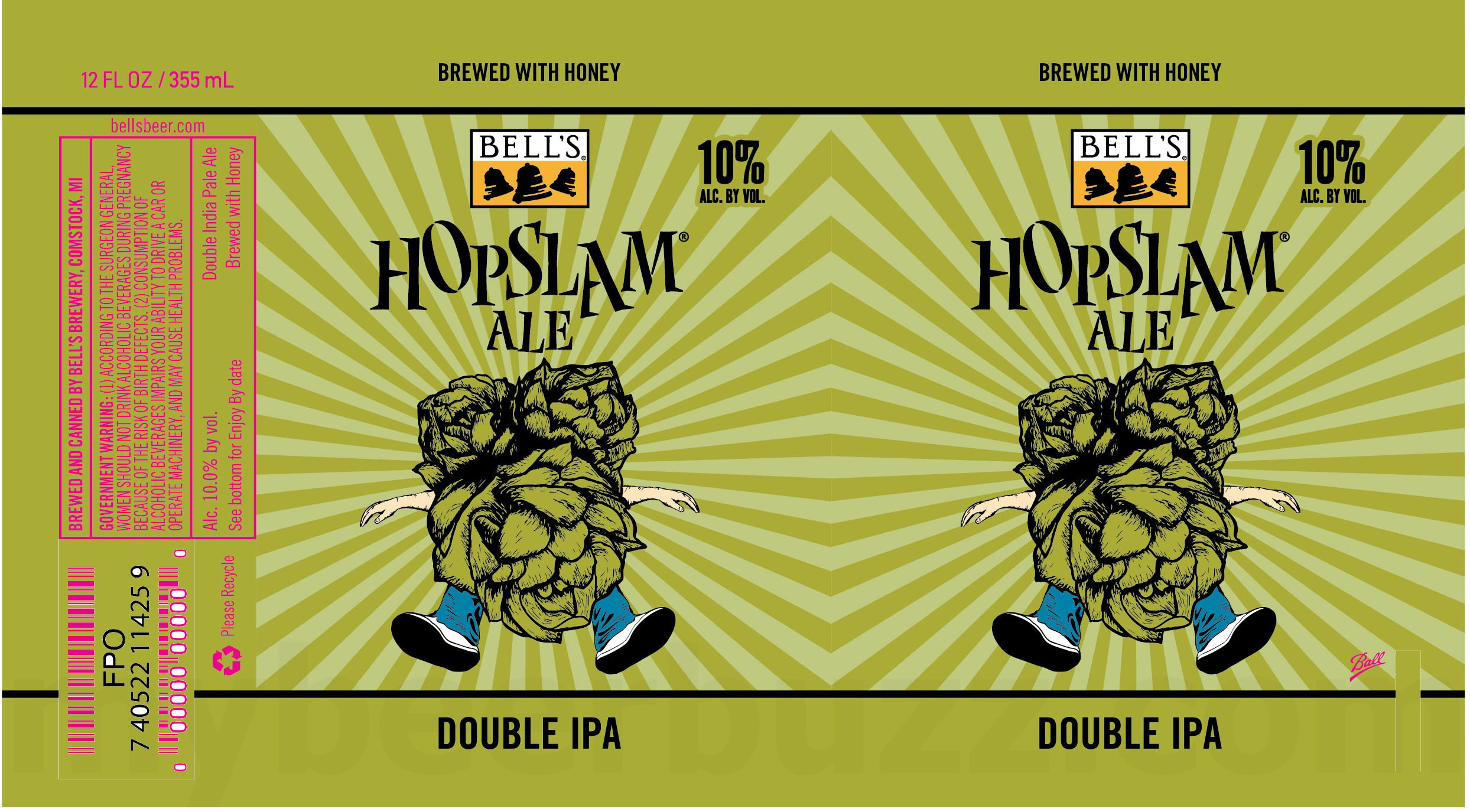
- The IPA Arms Race: Why the Hype Hits a Wall
- The Local Paradox: Sustainability vs. Scale
- Case Study: Lessons from the Regional Golden Age
- The Future of the Beer Geek: Quality Over Novelty
- Conclusion: The Maturity of the Modern Pint
- FAQ
Quick Facts: The 2026 Craft Beer Landscape
| Metric | Trend/Fact |
| Market Shift | Moving from “maximalism/hype” to “intentional execution and consistency.” |
| Packaging | Pivot toward 12oz cans for better value perception and shelf efficiency. |
| Top Styles | Resurgence of lagers, pilsners, and low-ABV/sessionable “beer-flavored beer.” |
| Industry Health | Market consolidation; closures outpaced openings in 2025-2026. |
| Consumer Vibe | Value-conscious, health-aware, and seeking community-focused “third spaces.” |
Introduction: The Hangover of the Hype Cycle
Rewind to the early 2010s: the air in the craft beer world was thick with the electric, frantic energy of the “beer geek” era. It was a time defined by the pursuit of the impossible, standing in four-hour lines for a limited-release whale, trading regional IPAs through clandestine message boards, and treating every new brewery opening like a pilgrimage. For many, that period felt like a renaissance, a golden age where innovation knew no bounds and the next “must-have” beer was always just around the corner.
Fast forward to 2026, and the mood in the taproom has shifted. The exhilaration has been replaced by a quiet, pervasive fatigue. Drinkers are no longer racing to chase down the latest triple-dry-hopped iteration; instead, they are navigating a market defined by “shrinkflation.” The craft beer landscape is feeling the squeeze of operational reality; prices continue to climb even as physical volumes in the glass seem to contract. We are seeing the “premiumization” of basic styles, where standard offerings are rebranded with higher price tags, leaving the average consumer to wonder if the quality in the can still justifies the premium at the register.
However, this transition is not the end of the craft movement; it is a long-overdue maturation. The industry is currently pivoting away from a business model built on the exhaustion of constant, unsustainable novelty toward one defined by operational necessity and fiscal reality. While this correction feels jarring, it is ultimately not a bad thing for the long-term health of our local beer communities. By trading the volatile adrenaline of the hype cycle for a focus on consistency and sustainability, breweries are laying the groundwork for a more stable, honest future.
The Economics of the 12oz Can: Right-Sizing the Pour
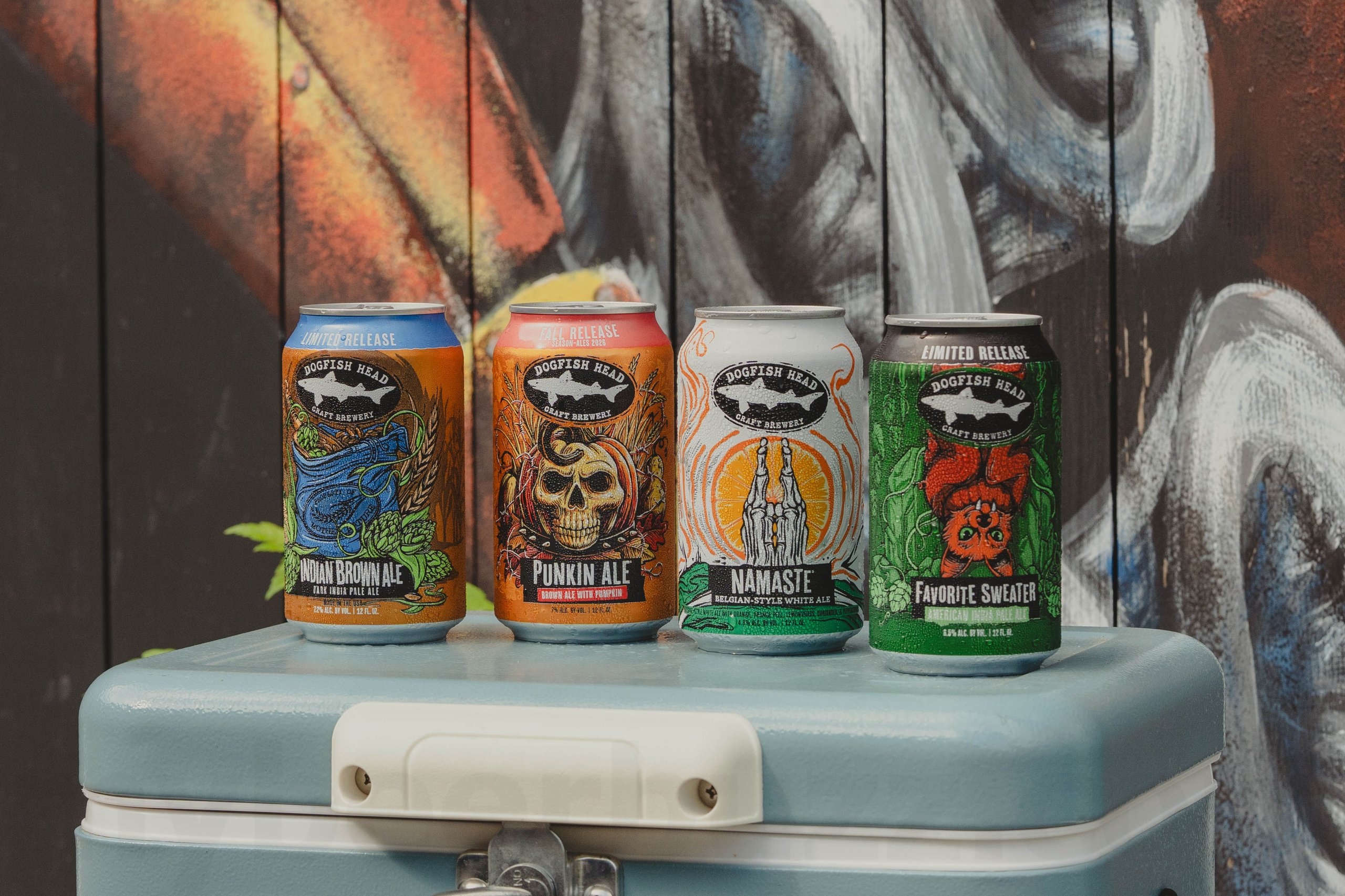
For the better part of a decade, the 16-ounce “tall boy beer” was the undisputed king of craft retail. It signaled luxury, served as a canvas for elaborate label art, and offered a volume that felt like a proper pint. But as we navigate 2026, the industry is witnessing a distinct pivot. From the independent microbrewery to regional powerhouses, the move back to the 12-ounce standard is more than a design choice; it is a calculated response to the tightening economic realities of the modern beer market.
The Math of the Shelf
The primary driver behind this shift is the need to hit specific, psychologically resonant price points. In an era where discretionary spending is increasingly scrutinized, the “sticker shock” of a 4-pack of 16-ounce cans, often retailing north of $18 or $20, has become a significant barrier to entry. By switching to a 12-ounce format, breweries can maintain their margins while lowering the total cost of the package. A 6-pack of 12-ounce cans feels like a “value” purchase, even if the price per ounce remains premium. It allows the consumer to walk away with a familiar, substantial-feeling pack of beer for under that $15-$17 threshold that often triggers hesitation.
Beyond the retail price, 12-ounce cans are a strategic asset in the battle for shelf space. As retailers and bottle shops look to maximize their inventory, the ability to fit more units into the same footprint is invaluable. When a brewery can stock 20% more product in the same linear shelf space compared to tallboys, they become a more attractive partner for distributors.
Managing “Craft Beer Pricing”
The move also reflects a broader effort to rationalize beer production costs in 2026. Aluminum tariffs and fluctuating raw material expenses have made the industry hyper-aware of waste and efficiency. The 12-ounce can is the industry standard for a reason: it minimizes “liquid waste” by offering a portion size that doesn’t overstay its welcome. As industry trends favor “sessionable” styles, lagers, pilsners, and lighter ales, the 12-ounce can provides the perfect delivery vehicle. It keeps the beer cold until the last drop, ensuring the consumer experiences the product exactly as the brewer intended.
Ultimately, the transition from 12oz vs 16oz beer cans is a move toward sustainability and accessibility. By right-sizing the pour, brewers are acknowledging that the “maximalist” era of 2015 is behind us. Today, success is found in reliability and smart economics. The shift isn’t about giving the consumer less; it’s about providing a more manageable, affordable, and consistent way to enjoy local beer in an increasingly expensive world.
The “IPA Arms Race” Hits a Wall
For over a decade, the craft beer industry was defined by an “arms race” of extremes. Brewers competed to see who could pack the most hops into a single vessel, who could push the ABV the highest, and who could concoct the most indulgent, pastry-inspired flavor profiles. It was a golden age of novelty, but in 2026, the data suggests that this “more is more” philosophy has reached a point of diminishing returns. The market is currently undergoing a “Great Re-Balancing,” where the frantic pursuit of the next “must-have” hyped beer is being sidelined by a return to fundamentals.
The Shift: Palate Fatigue and the Demand for Drinkability
We are witnessing a clear IPA popularity decline, not because the style itself is dying, but because the “extreme” iteration of it has lost its luster. Consumers who spent years chasing hazy, triple-dry-hopped, 9% ABV monsters are now experiencing significant palate fatigue. Today’s drinker is increasingly value-conscious and health-aware; they are looking for beers that fit into their lifestyle rather than beers that demand the entirety of their attention.
This shift has created a massive opening for a lager resurgence 2026. Consumers are rediscovering the beauty of “beer-flavored beer”; crisp, clean, and refreshing styles like Helles, Czech dark lagers, and traditional pilsners. Unlike the hype-driven IPAs of the past, these lagers offer high-volume drinkability. A customer might buy one hazy double IPA to “try it,” but they will buy a 6-pack of a well-executed craft lager to stock their fridge for the week. This is the difference between a “collectible” and a “daily driver,” and for breweries looking to survive in the current economic climate, the latter is infinitely more valuable.
The “Best Craft Beer Styles” for the New Era
The breweries that are winning right now are those that have audited their taplists to prioritize balance over intensity. This doesn’t mean abandoning the IPA, far from it. Instead, it means evolving the category. The successful IPA of 2026 is often a clear, bitter, West Coast-style ale or a low-ABV “session hazy” that retains tropical aromatics without the heavy, cloying finish that defined the early 2020s.
When evaluating the best craft beer styles for a modern lineup, focus on clarity and consistency. The complexity that once came from adding excessive adjuncts is now found in the brewer’s technical skill: the precision of the fermentation, the quality of the malt, and the restraint in the hop profile.
Ultimately, this correction is a sign of a maturing industry. The “IPA arms race” was a necessary stage of growth that showcased what craft beer could do, but the current era is about what craft beer should do: provide a high-quality, reliable, and enjoyable experience for the casual drinker and the connoisseur alike. Moving away from the “hype cycle” isn’t a retreat; it’s an evolution toward a more sustainable and accessible future for local beer.
The “Local” Paradox
The allure of the “local” brewery has always been the cornerstone of the craft beer movement. For years, the narrative was simple: drink local to support your community, ensure freshness, and foster unique regional flavors. But in 2026, we are facing a stark, often painful paradox. While consumers remain deeply invested in the idea of supporting local breweries, the economic reality of the regional craft beer market has shifted beneath their feet. The industry is currently trapped in a tension between the desire for small-batch intimacy and the brutal necessity of scale.
Sustainability vs. Scale
At the heart of the “local” paradox is the struggle for survival. Craft brewing is a manufacturing business masquerading as a hospitality venture. To be sustainable, a brewery needs consistent volume, reliable margins, and an efficient supply chain. However, true “small-batch” operations, those that pride themselves on hyper-local ingredients and constant, experimental rotations, often lack the economies of scale required to absorb rising labor, energy, and raw material costs.
As costs climb, breweries that remain too small to be efficient and too large to be lean are finding themselves in a “dead zone.” They lack the nimble, low-overhead nature of a tiny nano-brewery, yet they fail to capture the distribution efficiencies of larger regional players. This creates a trap where the very values that endeared them to the community, small-scale craft and innovation, become the primary drivers of their financial instability.
Understanding the “Survivor Bias”
When news hits that another favorite local spot is closing, the narrative often focuses on “bad beer” or a lack of interest. This is rarely the case. In reality, most closures are not a failure of quality, but a failure of business diversification. Many breweries that flourished in the low-interest-rate environment of the late 2010s are now struggling under the weight of accumulated pandemic-era debt and rent hikes that outpace inflation.
When asking why are craft breweries closing today, the answer frequently lies in an inability to pivot. The breweries thriving in 2026 are those that have expanded their definition of “local.” They aren’t just selling beer; they are diversifying into hybrid models, incorporating spirits, non-alcoholic options, elevated food programs, or becoming community hubs that serve more than just the “beer geek” demographic.
For the consumer, supporting local breweries now requires more than just showing up for a pint. It means recognizing that the most sustainable local businesses are those with sound underlying mechanics. The “local” label is no longer a free pass; it is a brand promise that must be backed by a resilient, diversified business model. The era of the “hype-only” brewery is over. The survivors of this “great reset” will be the ones that master the art of being both intensely local in spirit and professionally disciplined in their operations, ensuring that the taproom remains a vibrant, permanent fixture in the community.
Case Study: The “Golden Age” vs. Modern Efficiency
To understand where craft beer is heading in 2026, we often look to the future of technology and logistics. However, the most potent blueprint for long-term viability might actually be found in our past.
The Regional Hubs of Yesteryear
The modern craft movement has spent the last decade acting like a high-speed experimental lab. We have been so focused on “chasing the dragon” the next viral IPA, the most exclusive barrel-aged release, the “whaliest” beer on the market, that we have often neglected the slow, steady work of becoming a community staple. We treated the brewery like a hype-machine rather than a neighborhood institution.
The Lesson: Consistency as a Community Bond
What can today’s breweries learn from this? It comes down to the difference between novelty and utility.
Modern efficiency isn’t just about cutting costs or switching to 12-ounce cans; it is about building a business that can be there for the long haul. The breweries currently succeeding in Pennsylvania, and across the nation, are those that have stopped trying to win the “hype game” and started trying to win the “trust game.” They are becoming the new town squares. They are investing in high-quality, reliable lagers and ales that you can count on finding on tap every single time you walk through the door.
In the end, chasing the dragon of infinite novelty is exhausting for both the brewer and the consumer. By looking back at the regional giants that defined our brewing history, we see a clear path forward: build a space that offers comfort, consistency, and a sense of place. The future of craft beer doesn’t belong to the loudest hype machine; it belongs to the brewery that becomes a part of the fabric of its own community. When you stop chasing the next trend, you finally have the time to build a legacy.
The Future of the “Beer Geek”
The “Beer Geek” of 2026 is a fundamentally different species than their counterpart from a decade ago. If the mid-2010s were defined by the “collector”, the person who spent Saturday mornings in line for a bottle release, obsessively tracked trade values, and treated their cellar like an investment portfolio, the modern drinker is defined by the “integrator.”
The shift is subtle but profound. Today’s enthusiast isn’t looking for a trophy to display on a shelf; they are looking for a reliable, high-quality beverage that enhances the moments they already value. Whether it’s a crisp lager to pair with a backyard dinner, or a balanced ale to share with friends at a local community event, the future of the hobby is about lifestyle integration. Beer is transitioning from a high-stakes, commodity-driven pursuit back to its historical roots: a simple, communal pleasure that accompanies a well-lived life.
Defining Value in a Mature Market
As the novelty of the “extreme” era fades, the consumer’s definition of value is sharpening. Getting the most for your dollar no longer means hunting for the highest hop density or the most obscure adjuncts. Instead, quality-conscious drinkers are looking for three key markers:
- Consistency: In an industry that once celebrated “batch-to-batch variation” as a quirky charm, true quality is now measured by the brewer’s ability to hit the same standard every single time. If you find a beer you love, you should be able to trust that it will taste the same in August as it did in January.
- Transparency in Ownership: Modern drinkers are more curious than ever about who actually owns the brand in their hand. As the market consolidates and “big beer” acquisitions become more common, consumers are increasingly choosing to support independently owned breweries. Knowing that your dollars are staying within your community is now a major part of the overall value proposition.
- Community Engagement: The final hallmark of a “quality” brewery is its commitment to its physical space. The best breweries in 2026 act as anchors for their neighborhoods. They are places that foster genuine human connection rather than just “transactional consumption.”
For the evolving “beer geek,” the future isn’t found in a digital trading forum, it’s found at the local barstool. By prioritizing consistency, supporting transparency, and choosing community-focused brands, you ensure that the craft industry remains a vibrant, healthy, and accessible part of your lifestyle for years to come.
Conclusion: The Maturity of the Modern Pint
The narrative that “craft beer is dying” has become a fixture of industry headlines, but it fundamentally misreads the current landscape. We are not witnessing the death of a movement; we are witnessing its coming-of-age. The frantic, hype-driven phase of the last decade was a necessary laboratory, pushing the boundaries of what beer could be. However, the market of 2026 demands a pivot toward stability, fiscal responsibility, and, above all, the pursuit of “honest beer.”
This maturation is a win for the consumer. As breweries move away from the unsustainable “arms race” of constant novelty and high-ABV extremes, they are doubling down on quality, consistency, and local sustainability. We are returning to the core tenets of the craft: well-crafted lagers, sessionable ales, and taprooms that function as the bedrock of their communities. The goal is no longer to chase a fleeting trend, but to refine the classics until they are perfect.
The future of craft beer is bright, but it looks different than it did in 2015. It is leaner, more resilient, and deeply rooted in the neighborhoods it serves. The breweries that thrive will be those that have stopped trying to impress the “geek” in every corner of the country and started trying to serve the neighbor in the next seat over. By prioritizing transparent ownership and reliable excellence, the industry is securing its place as a permanent, essential pillar of our culture.
Join the Conversation
The craft landscape is shifting under our feet, and I want to hear your perspective from the taproom. Has your local favorite recently swapped their 16oz cans for a 6-pack of 12oz bottles? Are you finding yourself reaching for a crisp, reliable lager, or are you still searching for that next “white whale” IPA? Are you sticking with the hype, or going back to basics? Let’s talk in the comments.
Frequently Asked Questions (FAQ)
Q: Is craft beer actually “dying” in 2026?
A: No. While the industry is experiencing a period of contraction, with more brewery closures than openings, it is undergoing a maturation process. The “hype-only” business model of the 2010s is fading, replaced by a focus on sustainable, high-quality, and community-integrated brewing.
Q: Why are breweries switching back to 12oz cans from the popular 16oz tallboys?
A: It’s primarily an economic and psychological shift. 12oz cans allow breweries to hit “magic” price points (like sub-$15) that feel more affordable to inflation-weary consumers. They also provide better shelf-space efficiency for retailers and ensure the beer stays cold until the final sip.
Q: Why are so many established breweries closing?
A: Most closures are driven by a mix of market saturation, debt accumulation from the pandemic era, and rising operational costs. Many breweries that scaled up to chase the “IPA hype” now lack the business diversification needed to survive when consumer habits shift toward lighter, more affordable, and more sessionable styles.
Q: What is the “IPA Arms Race,” and why is it ending?
A: It was a decade-long competition to produce increasingly extreme beers (higher ABV, more hops, more adjuncts). It’s ending because of “palate fatigue.” Today’s drinkers are prioritizing drinkability and moderation, leading to a massive resurgence in crisp, classic styles like lagers and pilsners.
Q: What should I look for to ensure my local brewery is “quality-focused”?
A: Look for consistency (does their flagship beer taste the same every time?), transparency (are they independent and open about their business?), and community engagement (do they treat their taproom as a local anchor rather than just a retail counter?).
Q: How can I support local beer in a contracting market?
A: Support breweries that offer more than just hype-driven limited releases. Visit your local taproom to enjoy the “vibe” and community space, and prioritize purchasing from independent breweries that have diversified their offerings (e.g., great food programs or varied, sessionable beer lists).
zzubreebym



Comments 0
No Readers' Pick yet.