





The Chemistry of Beer Flavor: How Malt, Hops, Yeast, and Water Interact to Create Unique Profiles
 Story by:
Bil Corcoran
Story by:
Bil Corcoran
Introduction
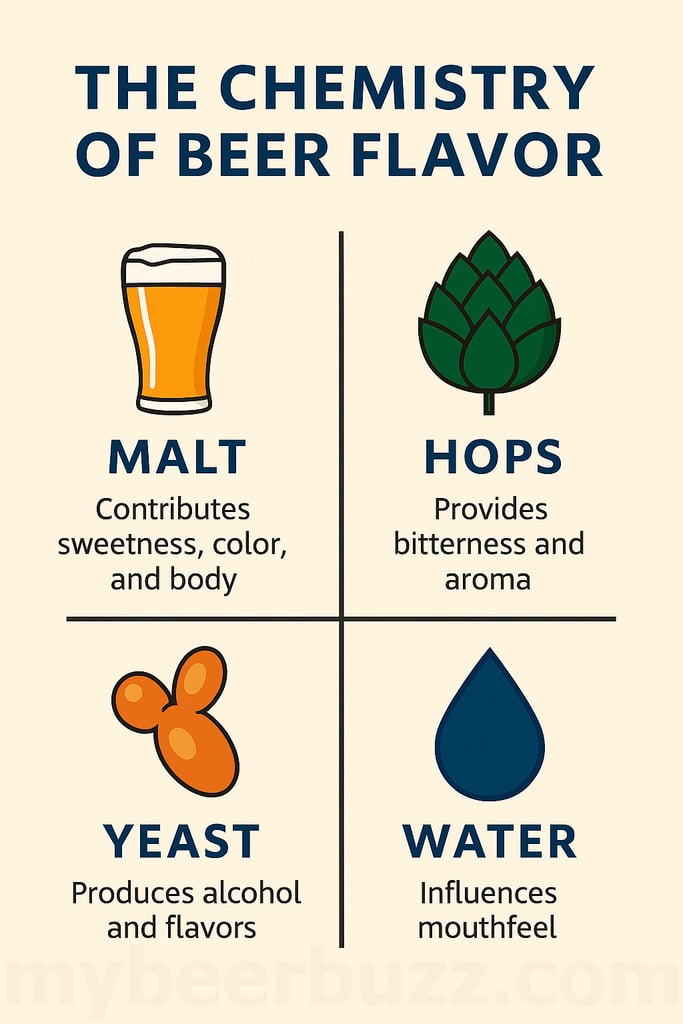
Beer may seem simple—just four ingredients: malt, hops, yeast, and water. But behind this simplicity lies a fascinating world of chemistry that shapes every sip. From crisp lagers to bold stouts, flavor is the result of complex interactions between these components. Let’s dive into the science behind beer’s taste.
Malt: The Backbone of Beer
Malt provides sweetness, color, and body. During malting, barley is soaked, germinated, and kilned, activating enzymes that convert starch into fermentable sugars. These sugars feed yeast during fermentation.
Flavor: Light malts add biscuit-like notes; roasted malts bring chocolate, coffee, and caramel tones.
Color: The Maillard reaction during kilning creates melanoidins, responsible for amber hues and rich flavors.
Hops: Aroma and Bitterness
Hops balance malt sweetness with bitterness and add aromatic complexity. Their chemistry revolves around alpha acids and essential oils.
Alpha Acids: Boiling hops converts alpha acids into iso-alpha acids, creating bitterness.
Essential Oils: Compounds like myrcene and humulene add floral, citrus, or pine aromas. Dry hopping preserves these oils for bold aroma.
Citra: Tropical fruit, citrus, and mango notes
Saaz: Herbal, earthy, and spicy—classic for lagers
Mosaic: Complex blend of berry, tropical fruit, and pine
Cascade: Floral and grapefruit—signature of American Pale Ales
Simcoe: Pine, resin, and stone fruit flavors
Bittering Addition (Early Boil): Time: 60+ minutes
Effect: Maximum bitterness, minimal aroma
Flavor Addition (Mid Boil): Time: 20–30 minutes
Effect: Balanced bitterness and hop flavor
Aroma Addition (Late Boil): Time: 5–10 minutes
Effect: Preserves essential oils for aroma
Dry Hopping (Post-Fermentation): Time: Days after fermentation
Effect: Intense hop aroma without added bitterness
Yeast: The Flavor Factory
Yeast transforms sugars into alcohol and creates flavor compounds like esters and phenols.
Ale Yeast: Produces fruity esters (banana, pear) at warmer temperatures.
Lager Yeast: Ferments cooler for clean, crisp flavors.
Wild Strains: Brettanomyces adds funky, earthy notes; mixed cultures create sour beers.
Water: The Silent Influencer
Water makes up 90–95% of beer, and its mineral content affects mash pH, hop bitterness, and mouthfeel.
Calcium: Stabilizes enzymes and clarity.
Sulfates: Enhance hop bitterness (ideal for IPAs).
Chlorides: Boost malt sweetness and fullness.
The Interplay
Each ingredient interacts with the others:
Sulfate-rich water sharpens hop bitterness in IPAs.
Dark malts lower mash pH, influencing fermentation.
Yeast metabolizes hop compounds, altering aroma perception.
IPA:
Malt: Pale base for clean sweetness
Hops: High bitterness and aroma
Yeast: Neutral ale yeast
Water: Sulfate-rich for crispness
Stout:
Malt: Dark roasted for chocolate and coffee notes
Hops: Mild bitterness
Yeast: Fruity esters from ale yeast
Water: Chloride-heavy for smooth mouthfeel
Belgian Ale:
Malt: Pilsner base with specialty malts
Hops: Moderate bitterness
Yeast: Expressive strains producing fruity esters and spicy phenols
Water: Balanced minerals for complexity
Conclusion
Beer is a symphony of chemistry. Malt provides sweetness and color, hops add bitterness and aroma, yeast creates alcohol and flavor complexity, and water ties it all together. Understanding these interactions deepens appreciation for every pint—proof that brewing is both art and science.



Comments 0
No Readers' Pick yet.