



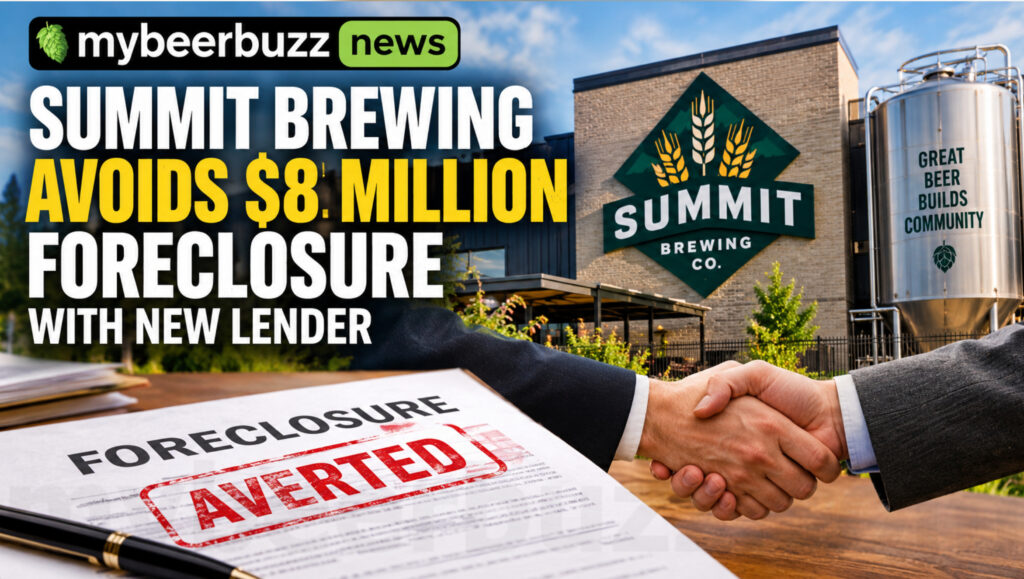
Summit Brewing Avoids $8 Million Foreclosure With New Lender
 Story by:
Bil Corcoran
Story by:
Bil Corcoran
Summit Brewing Foreclosure
Summit Brewing has found a way forward, at least for now, after the St. Paul, Minnesota, craft brewery faced a foreclosure lawsuit over more than $8 million in debt. The new lender has acquired the loans previously held by BMO Bank, giving Summit an opportunity to stabilize its finances, keep brewing beer and work toward a longer-term recovery. The announcement, made October 15, 2026, is welcome news for a brewery that has been part of Minnesota’s craft beer identity since 1986. But getting out from under the immediate Summit Brewing foreclosure threat is one thing, and building a sustainable business in today’s beer market is another.
Introduction Summit Brewing Foreclosure
For a few weeks, the future of Summit Brewing looked considerably less certain than the future of its familiar Extra Pale Ale. The company’s financial troubles had moved from private negotiations into a public court dispute, raising questions about whether one of Minnesota’s established independent breweries could continue operating without a major financial intervention.
Now there is a potential way out.
Summit Brewing’s new financing arrangement changes the immediate story, although it does not mean the brewery’s financial problems have disappeared. The new lender has taken over the loans, and Summit says the plan is to recapitalize the business and support long-term growth. The lender’s identity and the specific terms of the agreement have not been publicly disclosed in the announcement.
Quick facts: Summit Brewing foreclosure update
| Detail | Information |
|---|---|
| Brewery | Summit Brewing Company |
| Location | St. Paul, Minnesota |
| Founded | 1986 |
| Previous lender | BMO Bank |
| Reported debt at issue | More than $8 million |
| New lender | Not publicly identified |
| Announcement date | October 15, 2026 |
| Immediate outcome | New financing arrangement and continued brewery operations |
| CEO and president | Brandon Bland |
| Stated objective | Recapitalization, stronger finances and long-term growth |
Summit Brewing Foreclosure gets a financial lifeline
Summit Brewing has avoided the immediate outcome that had threatened to put its brewery and business under court-appointed control. The company announced that it had reached an agreement involving BMO Bank and that a new lender had acquired its outstanding loans, opening the door to a different financial arrangement.
That matters. A brewery facing foreclosure cannot simply ignore its lenders, keep filling tanks and hope that strong customer loyalty will solve the problem. It needs working capital, a manageable debt structure and enough breathing room to keep employees paid, ingredients purchased and beer moving through distributors and retailers.
Summit now has a chance to work on those problems without the same immediate pressure from its former lender.
In its announcement, president and CEO Brandon Bland expressed gratitude to employees who continued showing up during months of uncertainty. He also thanked shareholders, distributors, retail and hospitality partners, and Summit’s loyal customers for their support.
There is relief in that message, but there is also a recognition that the work is not finished. Summit described the arrangement as a path toward a recapitalization and long-term growth strategy, with the stated goal of strengthening its balance sheet and supporting the company’s future.
How the $8 million Summit Brewing foreclosure crisis developed
The financial problems became public in September 2026, when BMO Bank filed a lawsuit seeking to recover more than $8 million from Summit Brewing. The complaint described a loan package issued in 2024 that included a $1.25 million revolving credit facility and a term loan of approximately $6.88 million.
According to the bank’s allegations, Summit missed a payment deadline at the end of 2025. The two sides then entered a forbearance period, temporarily holding off on collection efforts while Summit attempted to address its obligations. That period ran through July 31, 2026, but the dispute continued after the bank said the debt had not been resolved.
The amount at stake was not simply a routine overdue bill. BMO’s claim reportedly totaled approximately $8.22 million, including principal, interest and other fees. The bank sought a court-appointed receiver who could take control of relevant property and business assets, a step that would have placed Summit’s operations under serious pressure.
The warning signs were public. The outcome, however, was still uncertain.
In September, Summit was exploring financing options and speaking with prospective investors as the company worked to find replacement capital. The October announcement now provides a new direction, even though the precise financial terms remain private.
A new lender, but plenty of unanswered questions
The biggest immediate development is that Summit has a new financial partner. The biggest unanswered question is what that relationship actually looks like.
Summit has not identified the new lender publicly or disclosed the terms of the transaction. That means outside observers cannot yet determine the interest rate, repayment schedule, collateral arrangements or other conditions that could affect the brewery’s finances over the coming years.
A new lender can make a major difference if the arrangement gives Summit time to rebuild revenue and control expenses. Refinancing can replace an unsustainable repayment schedule with something more workable, and a recapitalization can provide a business with room to make operational changes instead of reacting to the next payment deadline.
But refinancing does not automatically make a company profitable. The brewery still needs to generate enough cash to cover its costs, service its debt and invest in its products and distribution.
Summit’s announcement should therefore be read as a meaningful reprieve, not a declaration that the financial turnaround has already been completed. The new agreement creates an opening. Summit’s management will have to use it well.
Why Summit Brewing still matters
Founded in 1986, Summit Brewing became one of Minnesota’s early craft brewing success stories. Over the decades, it built a recognizable regional identity and a place in the Twin Cities beer market, helping establish the foundation for a craft beer community that would eventually become much more crowded.
For many drinkers, Summit Extra Pale Ale is more than a name on a shelf. It is a familiar beer that has been part of local bars, restaurants, liquor stores and gatherings for years. A brewery with that kind of history has an existing customer base and regional recognition, assets that a new company entering the market would have to spend years building.
That history does not guarantee financial success, of course. Familiar brands can struggle when customers change their habits, production costs increase or newer breweries compete for the same taps and cooler space. Summit has experienced the pressures that have affected much of the broader craft beer business.
Still, keeping Summit operating matters to its employees and business partners, and to drinkers who want established Minnesota breweries to remain part of the state’s beer culture. The new financing arrangement gives that community a reason to be optimistic without requiring anyone to pretend the last few months never happened.
The bigger challenges facing craft beer
Summit’s financial troubles are also a reminder that the craft beer business has become more complicated than simply making a good IPA and finding enough places to sell it.
Breweries are dealing with crowded shelves, competition for draft lines, changing consumer preferences and rising costs for ingredients, packaging and transportation. Even recognizable regional brands have to reconsider how much beer they produce, where they sell it and which parts of the business actually make money.
Summit has also pursued contract brewing and other beverage opportunities as it worked to adapt to changing market conditions. Such arrangements can provide additional production revenue, but they can also expose a brewery to risks beyond its traditional beer portfolio. Uncertainty surrounding emerging beverage categories and changing regulations can make those decisions even more complicated.
There is no single solution for every brewery. Some will focus on their home markets, some will lean into taproom sales, and others will seek contract production or outside investment. The challenge is making sure each decision supports the financial health of the business instead of adding complexity without enough return.
For Summit Brewing, the immediate priority is likely to be a practical one: get the balance sheet under control, protect its core business and make sure the next phase of operations can support the debt and expenses that remain.
That is less glamorous than announcing a new beer. It is also what keeps a brewery alive.
What happens next for Summit Brewing?
Summit says its brewery, taproom and operations will continue as usual, and it does not anticipate changes to its supply. That is reassuring for retailers, distributors and customers who were wondering whether the foreclosure dispute might disrupt the beer they know.
The next test will be whether the new financing arrangement gives Summit enough flexibility to make lasting improvements. Management will need to balance production costs with demand, maintain relationships with distribution partners and keep its core brands relevant without chasing every new trend in the beverage business.
The company’s long history can help, but it cannot do all the work. Summit will need consistent financial discipline and a realistic plan for growth, especially in a market where a strong local reputation does not necessarily translate into the volume or margins a brewery needs.
The identity of the new lender and the terms of the agreement may eventually provide a clearer picture of how much room Summit has to maneuver. Until those details become public, the best measure of progress will be what the brewery does next and whether it can turn this reprieve into a stable operating future.
For now, Summit Brewing remains open, its beer continues to move, and the immediate foreclosure threat has eased. That is a significant change from September, when the brewery’s future was far less certain.
Related news from mybeerbuzz.com:
This latest development follows the original MyBeerBuzz article reporting that Summit Brewing foreclosure over more than $8 million in debt, a story that first put the brewery’s financial problems on the radar for many readers. Original MyBeerBuzz foreclosure coverage: Summit Brewing foreclosure news and $8 million debt report. Readers following the broader story can compare that initial report with this new-lender announcement and watch for further updates on Summit Brewing, Minnesota craft beer and the financial pressures facing established regional breweries.
Conclusion: Summit Brewing gets another chance
Summit Brewing’s new lender has given the St. Paul brewery something it badly needed: a path away from the immediate foreclosure crisis and an opportunity to work on its finances without the same public fight with BMO Bank hanging over the business.
That is good news, but it is not the finish line. The lender remains unidentified, the details of the financing have not been disclosed, and the brewery still needs to turn its recapitalization plan into results that last. The next chapter will depend on execution, not just relief.
For now, Summit Brewing has time to work. After weeks of uncertainty, that counts for a lot.
What do you think Summit Brewing should do next to protect its future? Should it focus on its established Minnesota brands, expand contract brewing, seek new investment or take another approach? Share your thoughts and join the discussion on the Summit Brewing Forclosure news.
Frequently asked questions about Summit Brewing foreclosure
Was Summit Brewing saved from foreclosure?
Summit announced on October 15, 2026, that a new lender had acquired its loans from BMO Bank and was working with the brewery on a recapitalization and long-term growth strategy. The agreement has eased the immediate Summit Brewing foreclosure threat, but it does not by itself prove that all financial problems have been resolved.
How much debt was Summit Brewing facing?
BMO Bank’s lawsuit sought to recover more than $8 million. The reported claim was approximately $8.22 million, including principal, interest and other fees.
Who is Summit Brewing’s new lender?
The brewery has not publicly identified the new lender or disclosed the specific terms of the financing arrangement.
Will Summit Brewing continue making beer?
Summit said its brewery, taproom and operations would continue as usual and that it did not anticipate supply changes.
When was Summit Brewing founded?
Summit Brewing was founded in 1986 in Minnesota and became an established name in the Twin Cities craft beer market.
Does the new financing mean Summit Brewing is financially healthy again?
Not necessarily. The agreement provides a path forward, but the long-term result depends on the financing terms, the brewery’s ability to generate cash, and its success managing expenses and competing in the changing craft beer market.



Comments 0
No Readers' Pick yet.