







Lagunitas Brewing Fermentation Tanks Implode in Petaluma
 Story by:
Bil Corcoran
Story by:
Bil Corcoran
Lagunitas Brewing Company has seen plenty of unexpected moments during its long history of brewing bold, hop-forward beer, but two massive fermentation tanks at the brewery’s Petaluma, California, facility have now provided a spectacular reminder that modern brewing involves some seriously impressive industrial equipment.
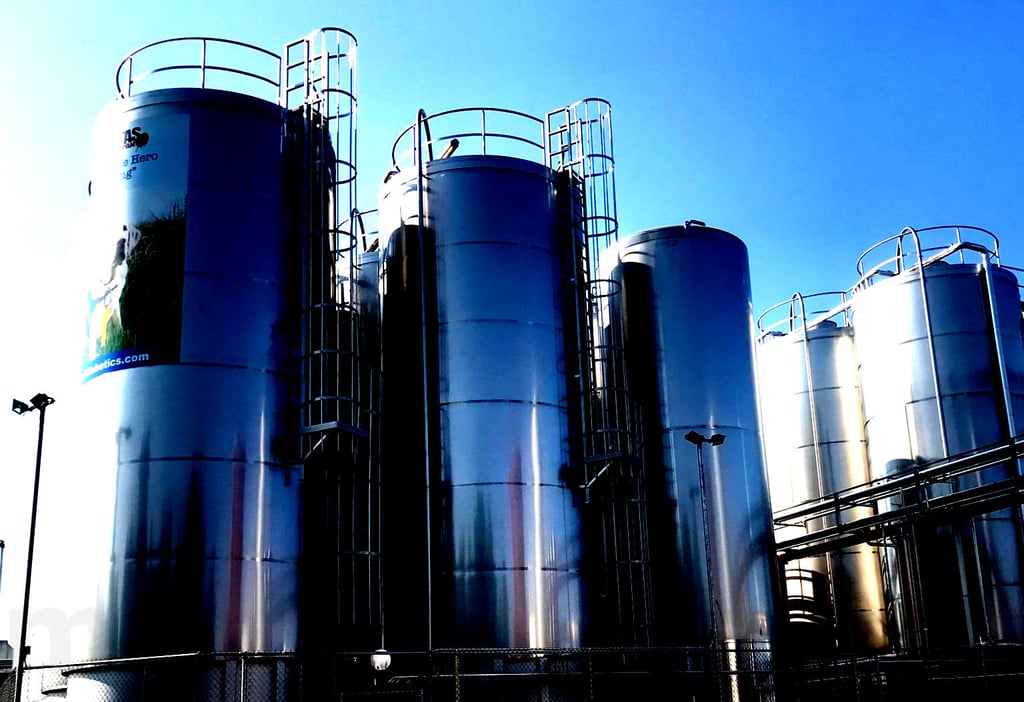
Reports emerging this week detail the June 2026 implosion of two 500-barrel fermentation tanks at Lagunitas Brewing in Petaluma, an incident that offers a fascinating look at the enormous scale of the brewery and the engineering challenges involved in handling thousands of gallons of beer. A 500-barrel fermentation tank is enormous by any ordinary standard, holding roughly 15,500 gallons based on the U.S. beer-barrel measurement.
The incident also puts the sheer size of Lagunitas Brewing’s Petaluma operation into perspective. The brewery has historically operated with large fermentation vessels capable of producing massive quantities of beer, and the Petaluma brewery remains closely associated with some of the most recognizable beers in the Lagunitas portfolio.
What Happened to the Lagunitas Fermentation Tanks?
According to the report detailing the incident, two 500-barrel fermentation tanks at Lagunitas Brewing imploded for the same reason. The tanks were designed to handle substantial internal pressures, making the fact that they collapsed inward particularly noteworthy. The tanks were apparently emptied without proper venting, causing the implosion.
An implosion is different from the type of explosion most people might imagine when they hear about a brewery tank failure. Instead of pressure inside the vessel forcing the tank outward, an implosion occurs when pressure outside the tank becomes greater than the pressure inside it, potentially causing a large vessel to collapse inward.
That distinction is particularly important with large stainless-steel fermentation tanks. These vessels are engineered primarily around their intended operating conditions, including the pressure associated with fermentation and beer production. But large tanks also have to withstand cleaning procedures, temperature changes, pressure fluctuations and other operational conditions.
The result is a dramatic demonstration of just how much engineering goes into something that, from the outside, may simply look like a giant stainless-steel tank.
Why 500-Barrel Tanks Are So Massive
Lagunitas Brewing has long operated on a scale that is considerably larger than the typical American craft brewery. In Tony Magee’s history of Lagunitas, the brewery’s production expansion included numerous 300-barrel and 500-barrel fermentation tanks, illustrating how rapidly the company grew from its small Northern California beginnings.
For perspective, one 500-barrel tank represents approximately 15,500 gallons of beer.
That is enough beer to fill approximately 124,000 16-ounce pints.
So when a 500-barrel fermentation tank is damaged, it isn’t simply a piece of equipment being taken offline. It represents a major piece of a brewery’s production infrastructure.
The fact that two tanks were involved makes the incident even more significant from a brewing-industry perspective.
Fermentation Tanks Are the Heart of a Brewery
Fermentation is one of the most important stages in beer production. After brewers produce wort in the brewhouse, yeast is added and the fermentation process transforms sugars into alcohol, carbon dioxide and numerous flavor compounds.
At a brewery the size of Lagunitas, fermentation takes place in enormous stainless-steel vessels rather than the comparatively small fermenters used by homebrewers or small brewpubs.
The size of these tanks allows Lagunitas to produce large quantities of beer efficiently while maintaining carefully controlled fermentation conditions.
Lagunitas has built its reputation around beers such as Lagunitas IPA, Hop Stoopid, A Little Sumpin’ Sumpin’, DayTime and other hop-forward releases, making fermentation capacity particularly important to the brewery’s ability to maintain its extensive portfolio. MyBeerBuzz has continued to track the brewery’s packaging and release activity, including its 2026 Sequoia West Coast IPA and Hop Stoopid updates.
The Incident Highlights Brewery Engineering
The Lagunitas fermentation tank implosion is also a reminder that brewing is much more than simply combining malt, hops, yeast and water.
Modern breweries are industrial manufacturing facilities filled with pressure vessels, pumps, heat exchangers, refrigeration systems, boilers, piping, cleaning systems and automated controls.
Every one of those systems has to work together.
Large fermentation tanks are particularly interesting because they must safely contain enormous quantities of liquid while also accommodating the pressure and temperature changes associated with brewing and fermentation.
When something goes wrong, the physical consequences can be dramatic.
Fortunately, the available reporting on the Lagunitas incident does not indicate that the story involved a beer-related consumer issue. Instead, it is primarily a remarkable piece of brewery-equipment news involving two enormous fermentation vessels at the Petaluma brewery.
What This Means for Lagunitas Brewing
The bigger question for beer drinkers will be whether the damaged fermentation tanks affect Lagunitas beer production, seasonal releases or brewery operations in Petaluma.
At this point, it would be premature to assume that the tank failures will cause widespread beer shortages or major changes to Lagunitas’ lineup. The brewery has extensive production experience and has operated multiple brewing facilities over the years.
Lagunitas also recently partnered with Pinter to bring a version of its brewing experience into the home, showing that the brand continues to explore new ways of connecting with beer drinkers.
For now, the imploded fermentation tanks are an unusual and fascinating chapter in the continuing Lagunitas Brewing story.
And for anyone who has ever looked at one of those gigantic stainless-steel tanks and wondered just how much beer is inside, this incident provides a powerful reminder: a 500-barrel fermentation tank is a massive piece of industrial brewing equipment, and keeping one operating safely is no small task.
Related news on Lagunitas Brewing from mybeerbuzz.com:
MyBeerBuzz has been following Lagunitas Brewing Company for years, documenting the Petaluma brewery’s beer releases, packaging changes, brewing innovations and occasional production challenges. Readers can revisit our coverage of Lagunitas Prepares to Launch Sequoia, a New West Coast IPA for 2026, Lagunitas Updating 2026 Hop Stoopid Stooooooopid Release, Lagunitas Teams Up with Pinter to Bring Iconic Beers to Home Brewers’ Hands, Lagunitas Brewing NOT Distributing Born Yesterday in 2025, Lagunitas Shugga’ Original Recipe Returning Nationwide, and Lagunitas NOT Releasing Willitized in 2025. For an even broader look at the brewery’s history and continuing releases, readers can also explore the Lagunitas archive on MyBeerBuzz, which includes years of coverage from the Petaluma brewery and its evolving lineup.
About Lagunitas Brewing Company:
Lagunitas Brewing Company is one of the most recognizable names in American craft beer, with roots stretching back to 1993 in Northern California. Founded by Tony Magee, Lagunitas began as a small brewing operation and eventually grew into a nationally and internationally recognized craft beer brand known for its irreverent personality, distinctive artwork, hop-forward beers and unconventional approach to brewing.
The company’s Petaluma, California, brewery became the heart of a much larger brewing operation as demand for Lagunitas beer expanded. The brewery’s growth included the addition of enormous fermentation vessels, expanded brewing capacity and eventually a second major brewing facility in Chicago. Historical accounts of the brewery’s expansion describe an operation featuring numerous 300-barrel and 500-barrel fermentation tanks, demonstrating the enormous scale Lagunitas reached during the craft beer boom.
Lagunitas is particularly famous for Lagunitas IPA, a beer that helped establish the brewery as a major force in American IPA culture. The brewery’s portfolio has also included Hop Stoopid, A Little Sumpin’ Sumpin’, Maximus, DayTime IPA, Hazy Wonder and a wide range of limited, seasonal and experimental beers.
The brand has continued to evolve as the beer industry has changed. Lagunitas has expanded beyond traditional craft beer with offerings such as IPNA, Hazy IPNA and Hoppy Refresher, while continuing to develop new hop-forward beers and limited releases. MyBeerBuzz recently reported on Lagunitas Sequoia, a new 7% ABV West Coast IPA planned for 2026, as well as the brewery’s continuing updates to established beers.
Lagunitas’ Petaluma identity remains particularly important to the brand. The brewery’s California location is closely connected to the company’s history, its brewing culture and its reputation for experimentation. Lagunitas also operates a Petaluma taproom, giving visitors an opportunity to experience the brewery and its beers at the source.
The brewery has also remained involved in brewing innovation. In 2026, Lagunitas partnered with Pinter on a project that allows home brewers to make a Pinter-crafted interpretation of a Lagunitas recipe, beginning with Lil Sumpin’ Easy.
For MyBeerBuzz readers, Lagunitas Brewing represents an especially interesting part of the American craft beer story because the brewery has experienced virtually every stage of the modern craft beer revolution—from tiny Northern California beginnings to enormous production volumes, multiple brewing facilities, national distribution, experimental beers and new approaches to reaching consumers.
The Lagunitas Brewing fermentation tank implosion is therefore more than an unusual brewery equipment story. It is another reminder of the enormous industrial scale behind a brand that began with a small brewing system and ultimately grew into one of America’s best-known craft breweries.
zzubreebym



Comments 0
No Readers' Pick yet.