





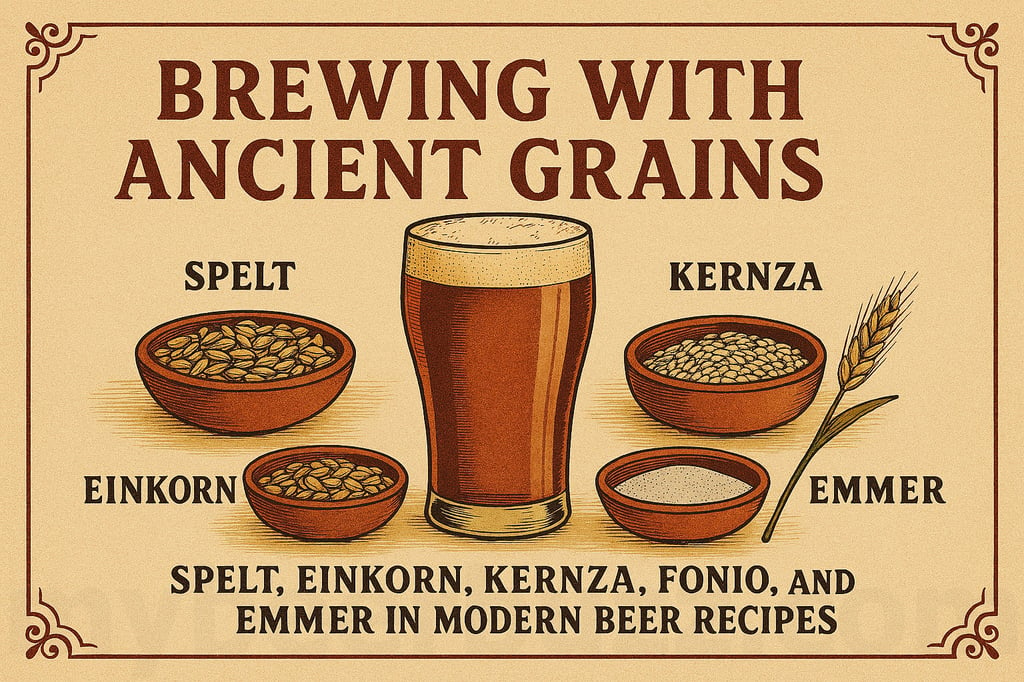
Brewing with Ancient Grains: Spelt, Einkorn, Kernza, Fonio & Emmer in Modern Beer Recipes
 Story by:
Bil Corcoran
Story by:
Bil Corcoran
Introduction
Craft beer is synonymous with innovation, and brewers today are reaching back thousands of years for inspiration. Ancient grains—spelt, einkorn, Kernza, Fonio, and emmer—are finding their way into modern beer recipes, adding complexity, sustainability, and a sense of heritage to every pint. These grains, once staples of early civilizations, are now redefining what beer can be.
Why Ancient Grains in Beer?
Traditionally, beer has relied on barley as its primary grain. But ancient grains offer unique flavors, nutritional benefits, and environmental advantages. They bring depth to malt profiles, create intriguing textures, and often resonate with consumers seeking authenticity and sustainability.
Key reasons for their resurgence:
Flavor Diversity: Nutty, earthy, and sweet notes that complement hops and yeast.
Historical Connection: Brewing with grains that date back millennia adds storytelling value.
Sustainability: Grains like Kernza reduce soil erosion and carbon footprint.
Market Differentiation: Unique ingredients help breweries stand out in a crowded market.
Meet the Grains
Spelt
Spelt, an ancient relative of wheat, has a mild sweetness and nutty character. It’s often used in farmhouse ales and saisons, where its rustic flavor shines. Spelt also contributes a creamy mouthfeel and excellent head retention.
Beer Styles:
Belgian-style saisons
Rustic farmhouse ales
Wheat beers with a twist
Einkorn
Einkorn is considered the oldest cultivated wheat, dating back over 10,000 years. Its buttery, slightly sweet flavor pairs beautifully with malt-forward beers. Einkorn’s lower gluten content can also create a softer body.
Beer Styles:
Traditional German-style ales
Mild, malt-forward lagers
Specialty heritage beers
Kernza
Kernza is a perennial grain developed from intermediate wheatgrass, making it a sustainability superstar. Its sweet, nutty flavor works well in lighter beers and experimental brews. Kernza’s perennial nature means less soil disturbance and better carbon sequestration.
Beer Styles:
Session ales
Eco-conscious craft lagers
Experimental IPAs
Fonio
Fonio, a tiny West African grain, is gluten-free and cooks quickly, making it ideal for brewing lighter, crisp beers. Its delicate, slightly earthy flavor adds subtle complexity without overpowering the base malt.
Beer Styles:
Gluten-free ales
Light, refreshing lagers
Specialty African-inspired brews
Emmer
Emmer, also known as farro, is hearty and rich in protein. It imparts a nutty, robust flavor that complements darker beers and adds chewiness to the grain bill.
Beer Styles:
Porters and stouts with depth
Amber ales with a rustic edge
Ancient-style gruits
Brewing Benefits and Challenges
Benefits:
Adds complexity to malt profile.
Appeals to health-conscious and sustainability-minded consumers.
Creates unique marketing stories.
Challenges:
Milling and mash adjustments may be needed.
Some grains have lower diastatic power, requiring enzyme supplementation.
Sourcing can be more expensive than traditional barley.
Flavor Pairings
Spelt + Noble Hops: Perfect for saisons and farmhouse ales.
Einkorn + Honey: Adds sweetness and depth to specialty beers.
Kernza + Citrus Hops: Bright, eco-friendly IPAs.
Fonio + Tropical Fruit: Light, refreshing summer beers.
Emmer + Roasted Malts: Bold stouts and porters.
Why Brewers Love Ancient Grains
Beyond flavor, these grains tell a story. They connect modern brewing to ancient traditions, appeal to adventurous drinkers, and align with sustainability goals. In a market where differentiation is key, ancient grains offer a compelling narrative and a distinctive taste experience.
Final Thoughts
The return of ancient grains in brewing is more than a trend—it’s a movement toward authenticity, sustainability, and creativity. Whether it’s a spelt saison, a Kernza lager, or a fonio-based ale, these grains invite brewers and drinkers alike to rediscover flavors that have stood the test of time.
zzubreebym




Comments 0
No Readers' Pick yet.