



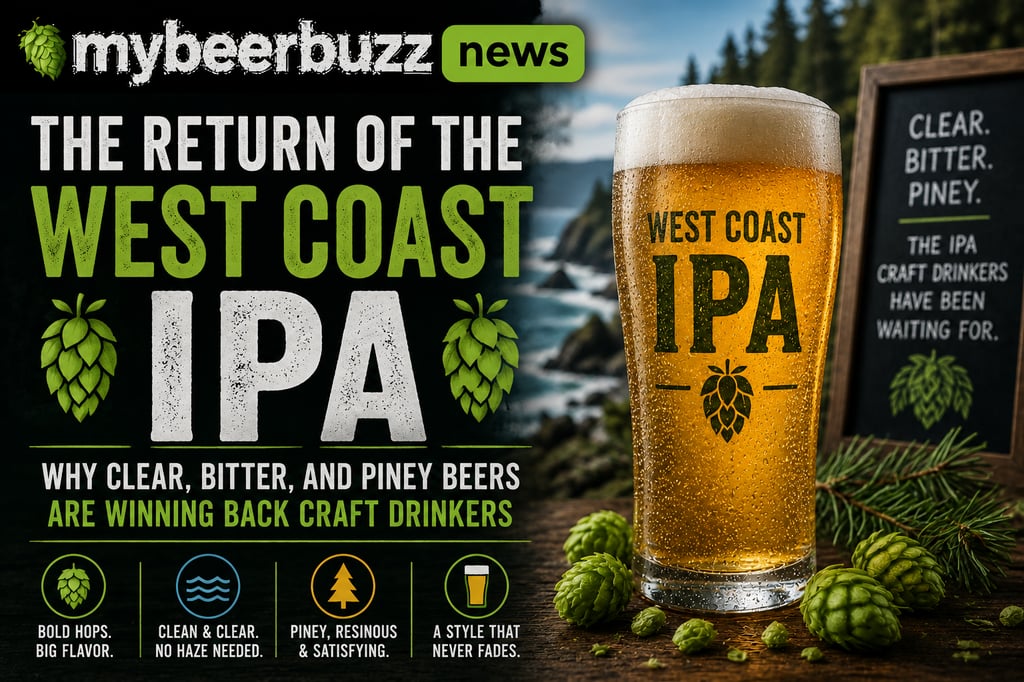
The Return of the West Coast IPA: Why Clear, Bitter, and Piney Beers Are Winning Back Craft Drinkers
 Story by:
Bil Corcoran
Story by:
Bil Corcoran
Table of Contents
- Introduction
- Quick Facts: The West Coast IPA Revival
- The Hazy Burnout: Why Drinkers Are Seeking Clarity
- Anatomy of a Modern West Coast IPA
- The Science of Bitterness: IBU’s Redemption
- Brewing Innovation: Combining Old-School Hops with Modern Techniques
- The Taproom Impact and Retail Shelf Shift
- Conclusion
- Frequently Asked Questions
Introduction
For nearly a decade, the craft beer aisle was dominated by opaque, orange-juice-colored hazy IPAs that traded bitterness for pillowy soft mouths and sweet tropical fruit profiles. While those styles undeniably revolutionized modern brewing, a fascinating counter-revolution is currently sweeping taprooms across the country. Drinkers are looking back to the style that built the craft movement in the first place, demanding bright clarity, resinous pine, and a sharp, clean bitterness that leaves the palate refreshed rather than coated. Welcome to the return of the classic West Coast IPA, reimagined, refined, and recapturing the hearts of craft enthusiasts everywhere.
Quick Facts: The West Coast IPA Revival
| Feature | Description |
| Primary Category | West Coast India Pale Ale |
| Key Characteristics | Crystal-clear pour, dry-ish finish, pronounced bitterness, resinous/pine/citrus aroma |
| Common ABV | 6.0% – 7.5% |
| Core Hops | Cascade, Centennial, Chinook, Simcoe, Columbus, Citra (used for resin/pine balance) |
| Market Driver | Hazy IPA fatigue, demand for structural balance, crispness, and drinkability |
| Significance | Re-establishes structural bitterness as a hallmark of craft brewing expertise |
The Hazy Burnout: Why Drinkers Are Seeking Clarity
The pivot back to West Coast IPAs didn’t happen in a vacuum. It is the direct result of what industry watchers call “hazy fatigue.” When New England-style IPAs first exploded, their lack of bitterness and juicy, bombastic fruit flavors were a revelation. However, as every brewery rushed to fill shelves with murky, heavily-adjuncted double and triple hazies, the market became oversaturated.
Drinkers began noticing that many hazy IPAs started tasting interchangeable, often leaving a heavy, lingering sweetness on the palate that made drinking a full four-pack an exercise in endurance. Consumers want to taste beer, not a fruit smoothie simulation. The desire for a refreshing, palate-cleansing finish has made the crisp bite of a West Coast IPA feel brand new again.
Anatomy of a Modern West Coast IPA
Today’s West Coast IPAs are not mere carbon copies of the heavy-handed, amber-tinted hop bombs of 2012. Brewers have taken the foundational philosophy of the style and refined it through modern technical advancements.
- The Visual Standard: Brilliant, sparkling clarity. A proper West Coast IPA should look like liquid gold or shimmering amber in the glass, inviting the drinker in with its transparency.
- The Malt Backbone: Clean, pale, or pilsner malt foundations that provide just enough structural support without introducing heavy caramel sweetness or cloying body.
- The Hop Profile: A heavy emphasis on classic pine, resin, grapefruit pith, and floral undertones, occasionally layered with modern tropical accents for added depth, but always anchored by a sharp, rewarding snap of bitterness on the finish.
The Science of Bitterness: IBU’s Redemption
For years, high International Bitterness Units (IBUs) were treated like a marketing badge of honor, sometimes resulting in harsh, astringent beers that alienated casual drinkers. In response, the industry swung too far in the opposite direction, eliminating bitterness almost entirely in favor of late-boil and dry-hop additions.
The modern West Coast IPA finds the golden mean. Brewers utilize advanced hop-selection techniques and precise whirlpool timing to harness clean, harmonious bitterness—typically ranging from 50 to 80+ IBUs, that stimulates the appetite rather than punishing the palate. This structural bitterness cuts right through food, making the style exceptionally versatile for taproom menus and culinary pairings.
Brewing Innovation: Combining Old-School Hops with Modern Techniques
What makes the current revival so compelling is how contemporary brewers are bridging eras. Instead of relying solely on older, high-alpha varieties, many independent craft operations are pairing traditional hops like Centennial and Simcoe with newer, hyper-vibrant strains like Strata or Nelson Sauvin.
Furthermore, modern cellar practices, such as improved dissolved oxygen control and advanced filtration, ensure that these beers retain their explosive hop aromatics while achieving the crisp, shelf-stable clarity that defined the original style. It is a marriage of old-school attitude and 21st-century brewing science.
The Taproom Impact and Retail Shelf Shift
Taproom boards are telling the story loud and clear: clear IPAs are sharing equal billing with hazies once again. Beer enthusiasts walking into a taproom are actively asking bartenders for “something crisp and bitter” rather than defaulting to the sweetest, highest-ABV option on the menu.
Conclusion
The return of the West Coast IPA is a celebration of what makes craft beer enduring: a commitment to balance, clarity, and uncompromising flavor. By stepping away from the hazy craze and returning to structural bitterness and piney complexity, brewers have given enthusiasts a reason to fall in love with the IPA all over again.
Frequently Asked Questions
Q: What is the main difference between a West Coast IPA and a Hazy IPA?
A: West Coast IPAs are characterized by their brilliant clarity, dry finish, and assertive bitterness with pine and citrus notes. Hazy IPAs are opaque, feature little-to-no bitterness, and rely on heavy dry-hopping for a soft, juicy, fruit-forward profile.
Q: Are modern West Coast IPAs as bitter as the ones from 10 years ago?
A: While they still feature prominent bitterness, many modern interpretations use refined hopping techniques that provide a cleaner, smoother snap without the harsh, lingering astringency of some older styles.
Q: Do West Coast IPAs have lower calories than hazy IPAs?
A: Generally, yes. Because West Coast IPAs have lower residual sugars and a cleaner malt profile, they often tend to be slightly lighter in body and carbohydrates compared to heavy, adjunct-laden hazy IPAs.
zzubreebym



Comments 0
No Readers' Pick yet.