





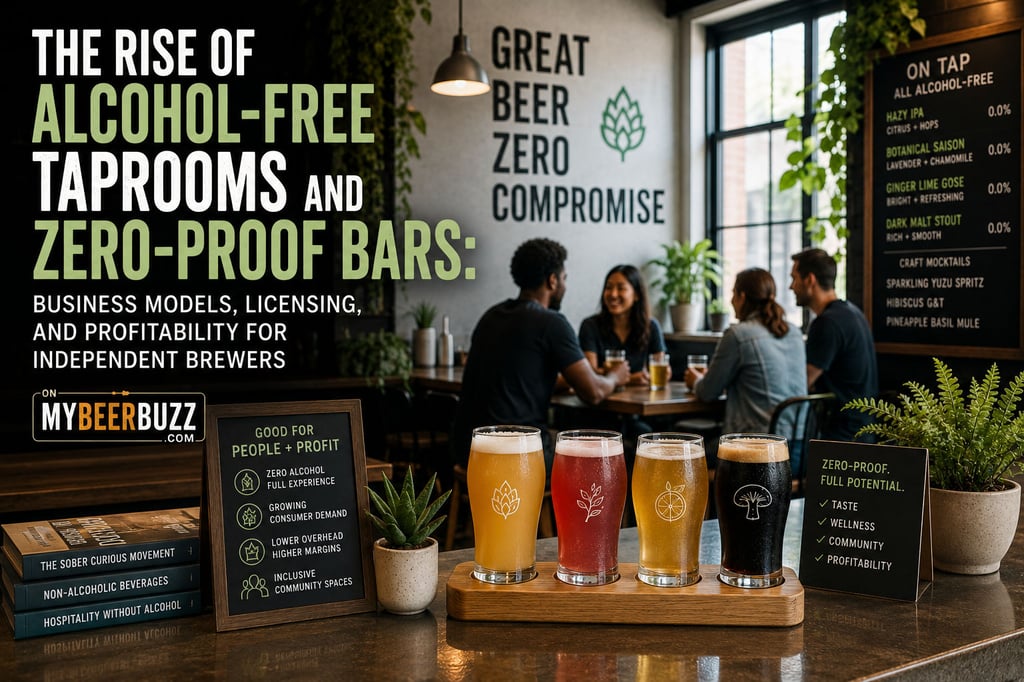
The Rise of Alcohol-Free Taprooms and Zero-Proof Bars: Business Models, Licensing, and Profitability for Independent Brewers
 Story by:
Bil Corcoran
Story by:
Bil Corcoran
Section 1: Introduction, Table of Contents, and Key Points Table
Table of Contents
- 1. Introduction, Table of Contents, and Key Points Table
- 2. Market Economics and the Zero-Proof Shift
- 3. Navigating Licensing, Distribution, and Legal Frameworks
- 4. Operational Design and Taproom Layout Strategies
- 5. Sourcing, Ingredient Innovation, and Complex Flavor Profiles
- 6. Marketing, Community Building, and Digital SEO Positioning
- 7. Future Outlook: Scaling the Zero-Proof Business Model
- 8. Frequently Asked Questions (FAQ)
Key Points Table
| Metric / Focus | Traditional Taproom Model | Zero-Proof / Hybrid Taproom Model |
| Primary Revenue Driver | High-ABV flagships, seasonal drafts | Craft non-alcoholic beer, botanical mocktails |
| Average Dwell Time | Shorter if pacing or driving | Extended due to non-impairing beverage options |
| Permitting Complexity | Standard tavern or brewery license | Broadened scope depending on local liquor control laws |
| Target Demographic | Broad craft audience, heavy beer drinkers | Gen Z, millennials, sober-curious, health-conscious |
1. Introduction
The modern craft beverage landscape is undergoing a structural transformation, driven by an unprecedented cultural shift toward mindful consumption and moderation. For decades, independent craft breweries anchored their financial viability on high-ABV flagships, limited-release imperial stouts, and bustling taprooms designed around traditional drinking rituals. However, the explosive growth of the sober-curious movement has fundamentally disrupted these legacy models. To capture shifting consumer demands and secure long-term revenue growth, progressive craft breweries are pioneering dedicated alcohol-free taprooms and zero-proof bars. This comprehensive guide explores the operational economics, licensing frameworks, and strategic design principles required for independent craft foundries to successfully launch and scale zero-proof hospitality concepts.
2: Market Economics and the Zero-Proof Shift
The commercial success of zero-proof taprooms and alcohol-free bars is anchored in a powerful demographic shift, spearheaded by Gen Z and millennial consumers who are actively reevaluating their relationship with alcohol. These younger cohorts view wellness, mental clarity, and physical health as foundational lifestyle pillars, frequently choosing to moderate their alcohol intake during social gatherings without sacrificing the ritual of a night out. Unlike older demographics who historically viewed non-alcoholic beer options as flavorless compromises, modern consumers embrace zero-proof beverages as sophisticated, premium lifestyle products. This cultural evolution has transformed non-alcoholic craft beverages from a niche novelty into one of the fastest-growing sectors in the entire beverage economy.
From a taproom economics perspective, introducing dedicated zero-proof options or standalone alcohol-free spaces unlocks high-margin revenue streams by capturing previously underserved customer segments. Traditional taprooms often experience a ceiling on per-capita spending and customer dwell times if a patron is pacing their alcohol intake or designated driving. By offering complex, beautifully crafted botanical mocktails and high-end non-alcoholic craft pours, breweries extend customer visits, boost overall spending, and invite designated drivers and wellness advocates to fully participate in the social experience. Furthermore, because premium botanical ingredients, dealcoholized craft bases, and bespoke zero-proof formulations demand elevated price points, operators can command margins that rival or exceed traditional high-ABV craft releases.
Case studies across pioneering independent craft breweries reveal that launching dedicated zero-proof spaces or hybrid taproom extensions does not cannibalize traditional beer sales. Instead, these initiatives diversify the brand’s catalog, attract new demographic groups who might otherwise bypass a brewery entirely, and cement the business as an inclusive community hub. By strategically capturing the health-conscious consumer base, independent craft foundries can future-proof their revenue models, insulate themselves against fluctuations in traditional beer consumption, and position their brand at the bleeding edge of modern hospitality innovation.
3: Navigating Licensing, Distribution, and Legal Frameworks
Navigating the federal, state, and local regulatory landscape is arguably the most intricate hurdle when launching a standalone zero-proof bar or a dedicated alcohol-free taproom extension. In the United States, beverage alcohol and non-alcoholic products are subject to multi-layered oversight by federal bodies like the Alcohol and Tobacco Tax and Trade Bureau (TTB), alongside state liquor control boards and local health departments. Depending on whether a venue intends to operate entirely free of alcohol or serve a hybrid menu of traditional craft beers alongside zero-proof options, the permitting process can vary wildly. Understanding whether a zero-proof venue can operate under a standard restaurant permit or requires a specialized beverage license is critical to avoiding costly launch delays.
Federal and state regulatory compliance also dictates strict definitions regarding ABV thresholds and product labeling. Under federal guidelines, beverages marketed as non-alcoholic must strictly maintain an alcohol-by-volume of less than 0.5%, though true alcohol-free products contain 0.0% ABV. Compliance teams must meticulously review every product formulation, ingredient deck, and consumer-facing label to ensure absolute transparency regarding alcohol content and functional ingredient dosages. Mislabeling a dealcoholized brew or failing to adhere to state-specific minor service regulations within an alcohol-free lounge can trigger severe administrative penalties, fines, or jeopardize existing manufacturing licenses.
To mitigate legal risks and streamline permitting, independent craft foundries must proactively collaborate with compliance attorneys, industry consultants, and local liquor control boards during the earliest planning phases. These regulatory specialists help navigate the nuances of municipal zoning laws, health department requirements, and state alcohol control board jurisdictions. By treating compliance as an foundational pillar of business development rather than an afterthought, independent operators can successfully establish compliant, transparent, and legally sound zero-proof hospitality venues that protect the parent brand’s long-term commercial equity.
4: Operational Design and Taproom Layout Strategies
Designing a successful zero-proof bar or hybrid alcohol-free taproom extension requires a deliberate shift in operational architecture to ensure that non-drinking patrons feel just as valued as traditional craft beer enthusiasts. The physical environment must move far beyond the standard dimly lit tavern aesthetic, leaning instead into bright, immersive, and welcoming spaces that encourage lingering, socialization, and community gathering. Operational design must seamlessly accommodate both high-volume draft service and meticulous mocktail preparation, ensuring that the bar flow remains efficient during peak weekend rushes without sacrificing the artisanal presentation expected from a modern craft beverage venue.
Draft system engineering represents one of the most critical technical challenges when integrating zero-proof options alongside traditional beer lines. Pouring dealcoholized craft beers or nitro-infused botanical mocktails requires dedicated draft lines, separate regulators, and pristine sanitation protocols to completely eliminate the risk of cross-contamination with residual alcohol or wild yeasts. Furthermore, implementing advanced nitrogen and carbon dioxide gas blending systems allows operators to achieve the creamy head and velvety mouthfeel characteristic of traditional stouts and ales, even within a completely alcohol-free matrix. Investing in dedicated, state-of-the-art draft infrastructure protects the integrity of both product lines and prevents costly off-flavor development.
Staff training and mixology education are equally vital to operational success. Bartenders and taproom staff must treat zero-proof pours, craft botanical distillates, and adaptogenic infusions with the exact same reverence, precision, and technical skill traditionally reserved for complex cocktail programs or rare barrel-aged releases. Front-of-house teams should be thoroughly educated on the sourcing, functional properties, and flavor profiles of every non-alcoholic offering, empowering them to guide curious consumers through the menu with confidence. By prioritizing thoughtful spatial design, meticulous draft engineering, and elevated staff expertise, independent operators can deliver a world-class hospitality experience that redefines what a modern taproom can achieve.
 5: Sourcing, Ingredient Innovation, and Complex Flavor Profiles
 5: Sourcing, Ingredient Innovation, and Complex Flavor Profiles
Crafting exceptional zero-proof beverages demands moving far beyond overly sweet sodas, artificial syrups, and basic fruit juices that historically dominated non-alcoholic menus. Modern wellness-focused consumers and craft beverage aficionados expect sophisticated, adult flavor profiles characterized by layered botanical complexity, balanced acidity, and pleasing bitterness. To achieve this, independent foundries are sourcing premium botanical distillates, dealcoholized craft fermentation bases, and high-grade functional extracts. Ingredients such as gentian root, wormwood, citrus peels, and aromatic spices provide the structural bite and aromatic depth necessary to replicate the sensory satisfaction of traditional alcoholic drinks without relying on ethanol.
One of the most persistent technical hurdles in zero-proof formulation is overcoming the distinct lack of body and mouthfeel that alcohol naturally provides. Ethanol contributes significant viscosity, warmth, and structural backbone to standard beer and wine matrices; removing it often leaves a beverage tasting thin, watery, or overly cloying. Master brewers and formulators solve this challenge by utilizing specialized grain bills with higher proportions of dextrin-rich malts, integrating functional adjuncts like oat or wheat proteins, and applying precise hopping techniques that impart residual mouthfeel and textural weight. Additionally, utilizing natural tannins and food-grade acids helps create a convincing palate structure that lingers pleasantly on the finish.
Maintaining a consistent, year-round supply chain for specialized agricultural botanicals and custom functional extracts requires building robust partnerships with reputable, food-safe suppliers. Unlike traditional commodity hops and macro-milled grains, boutique botanical ingredients can experience seasonal availability shifts and price volatility. Independent craft foundries must establish rigorous quality control protocols and alternative sourcing pathways to ensure that every batch of zero-proof craft beer or botanical tonic tastes identical to the last. By mastering complex flavor formulation and securing dependable ingredient supply chains, brewers can consistently deliver premium zero-proof products that command consumer loyalty and elevate the brand’s market standing.
6: Marketing, Community Building, and Digital SEO Positioning
Capturing market share in the rapidly expanding zero-proof sector requires a sophisticated digital marketing strategy coupled with robust local SEO positioning. Because health-conscious consumers, sober-curious individuals, and designated drivers frequently search for specialized venues online, independent breweries must optimize their digital footprint to capture high-intent search queries such as zero-proof bar near me, non-alcoholic taproom, and craft botanical mocktails. Implementing comprehensive on-page SEO, localized schema markup, and engaging trade blog content ensures that the brand dominates search engine results pages, driving organic web traffic directly to the physical taproom or e-commerce storefront.
Beyond digital visibility, community-building events serve as a powerful engine for foot traffic and customer retention. Zero-proof taprooms and hybrid spaces thrive by hosting inclusive, wellness-oriented programming that extends far beyond traditional weekend drinking events. Popular community initiatives include evening run clubs, mental health and mindfulness workshops, trivia nights, non-alcoholic tasting flights, and pop-up collaborations with local artisan food vendors. These curated events create a welcoming social ecosystem where patrons can connect and unwind without the pressure of alcohol consumption, transforming casual visitors into fiercely loyal brand advocates.
Finally, public relations and media outreach play a crucial role in building long-term brand equity and earning valuable high-authority backlinks. By pitching unique business model angles, sustainability initiatives, and innovative zero-proof brewing techniques to lifestyle, hospitality, and trade publications, independent foundries can secure organic media coverage. Securing features in reputable industry journals and regional lifestyle guides not only drives immediate consumer awareness but also significantly enhances the domain rating and search authority of the brewery’s digital platform, establishing the brand as an undeniable thought leader in the modern craft beverage revolution.
7: Future Outlook: Scaling the Zero-Proof Business Model
Industry analysts project that over the next five to ten years, the global non-alcoholic and zero-proof beverage sector will experience unprecedented expansion, evolving from a niche alternative into a permanent, multi-billion-dollar pillar of the mainstream hospitality industry. As demographic shifts accelerate and younger consumers increasingly prioritize holistic wellness, mindfulness, and moderation, standalone zero-proof bars and dedicated alcohol-free taproom extensions are transitioning from experimental concepts into highly lucrative, scalable business models. Independent craft breweries that successfully establish early market dominance in this space are positioning themselves at the vanguard of a profound cultural and commercial evolution.
This rapid market acceleration has not gone unnoticed by institutional investors and major beverage conglomerates. As agile independent startups and progressive taprooms prove sustained, high-margin consumer demand for sophisticated zero-proof options, macro-beverage players facing plateauing volumes in traditional alcohol sectors are expected to pursue aggressive mergers and acquisitions. Acquiring proven zero-proof pioneers offers multinational corporations an expedited pathway to capturing health-conscious Gen Z and millennial markets without needing to build authentic wellness credibility from scratch. Consequently, independent foundries that protect their proprietary formulations, build robust distribution networks, and cultivate loyal consumer bases will emerge as prime targets in an increasingly consolidating beverage market.
For independent craft brewery owners looking to future-proof their operations against shifting consumer habits and raw material volatility, the strategic imperative is clear: diversification is essential for long-term survival. Scaling a zero-proof business model requires treating alcohol-free innovation not as a passing trend, but as a permanent operational commitment. By investing in multi-unit franchising capabilities, expanding retail merchandise lines, and optimizing e-commerce direct-to-consumer funnels, independent foundries can unlock new revenue streams that insulate them from traditional market downturns. Ultimately, breweries that successfully merge uncompromised craft quality with visionary zero-proof hospitality will lead the next golden era of independent brewing and secure lasting commercial dominance.
8: Frequently Asked Questions (FAQ)
What makes zero-proof taprooms profitable for independent brewers?
Zero-proof taprooms maximize profitability by capturing high-margin sales from health-conscious consumers, extending customer dwell times, and attracting new demographic groups who might otherwise bypass traditional alcohol-focused venues.
Do standalone zero-proof bars require traditional liquor licenses?
Permitting varies by municipality and state jurisdiction; while some zero-proof lounges operate entirely under standard food and beverage or restaurant permits, hybrid models serving alcoholic craft beers alongside zero-proof options must navigate complex state liquor control board regulations.
How do brewers manage draft lines for non-alcoholic and alcoholic beers?
To prevent cross-contamination and off-flavor development, operators must install completely dedicated draft lines, separate regulators, and strict sanitation protocols specifically for dealcoholized and zero-proof beverages.
What are the projected market trends for alcohol-free beverages over the next decade?
Industry analysts project rapid, sustained market expansion as millennial and Gen Z consumers increasingly prioritize mindful moderation, physical health, and sophisticated social spaces that do not center around alcohol consumption.
zzubreebym



Comments 0
No Readers' Pick yet.