





Beyond the Bottle: Why Modern Craft Brewers Are Embracing Pasteurization
 Story by:
Bil Corcoran
Story by:
Bil Corcoran
I. Introduction
For decades, the craft beer industry has operated under a pervasive dogma: pasteurization is a “dirty word.” Within the subculture of craft enthusiasts, the terms “unpasteurized” and “live” have long served as badges of honor, signaling a product that is fresh, artisanal, and untainted by the industrial pasteurization practices of global macro-breweries. To pasteurize was to “cook” the beer, stripping it of its vibrant, volatile hop character and killing the soul of the liquid. It was a line in the sand that separated the bold, experimental independent brewers from the sterilized, soulless output of the corporate conglomerates.
But as we settle into 2026, that binary narrative is crumbling. Walk into the production facilities of some of the most celebrated, award-winning independent craft breweries today, and you will find them, quietly integrated, highly sophisticated pasteurizers humming away on the packaging line. The industry is reaching a maturity inflection point where the romanticism of the “raw” product is increasingly colliding with the harsh realities of modern distribution.
This is not a story of breweries selling out; it is a story of breweries growing up. As craft beer expands into wider distribution networks and experimental styles, like hyper-sensitive Hazy IPAs and complex, low-alcohol offerings, the need for product consistency and shelf stability has become paramount. What was once viewed as a shortcut for “big beer” to mask low-quality ingredients is now being reclaimed as a vital tool for independent brewery sustainability. Pasteurization is evolving from a symbol of compromise into a scientific necessity, ensuring that the beer reaching your glass today tastes exactly as the brewer intended, regardless of the time spent in transit. It is time to move past the stigma and examine how precision technology is actually the new frontier of craft quality.
Quick Facts: Pasteurization in Craft Beer
| Fact | Detail |
| Industry Shift | Move toward “quality-first” standards over “raw” dogma. |
| Primary Driver | Need for consistency in Hazy IPAs and N/A segments. |
| Technological Pivot | Adoption of precision flash pasteurization vs. older tunnel methods. |
| Key Benefit | Significantly increased shelf stability and reduced waste. |
| Market Reality | Independent brewers now prioritize “freshness upon arrival” over “raw” labels. |
Table of Contents
- Introduction
- The “Raw” Myth: Why We Hated Pasteurization
- The Business Case: Why 2026 is Different
- The Technology: “Flash” vs. “Tunnel”
- The “New Craft” Definition: Does Process Matter?
- Consumer Q&A: Addressing the Stigma
- Conclusion: The Future of the Taproom
- FAQ
II. The “Raw” Myth: Why We Hated Pasteurization
To understand why the modern integration of pasteurization feels like a paradigm shift, one must first appreciate the cultural weight the “unpasteurized” label once held. In the formative years of the American craft beer movement, roughly from the 1980s through the early 2010s, “craft” was defined as much by its opposition to industrial giants as by its flavor profile. At the time, the term “pasteurized” was functionally synonymous with “corporate.” It represented the massive, shelf-stable, and often monotonous yellow lagers that dominated the market, beer designed to survive a six-month stint in a hot warehouse without changing a single note of its flavor. For the early craft pioneer, pasteurization was a blunt instrument used by big business to turn beer into a commoditized, sterile product at the expense of nuance, soul, and complexity.
This anti-pasteurization stance quickly calcified into a fundamental “craft dogma.” The marketing narrative was seductive and highly effective: because the beer was unpasteurized and “live,” it was inherently fresher and more artisanal. It was implied that the liquid contained active yeast cultures and volatile hop oils that would perish if exposed to thermal processing. For the consumer, seeking out “live” beer became a proxy for quality and authenticity. It created an industry-wide standard where the fragility of a beer was treated as a feature, a testament to its purity. If a beer spoiled within a month or started to referment in the can, it wasn’t seen as a failure of packaging or quality control; it was seen as proof of its “raw” nature.
This belief system reinforced a rigid sensory expectation. Enthusiasts were trained to look for bright, explosive, and often fleeting hop aromatics that only existed in the first few weeks of a beer’s life. Anything beyond that window was often dismissed as “stale,” “muted,” or “cooked.” This fostered a consumer culture that obsessed over “canned-on” dates, local-only logistics, and the “cold chain” delivery model. To suggest that a brewer might intentionally use heat to stabilize their product was, for many, an admission of defeat, an acknowledgment that the brewery was prioritizing logistics over the liquid’s integrity.
We essentially built an entire ecosystem around the idea that the “best” beer was also the most unstable. It was a romantic, albeit technically incomplete, standard that successfully differentiated the independent brewer from the conglomerate. It gave the consumer a sense of insider knowledge: you knew to drink it fresh, and you knew not to trust the stuff on the bottom shelf. However, while this dogma helped establish the craft identity in its infancy, it ultimately created a dangerous ceiling for how far craft beer could realistically travel. By clinging to the “raw” ideal, the industry unknowingly limited its growth, setting up a binary conflict between the quality of the beer and the reality of the global supply chain, a conflict that is reaching its breaking point in 2026.
III. The Business Case: Why 2026 is Different
The romanticism of the “raw” beer era was sustainable when the craft market was hyper-local, with beer moving directly from the bright tank to a taproom keg or a nearby bottle shop shelf. However, the economic landscape of 2026 is unrecognizable from that of a decade ago. As the craft beer market has matured, the margin for error has vanished. For independent breweries, the business case for pasteurization is no longer about corporate conformity; it is about the fundamental survival of the brand in an increasingly competitive and geographically dispersed market.
The primary driver for this shift is the evolution of distribution logistics. In the past, a brewery could rely on the “freshness” of its product to sell itself within a 50-mile radius. Today, many of those same breweries are vying for shelf space in national retail chains and regional markets hundreds of miles away. Transporting delicate, unpasteurized craft beer across state lines, often through temperature-inconsistent trucking and warehouse environments, is a recipe for brand damage. When a consumer picks up a four-pack of an IPA from a beloved brand in a different state, only to find the flavor profile muted or the beer refermenting due to improper storage, they don’t blame the distributor; they blame the brewery. For a mid-sized independent brewery, the cost of a single “bad batch” report can be devastating to a hard-earned reputation.
Furthermore, the stylistic evolution of craft beer has made the “raw” approach technically unsustainable. Consider the explosion of the Hazy IPA, which continues to be a dominant force in 2026. These beers are notoriously unstable. With high levels of proteins, polyphenols, and often residual sugars, they are essentially a playground for wild yeast and spoilage bacteria. Without stabilization, these beers begin to degrade almost immediately after canning, with hop aromatics oxidizing and the beer losing its characteristic “haze” and mouthfeel. Pasteurization, when executed with precision, acts as a time-capsule, locking in the hop profile and preventing the secondary fermentation that often leads to “can-bulge” or “gushers” that plague retail shelves.
The low-alcohol (N/A) and functional beverage revolution has also forced the hand of even the most die-hard “purist” breweries. The N/A segment is the fastest-growing category in the industry, but it is also the most unforgiving from a microbiological standpoint. Because these beers often lack the alcohol content to inhibit spoilage, pasteurization is not just a quality preference; it is a safety requirement. Breweries that have invested in the infrastructure to make high-quality N/A beer have inadvertently discovered that this same pasteurization technology can be applied to their traditional beer portfolio.
Finally, we must address the issue of waste. Dumping beer is the single greatest expense for a brewery. In an era where ingredients, aluminum, and energy costs are at record highs, the environmental and financial cost of throwing away thousands of gallons of spoiled product is antithetical to the modern brewery’s mission. Pasteurization allows breweries to extend their shelf-life from a few weeks to several months, significantly reducing waste and allowing for more efficient inventory management. In 2026, the independent brewer who chooses not to stabilize is not necessarily the “truer” artist; they are often the one operating with a higher risk of financial volatility. The business case is clear: stability is the bedrock upon which long-term independent success is built.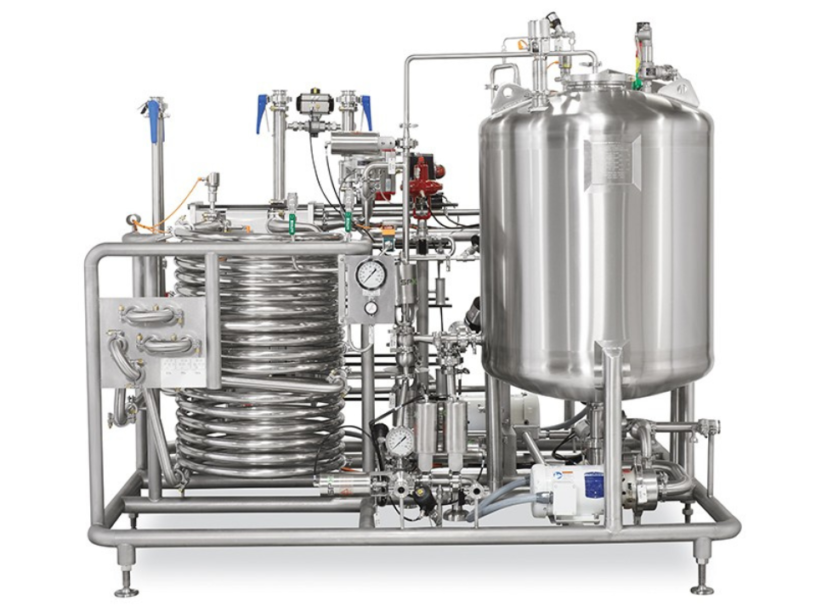
IV. The Technology: “Flash” vs. “Tunnel”
To move beyond the stigma of “cooked” beer, one must understand that not all thermal processing is created equal. The industry-wide fear of pasteurization largely stems from the legacy of “tunnel pasteurization,” a method historically favored by mass-market brewers. In a tunnel pasteurizer, the entire filled, capped bottle or can travels slowly through a literal tunnel, where it is sprayed with progressively hotter water until the liquid inside reaches the target temperature. It stays there for an extended duration before being cooled down. Because the beer remains at high temperatures for a prolonged period, it can indeed suffer from “thermal abuse,” leading to the oxidized, cardboard-like notes that purists have rightfully criticized for years.
However, the technology available to the independent brewer in 2026 is vastly more sophisticated. The current gold standard for craft is “Flash Pasteurization,” or High-Temperature Short-Time (HTST) pasteurization. Unlike the tunnel method, flash pasteurization occurs before the beer is packaged. The beer is rapidly heated to a precise temperature, typically between 160°F and 172°F, held for a matter of seconds, and then instantly cooled via a heat exchanger before being piped to the canning line.
The technical brilliance of flash pasteurization lies in this brevity. By minimizing the time the beer spends at elevated temperatures, the system achieves the desired “Pasteurization Units” (PUs) required to neutralize spoilage organisms and stabilize yeast, while sparing the delicate volatile compounds that give modern craft beer its signature aroma. Essentially, the beer is “in and out” of the heat so quickly that it never has the chance to develop those “cooked” characteristics associated with the older, slower tunnel method.
This precision is further enhanced by modern automation. In 2026, many mid-sized independent breweries are utilizing skid-mounted flash pasteurization units integrated with real-time sensors. These systems monitor flow rates and temperatures with surgical accuracy, adjusting in milliseconds to ensure that the beer’s sensory profile, from the citrus punch of a West Coast IPA to the subtle malt profile of a crisp lager, remains uncompromised.
Furthermore, these systems are often closed-loop, meaning they are incredibly energy-efficient. They capture and reuse heat, aligning with the sustainability goals of independent craft breweries that are looking to reduce their carbon footprint. When a brewery adopts flash pasteurization, they aren’t just protecting their product; they are optimizing their entire production cycle.
For the skeptical craft enthusiast, the distinction is vital. It is a mistake to conflate the slow, harsh thermal shock of tunnel systems with the rapid, surgical precision of flash technology. As more independent brewers adopt these high-efficiency systems, the “cooked” beer narrative is rapidly becoming a relic of the past. The technology has evolved to a point where the only thing being “killed” during the process is the risk of spoilage, leaving the craft, the character, and the quality of the beer exactly where the brewer intended them to be.
V. The “New Craft” Definition: Does Process Matter?
As we navigate the second half of 2026, the industry is grappling with a profound identity crisis. For decades, the “craft” definition was tied to a restrictive checklist: independent, small, traditional. If you moved toward industrial efficiency, you were sliding toward “macro.” But as we have seen through the lens of pasteurization, this definition of “craft” as an adherence to primitive processes is increasingly obsolete. We are witnessing a transition where the definition of “craft” is shifting from how the beer is made to why and for whom it is made.
The “New Craft” is defined by intent. It is the marriage of artisanal creativity with professional-grade execution. In this new era, the most “craft” thing a brewer can do is ensure that their vision reaches the consumer exactly as it was conceived in the brewhouse. If a brewer spends weeks sourcing rare hops, dialing in a water profile, and meticulously managing a fermentation schedule, it is actually an anti-craft act to let that product degrade on a shelf due to poor stability. By this metric, implementing precision technology like flash pasteurization is not a betrayal of the craft ethos; it is the ultimate expression of respect for the consumer and the liquid itself.
This shift mirrors other artisanal industries. Take the specialty coffee world or high-end craft chocolate: both industries have moved toward rigorous, science-backed processing methods to preserve the integrity of their raw materials. No coffee enthusiast argues that a bean is “less artisanal” because it was dried using modern, temperature-controlled equipment rather than being left in an open field to chance. Similarly, craft brewers are realizing that relying on refrigeration alone to prevent spoilage is a fragile strategy that punishes the drinker who happens to pick up a slightly older can.
Furthermore, we are seeing the rise of the “Quality-First” independent. These are breweries that have moved beyond the “hype” model, where beer is sold based on scarcity and social media buzz, toward a “consistency” model. They understand that in a market saturated with options, a brewery’s greatest asset is its reputation for reliability. When a consumer trusts that your Hazy IPA will taste vibrant and fresh regardless of whether they buy it at a local taproom or a retail store three states away, you have built a brand that can survive in the long term. This consistency is the new hallmark of the independent operator.
It is also worth noting that the “Big Beer” bogeyman has changed. The lines have blurred significantly through acquisitions and partnerships, but the true spirit of craft remains in the autonomy of the brewer. A brewery that uses flash pasteurization to maintain their brand’s standard while remaining fiercely independent is arguably more “craft” than a brewery that refuses to modernize and eventually produces inconsistent, flawed product due to outdated methods.
Ultimately, process matters, but not in the way the early 2010s purists thought. It is not about avoiding technology; it is about mastering it. The “New Craft” definition accepts that science is a tool, not an adversary. By embracing stability, independent brewers are liberating themselves from the tyranny of the “fresh-or-dump” cycle. They are moving into a future where the definition of craft is broad enough to encompass both the raw, experimental spirit of the early movement and the professional, sustainable, and high-quality standards that the modern drinker demands. We are moving toward a landscape where the beer that makes it into your glass is defined by the brewer’s ambition, not by the limitations of their packaging line. That, in its own right, is a significant evolution for the better.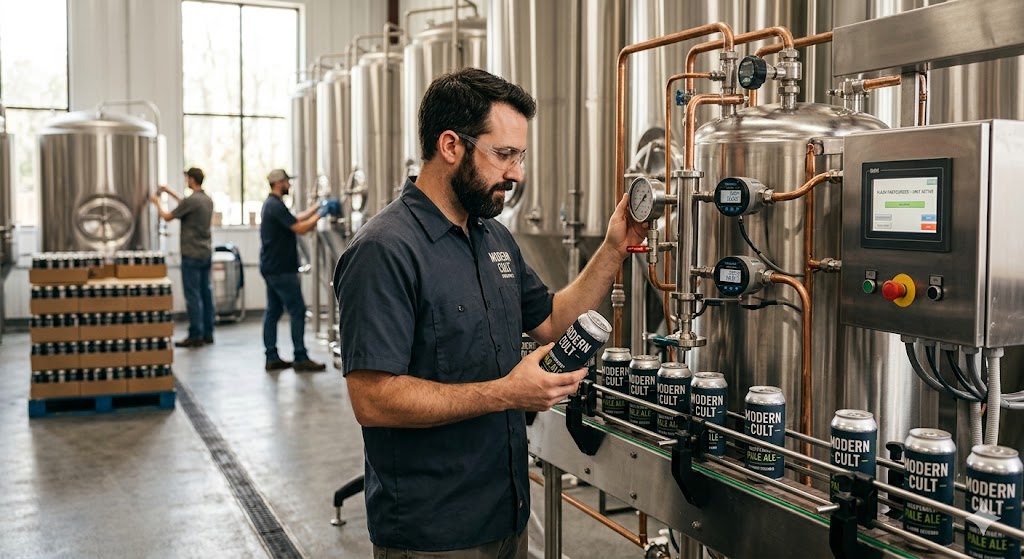
VI. Consumer Q&A: Addressing the Stigma
The transition to pasteurized craft beer is often met with pushback from the most vocal segment of the fanbase. Here, we address the most common misconceptions head-on.
“Will I be able to taste the difference?” The short answer is no, at least not if the brewery is using modern flash pasteurization. The “cooked” flavor profile associated with old-school, industrial tunnel pasteurization is largely a result of the beer sitting in a hot tunnel for minutes at a time. Flash pasteurization, however, is a matter of seconds. When done correctly, the beer undergoes zero perceptible change in flavor, mouthfeel, or aroma. In blind taste tests, even seasoned cicerones often struggle to distinguish between a fresh, unpasteurized sample and a properly flash-pasteurized one.
“Isn’t the ‘live’ yeast part of the craft experience?” While “live” beer has its place, particularly in bottle-conditioned Saisons or traditional ales, the vast majority of modern craft beer styles, such as IPAs, are not intended to have active yeast in the package. In fact, residual yeast in an IPA is often a sign of poor filtration or stabilization, leading to unwanted refermentation and flavor instability. For the majority of today’s popular styles, a “clean” beer is a better beer. Pasteurization simply ensures that the product remains in that “clean” state for as long as possible.
“Why should I pay more for ‘processed’ beer?” You aren’t paying for “processing”; you are paying for reliability. Think of it as an insurance policy. When you buy a four-pack, you want to be certain that the beer will taste as delicious on day 60 as it did on day 1. Pasteurization minimizes the risk of buying a spoiled product, ultimately giving you better value for your money. It’s the difference between buying a carton of fresh produce that rots in two days and a premium, high-quality product that retains its integrity until you’re actually ready to enjoy it.
VII. Conclusion: The Future of the Taproom
The debate over pasteurization is, at its heart, a growing pain. As the craft beer industry matures, it must reconcile its rebellious, “raw” roots with the sophisticated realities of a globalized market. By moving beyond the outdated stigma, independent brewers are not abandoning their artisanal values; they are professionalizing them. The future of the craft taproom is not found in the fragility of an unpasteurized can, but in the confidence that every pour, whether at the source or on a retail shelf, delivers the exact experience the brewer intended.
As we look toward the remainder of 2026 and beyond, we will likely see a widening divide. On one side, a niche segment will continue to prioritize “raw” and “live” products, catering to a localized, hyper-enthusiast audience. On the other, the most successful independent breweries will embrace precision stabilization as the new standard of excellence. This shift ensures that the “craft” label remains synonymous with quality, not compromise. Ultimately, the consumer is the winner. When we remove the fear of spoilage from the equation, we are left with more time to focus on what actually matters: the craft, the innovation, and the shared experience of a truly exceptional beer. The “Great Pasteurization Reset” isn’t the end of craft beer—it is the beginning of its most sustainable chapter yet.
VIII. Frequently Asked Questions: The Craft Beer Pasteurization Debate
As the craft beer industry evolves, so do the questions surrounding production methods. Here are the most common inquiries regarding the “Great Pasteurization Reset.”
Q: If a beer is pasteurized, is it still “craft”?
A: Yes. The “craft” designation is rooted in the brewery’s independence, creativity, and intent, not its packaging process. Pasteurization is a tool for quality control and consistency. A brewery that uses modern technology to ensure you get a fresh, shelf-stable product is acting in the interest of the consumer, regardless of the tools used in the brewhouse.
Q: Does pasteurization “cook” the beer and ruin the flavor?
A: This is a common misconception born from outdated “tunnel pasteurization” methods. Modern “flash pasteurization” (HTST) heats the beer for only 15–30 seconds before immediately cooling it. This process is precise enough to kill spoilage microbes without impacting the volatile hop aromas or delicate flavors that define craft beer styles.
Q: Why do Hazy IPAs specifically benefit from pasteurization?
A: Hazy IPAs are notoriously unstable. Their composition, high protein, polyphenols, and often residual sugars, makes them prone to secondary fermentation in the can. This can lead to “can bulge,” “gushers,” and rapid flavor degradation. Pasteurization acts as a safety lock, keeping the beer stable and preventing these quality issues during transit and storage.
Q: Is there a difference between “Flash” and “Tunnel” pasteurization?
A: A major one. Tunnel pasteurization involves passing filled, sealed cans through a heated water shower, which can lead to “thermal abuse” of the liquid. Flash pasteurization occurs before packaging, using a heat exchanger to rapidly heat and cool the beer in seconds. Flash pasteurization is the preferred method for craft brewers because it is faster, more energy-efficient, and far gentler on flavor compounds.
Q: Why are breweries moving away from “unpasteurized” marketing?
A: As breweries move from local, taproom-only models to regional and national distribution, “raw” beer faces significant challenges. Factors like warm warehouses and long shipping times can cause unpasteurized beer to spoil or oxidize before it reaches the customer. Breweries are prioritizing consistent quality over the marketing allure of “raw” labels to ensure their reputation remains intact across every market.
Q: Is pasteurized beer better for the environment?
A: In many ways, yes. Pasteurization drastically reduces the amount of beer discarded due to spoilage or shelf-life expiration. Reducing product waste saves the energy, water, and raw materials that go into brewing, packaging, and shipping beer that ultimately gets dumped. While the pasteurization process itself uses energy, the net reduction in wasted product often makes it a more sustainable operational choice.
zzubreebym



Comments 0
No Readers' Pick yet.