

Trending Stories
2026 Hi-Wire Brewing Hop Circus 16-oz Cans
Hi-Wire Brewing Adding Hop Circus Super Dry IPA & Peach White Tea Gose
Breweries
Boston Beer Company All-New 15% Alc. LYTT Electric Coolers
The Boston Beer Company Lights Up Ready-To-Drink Market with All-New 15% Alc. LYTT® Electric Coolers™
Beverage Makers
From the Pitch to the Backyard, Miller Time is on U.S. All Summer
Breweries
Seagram's 7 Crown Blended Whiskey Turns Up The Taste Of Summer With New Apple Pie Flavor
Seagram’s 7 Crown Blended Whiskey Turns Up The Taste Of Summer With New Apple Pie Flavor
Distilleries
Brooklyn Brewery Logo
Brooklyn Brewery Reveals Opening Plans for New Home at 1 Wythe Avenue
Breweries
2026 Pipeworks Brewing Sweet Tea Beer 16-oz Cans
Pipeworks Adding Sweet Tea Inspired Beer with Black Tea and Lemon
Breweries
Skip to content
  • Breaking
  • New Beer
  • Beer
  • Beverages
  • Spirits
  • Resources
  • Reviews
  • Blogs
  • Travel

mybeerbuzz Oval header
Contact Us
Account
mybeerbuzz Oval header
Account
  • Breaking
  • New Beer
  • Beer
  • Beverages
  • Spirits
  • Resources
  • Reviews
  • Blogs
  • Travel
Home / Blogs / Blogs / How Co₂ And Gas Quality Impact Your Draft Beer Experience
How Co₂ And Gas Quality Impact Your Draft Beer Experience

How Co₂ And Gas Quality Impact Your Draft Beer Experience
Bil Corcoran Story by: Bil Corcoran
Published: March 25, 2026
Share this article
Share options

Share This Article

Comments 0

Leave a Reply Cancel reply

Your email address will not be published. Required fields are marked *

  • All

No Readers' Pick yet.

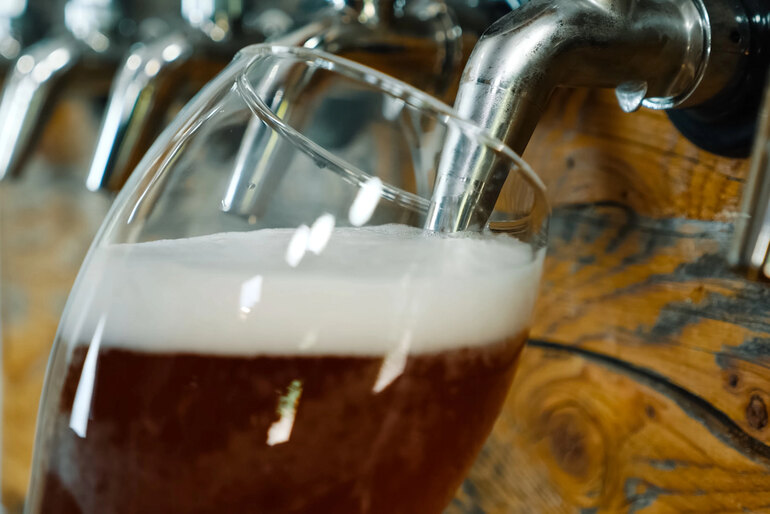
Draft systems will either fail or succeed, and the quality of the gas is the key to it. Unbalanced or impure gas may flatten the carbonation, collapse the head, and make flavors dull. The appropriate mix at the right pressure makes every pour come out with the aroma, foam, and finish that the brewer wanted. Although the centre stage is given to hops and malt, the unseen gas behind the scenes determines each sip. Independent CO 2 or mixed gases may result in gushing foams, flat pints, metallic notes, and muted aromas. Knowing about gas effects enables brewers and bar managers to troubleshoot more quickly, guard margins, and ensure beer enthusiasts return to the bar to take another drink.  


Why Co₂ Quality Matters So Much  


CO₂ does more than push beer to the tap. It affects carbonation, mouthfeel, and stability. It carries volatile aroma compounds toward the drinker’s nose and lifts flavor notes on the tongue, which means that any issue with gas quality shows up as muted hop character or a dull malt profile. Just as techniques like barrel aging build layered flavors, gas quality plays a clear role in affecting flavors, pour performance, and foam stability. Clean, dry CO₂ helps form dense, long-lasting heads because stable bubbles depend on a tight interaction between gas, protein,s and hop compounds at the surface. 

When CO₂ contains moisture, hydrocarbons,s or sulfur compounds, it tears down that structure. Bartenders see coarse foam that collapses quickly, while drinkers notice off-odors, a sharp carbonic bite,e or a strange chemical taste. Even when impurities are at parts-per-million levels, they can leave a taste that clashes with carefully designed recipes. For serious beer programs, specifying beverage-grade CO₂ and verifying purity with reputable restaurant CO₂ suppliers become basic quality-control steps.

 
Carbonation, Head Retention, and Pressure 


The average volume of CO2 used to serve most lagers and ales is about 2.4 to 2.7 volumes, whereas sparkling or specialty beers can be as high as 4.0 to 4.5 volumes. These measures determine the crispness of the beer, the vigor of the foam, and the duration of the head over the course of the Pint. Getting this correct makes the beer provide the sensory experience that the brewer wanted to provide. The same balance can be affected outside the bar as well—storing beer in a beverage cooler at stable temperatures helps maintain proper carbonation levels and prevents unwanted gas loss before serving.

The key issue in ensuring the balance between the gas and the beer is temperature and pressure. With either excessively hot CO2 or incorrect pressure, the beer can will either spurt foam up or be flat. A single swallow depends on the delicate balance between gas and liquid, and the slightest changes can make a big difference in the perception of the beer.

Overpressing, particularly when pure CO2 and cold beer are used, will push surplus gas into the liquid. The outcome may be rough and prickly rather than lively. Under-pressurizing works just the reverse; the CO2 is lost, the texture turns soft and flabby, a nd fewer bubbles find their way to the surface to bring out the aroma, making the beer less noticeable. It is achieved by professionals through painstaking levels of alignment of the volumes, so the amount of gas pressure applied varies according to the line length, elevation, and even the target carbonation level, depending on each style. Checking regulators and checking the temperatures of the keg rooms consistently helps maintain carbonation and keep all the keg pours as foamy and flavorful as possible- by doing this, the beer is shining with every sip.

 
Co₂ Vs. Beer Gas: Matching Gas To The Job 


Most direct-draw systems used to serve lagers, IPAs,s and other traditionally carbonated beers use pure CO2 as the standard. It is naturally aerated, resistant to oxygen absorption,p and generally the least expensive in the short run. Problems arise when operators attempt to resolve long-run problems by turning up the CO2 pressure, which tends to excessively carbonate the beer and always causes it to foam at the tap. Beer gas is a traditional mix of customary CO2 and nitrogen; it can be used to address situations requiring greater pushing pressure without the additional carbonation in line lengths, elevation changes, or nitro-style. 

Nitrogen does not dissolve very well in the beer, providing pressure and maintaining the CO2 at a constant level,s and minimizing wastage caused by over-foamed pints. In long-draw systems, an appropriately adjusted mixture eliminates the soda pop effect of over-carbonated pilsners, as well as the tendency of stouts to become spritzy rather than creamy. In the case of nitro offerings, increased pressure with a restrictor plate or stout faucet, plus increased nitrogen level, results in a cascading, velvety head desirable to drinkers. 


How Gas Impurities And Leaks Change Flavor  


Contamination in the beer often remains hidden. Dirty CO₂ often introduces traces of hydrogen sulfide, carbonyl sulfide,e or hydrocarbons that give the beer a sulfurous, plastic, or oily taste. These compounds may fall inside industrial tolerances, but beer lovers can detect them immediately, especially in lighter or delicately hopped styles. Leaks and backflow create another set of issues. If oxygen sneaks into the keg headspace because of faulty seals or makeshift compressed air fixes, oxidative staling happens quickly with cardboardy, sherry-like flavors. 

Compressors that feed ambient air into the kegs are often a shortcut in some venues. Using compressors usually introduces oil mist and microbially loaded air into the beer. Performing leak checks routinely, using dedicated beverage-grade cylinders, and implementing clear rules against using compressed air on beer lines help protect flavor clarity and shelf life. Proper CO2 system safety practices are critical, as gas leaks in enclosed spaces can pose serious health risks.   


Practical Checks For Brewers And Bar Managers 


Draft-focused breweries and bars gain a lot by treating gas systems with the same seriousness they give their cold box and cleaning log. Simple, repeatable checks catch many issues long before customers complain. Champion pourers often follow a pattern similar to this: 

Verify that gas sources meet beverage-grade specifications and come from traceable, reputable suppliers.
Map target carbonation levels by style and confirm that regulators and line design support those numbers. 
Track cellar temperature and adjust pressure to maintain equilibrium instead of chasing foam symptom-by-symptom.
Inspect regulators, hoses, and fittings for leaks or damage that could invite oxygen contamination or inconsistent pressure. 

Train staff to recognize foam, aroma, and mouthfeel changes as potential gas issues, not just “bad kegs.” 
Breweries that host tap rooms and bars that rotate high-end drafts frequently often document gas settings and troubleshooting steps the same way they document line cleaning. That discipline pays off in tighter sensory consistency across sessions, fewer comped pints, and a tap list that genuinely reflects what the brewers put into the tank. 

Uncontaminated CO₂, correct pressures that match beer styles and the system design, and gas blends that match the line length and nitro needs all contribute to a better-tasting beer. In the craft beer industry, these details matter just as much as hop schedules and yeast strains, because paying attention to gas quality allows the beer to taste exactly like the brewery meant it to taste.

  • ADVERTISEMENT

  • In house ad for mybeerbuzz.com
  • mybeerbuzz.com Ad2
  • On SALE Now @ Amazon
Bil Corcoran

Bil Corcoran is the founder, editor, and driving force behind MyBeerBuzz.com, one of the longest-running independent craft beer news sites in the U.S. Since launching the platform in 2007, he has published more than 77,000 original posts covering breweries, trends, industry news, and beer culture.

A true one-man operation, Bil oversees every aspect of the site—from writing and editing to design, development, and day-to-day operations. His work extends beyond digital publishing as the longtime producer, news anchor, and co-host of the WILK Friday BeerBuzz, a live weekly craft beer radio show. He is also a four-time recipient of the Pennsylvania Association of Broadcasters Excellence in Broadcasting Award for Outstanding Radio Feature.

Bil holds a Bachelor of Science in Information Technology and a Master of Science in Organizational Management. Known for his deep industry perspective and independent voice, he continues to explore evolving topics such as the rise of non-alcoholic beer, consolidation in craft brewing, and the future of the industry.

Follow Bil Corcoran on social media: Facebook, X, Threads, and Instagram.

Facebook X Instagram YouTube Linkedin Pinterest
Post Tags: #Blogs
RELATED NEWS
Online courses concept with learning tools and icons on a blue background.

Discover The Value Of Learning With Free Online Courses

Blogs
A technician wearing protective goggles and a white coat is adjusting pressure in a cylindrical beer maturation tank while standing at a modern brewing plant.

When The Tap Runs Dry: Understanding And Preventing Equipment Failure In Brewing

Blogs
A man sitting at a table drinking beer, with empty bottles, cigarettes, and a small tray of white powder nearby, illustrating alcohol and substance addiction.

Alcohol & Substance Addiction in the UK vs USA: Similarities & Differences Explored

Blogs
San Miguel Pale Pilsen bottle and glass of beer on a bar counter with warm ambient lighting.

San Miguel Pale Pilsen: The Heart Of Filipino Inuman Culture

Blogs
Man using a laptop while holding a glass of beer outdoors, reflecting online gaming comparison for beer lovers.

Is Tongits Star the Best Licensed Platform? Why GameZone Stands Out for Beer Lovers

Blogs
mbb oval logo for footer

Bringing Good Beers and Good People Together Since 2008
© 2025 All Rights Reserved.

ABOUT
.
CONTACT
.
ADVERTISING
.
SAMPLING

DEPARTMENTS
  • Breaking
  • New Beer
  • Beer
  • Beverages
  • Spirits
  • Resources
  • Reviews
  • Blogs
  • Travel
TRENDING BREWERIES
  • 10 Barrel
  • 21st Amendment
  • 3 Floyds
  • Abita
  • Alaskan
  • Alchemist
  • AleSmith
  • Allagash
  • Almanac
  • Anchor
  • Anderson Valley
  • Angel City
  • Anheuser-Busch
  • Avery
  • Bale Breaker
  • Ballast Point
  • Baxter
  • Bear Republic
  • Bell's
  • Black Raven
  • Blue Moon
  • Blue Point
  • Boulevard
  • Braxton
  • Breaker
  • Breckenridge
  • BrewDog
  • Brewery Vivant
  • Brooklyn
  • Bruery
  • Burial
  • Cantillon
  • Cape May
  • Capt Lawrence
  • Chimay
  • Chuckanut
  • Cigar City
  • Creature Comforts
  • Crooked Stave
  • Crux
  • DC Brau
  • Deschutes
  • Destihl
  • Dock St
  • Dogfish Head
  • Double Mtn
  • Drakes
  • DuClaw
  • Elysian
  • Epic
  • Evil Twin
  • Firestone Walker
  • Flying Dog
  • Founders
  • Free Will
  • Funky Buddha
  • Genesee
  • Gigantic
  • Golden Road
  • Goose Island
  • Great Divide
  • Great Lakes
  • Ground Breaker
  • Guinness
  • Harpoon
  • Heavy Seas
  • Hi-Wire
  • Hill Farmstead
  • Hoppin' Frog
  • Hopworks
  • Idle Hands
  • Indeed
  • Iron Hill
  • Ithaca
  • Jacks Abby
  • Jester King
  • Karl Strauss
  • Lagunitas
  • Lakefront
  • Lakewood
  • Lawsons
  • Left Hand
  • Leinenkugel's
  • Long Trail
  • Lost Abbey
  • Maui
  • Melvin
  • Mikkeller
  • MillerCoors
  • Modern Times
  • Monday Night
  • Narragansett
  • New Belgium
  • New Glarus
  • New Holland
  • New Realm
  • Night Shift
  • Ninkasi
  • North Coast
  • Oakshire
  • Odell
  • Off Color
  • Offshoot
  • Ommegang
  • Oskar Blues
  • Pelican
  • Perennial
  • Prairie
  • Reubens
  • Revolution
  • Rogue
  • River Horse
  • Russian River
  • Saint Arnold
  • Samuel Adams
  • Schlafly
  • Shiner
  • Sierra Nevada
  • Sixpoint
  • Ska
  • Sly Fox
  • Smuttynose
  • Southern Tier
  • Stone
  • Summit
  • Sun King
  • Surly
  • Susquehanna
  • SweetWater
  • Terrapin
  • Tired Hands
  • Toppling Goliath
  • Tröegs
  • Uinta
  • Victory
  • Wallenpaupack
  • Westbrook
  • West Sixth
  • Weyerbacher
  • Wicked Weed
  • Widmer
  • Yards
  • Yuengling
mybeerbuzz.com Black Hop Cone logo 512px x 512px
  • Write for Us
  • Advertise
  • Contact Us
  • About Us
  • Radio
  • Press Releases
  • Sampling
  • Disclaimer
  • FAQ
  • Privacy Policy
  • Copyright
  • Sitemap

Follow Us:

  • X
  • Facebook
  • Instagram
  • Pinterest
  • YouTube
  • Threads
  • Bluesky
  • Link
  • Tumblr
mbb oval logo for footer

Bringing Good Beers and Good People Together SInce 2008
© 2025 All Rights Reserved.


  • Write for Us
  • Advertise
  • About Us
  • Contact Us
  • Radio
  • Press Releases
  • Sampling
  • FAQ
  • Disclaimer
  • Copyright
  • Privacy Policy
  • Sitemap
  • Breaking
  • New Beer
  • Beer
  • Beverages
  • Spirits
  • Resources
  • Reviews
  • Blogs
  • Travel
  • 10 Barrel
  • 21st Amendment
  • 3 Floyds
  • Abita
  • Alaskan
  • Alchemist
  • AleSmith
  • Allagash
  • Almanac
  • Anchor
  • Anderson Valley
  • Angel City
  • Anheuser-Busch
  • Avery
  • Bale Breaker
  • Ballast Point
  • Baxter
  • Bear Republic
  • Bell's
  • Black Raven
  • Blue Moon
  • Blue Point
  • Boulevard
  • Braxton
  • Breaker
  • Breckenridge
  • BrewDog
  • Brewery Vivant
  • Brooklyn
  • Bruery
  • Burial
  • Cantillon
  • Cape May
  • Capt Lawrence
  • Chimay
  • Chuckanut
  • Cigar City
  • Creature Comforts
  • Crooked Stave
  • Crux
  • DC Brau
  • Deschutes
  • Destihl
  • Dock St
  • Dogfish Head
  • Double Mtn
  • Drakes
  • DuClaw
  • Elysian
  • Epic
  • Evil Twin
  • Firestone Walker
  • Flying Dog
  • Founders
  • Free Will
  • Funky Buddha
  • Genesee
  • Gigantic
  • Golden Road
  • Goose Island
  • Great Divide
  • Great Lakes
  • Ground Breaker
  • Guinness
  • Harpoon
  • Heavy Seas
  • Hi-Wire
  • Hill Farmstead
  • Hoppin' Frog
  • Hopworks
  • Idle Hands
  • Indeed
  • Iron Hill
  • Ithaca
  • Jacks Abby
  • Jester King
  • Karl Strauss
  • Lagunitas
  • Lakefront
  • Lakewood
  • Lawsons
  • Left Hand
  • Leinenkugel's
  • Long Trail
  • Lost Abbey
  • Maui
  • Melvin
  • Mikkeller
  • MillerCoors
  • Modern Times
  • Monday Night
  • Narragansett
  • New Belgium
  • New Glarus
  • New Holland
  • New Realm
  • Night Shift
  • Ninkasi
  • North Coast
  • Oakshire
  • Odell
  • Off Color
  • Offshoot
  • Ommegang
  • Oskar Blues
  • Pelican
  • Perennial
  • Prairie
  • Reubens
  • Revolution
  • River Horse
  • Rogue
  • Russian River
  • Saint Arnold
  • Samuel Adams
  • Schlafly
  • Shiner
  • Sierra Nevada
  • Sixpoint
  • Ska
  • Sly Fox
  • Smuttynose
  • Southern Tier
  • Stone
  • Summit
  • Sun King
  • Surly
  • Susquehanna
  • SweetWater
  • Terrapin
  • Tired Hands
  • Toppling Goliath
  • Tröegs
  • Uinta
  • Victory
  • Wallenpaupack
  • Westbrook
  • West Sixth
  • Weyerbacher
  • Wicked Weed
  • Widmer
  • Yards
  • Yuengling
  • Cider
  • Seltzer
  • Whiskey
  • All Reviews
Scroll to top
Search
  • Breaking
  • New Beer
  • Beer
  • Beverages
  • Spirits
  • Resources
  • Reviews
  • Blogs
  • Travel