





Boston Beer Could Face $175 Million Fine in High‑Stakes Dispute With Ardagh Metal Packaging
 Story by:
Bil Corcoran
Story by:
Bil Corcoran
UPDATE 10 June 2026: Boston Beer is appealing the decision.
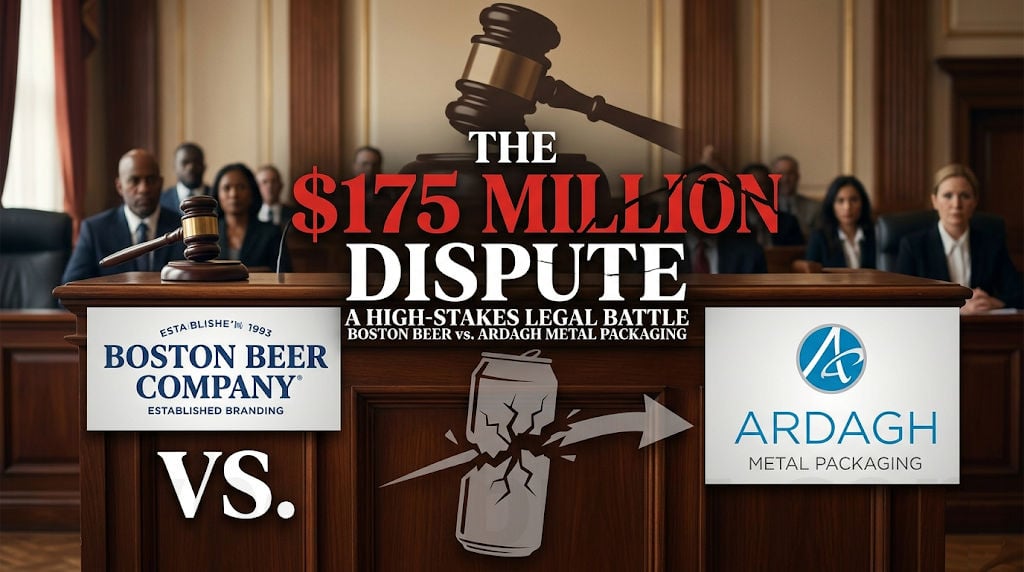
The craft beer industry is no stranger to supply‑chain tension, but the escalating legal battle between Boston Beer Company and Ardagh Metal Packaging has become one of the most closely watched disputes in the beverage world. With a potential $175 million fine looming over Boston Beer, this conflict highlights the increasingly fragile relationship between major breweries and the packaging suppliers who keep their cans on shelves. As the story develops, it’s becoming a defining moment for the intersection of craft beer production, aluminum can manufacturing, and long‑term supply contracts in a post‑pandemic marketplace.
At the center of the dispute is a complex disagreement over contractual obligations, production volumes, and the rapidly shifting economics of aluminum packaging. Boston Beer, the company behind Samuel Adams, Truly Hard Seltzer, Twisted Tea, Angry Orchard, and a wide portfolio of craft‑adjacent brands, has long relied on Ardagh Metal Packaging, one of the world’s largest aluminum can manufacturers. As demand for cans surged during the pandemic, driven by at‑home consumption, supply chain disruptions, and the explosive growth of ready‑to‑drink beverages, breweries and beverage producers locked into long‑term agreements to secure packaging capacity.
Now, those same agreements are at the heart of a dispute that could cost Boston Beer $175 million.
A Contractual Clash With Major Financial Stakes
According to filings and industry reports, Ardagh Metal Packaging alleges that Boston Beer failed to meet minimum volume commitments outlined in a multi‑year supply agreement. These types of contracts, common in the beverage industry, guarantee manufacturers a predictable production schedule while giving breweries priority access to cans. When demand for Truly Hard Seltzer and other Boston Beer brands cooled from their pandemic peak, the company reportedly reduced its can orders, triggering penalties embedded in the contract.
Ardagh claims those penalties amount to $175 million, a staggering figure even for one of the largest craft‑leaning beverage companies in the United States. Boston Beer, for its part, disputes the claim and argues that market volatility, shifting consumer preferences, and supply‑chain disruptions fundamentally changed the conditions under which the agreement was signed.
This clash between Boston Beer and Ardagh Metal Packaging underscores a broader industry challenge: how do breweries navigate long‑term packaging commitments in a market where demand can swing dramatically from year to year?
The Broader Impact on the Craft Beer and Beverage Industry
The dispute is more than a corporate disagreement, it’s a case study in the pressures facing modern beverage producers. The craft beer industry has become increasingly dependent on aluminum cans, not only for beer but for hard seltzers, RTDs, non‑alcoholic beverages, and flavored malt beverages. As brands diversify, packaging needs become more complex, and suppliers like Ardagh play an even more central role.
A fine of $175 million would represent one of the largest financial penalties ever levied in a packaging‑related dispute in the beverage sector. For Boston Beer, a company already navigating slowing hard seltzer sales and increased competition in the RTD space, the financial impact could be significant. For other breweries, large and small, the case serves as a warning about the risks of overcommitting to packaging contracts during periods of inflated demand.
Why This Matters for Craft Breweries and Beverage Producers
The Boston Beer–Ardagh conflict highlights several key issues shaping the future of beverage packaging:
1. Volatile Demand Forecasting
The pandemic created unprecedented spikes in demand for canned beverages. Many companies overestimated how long that demand would last, leading to long‑term commitments that no longer match current sales volumes.
2. Supplier Power Dynamics
Large packaging suppliers like Ardagh, Ball, and Crown hold enormous leverage. When demand is high, breweries fight for capacity. When demand drops, penalties and minimums become a financial burden.
3. Contractual Risk Exposure
The Boston Beer case is a reminder that supply agreements can carry massive financial consequences. Breweries of all sizes are now reevaluating their packaging strategies, contract structures, and forecasting models.
4. The Shift Toward Diversification
As Boston Beer expands into non‑alcoholic beverages, RTDs, and beyond, packaging flexibility becomes essential. A dispute of this scale may influence how the company approaches future packaging partnerships.
What Comes Next for Boston Beer and Ardagh?
While the dispute remains unresolved, both companies have strong incentives to reach a settlement. Ardagh wants to enforce its contract and protect its production commitments. Boston Beer wants to avoid a nine‑figure penalty that could impact its financial performance, stock valuation, and long‑term strategic planning.
Industry analysts expect negotiations, arbitration, or litigation to continue through 2026. Meanwhile, the craft beer world is watching closely. The outcome could reshape how breweries negotiate packaging contracts and how suppliers structure minimum‑volume agreements.
Final Thoughts
The $175 million Boston Beer fine sought by Ardagh Metal Packaging is more than a headline, it’s a pivotal moment in the evolving relationship between breweries and packaging suppliers. As the craft beer industry continues to adapt to shifting consumer trends, supply‑chain pressures, and post‑pandemic realities, this dispute will likely become a reference point for years to come.
zzubreebym




Comments 0
No Readers' Pick yet.