




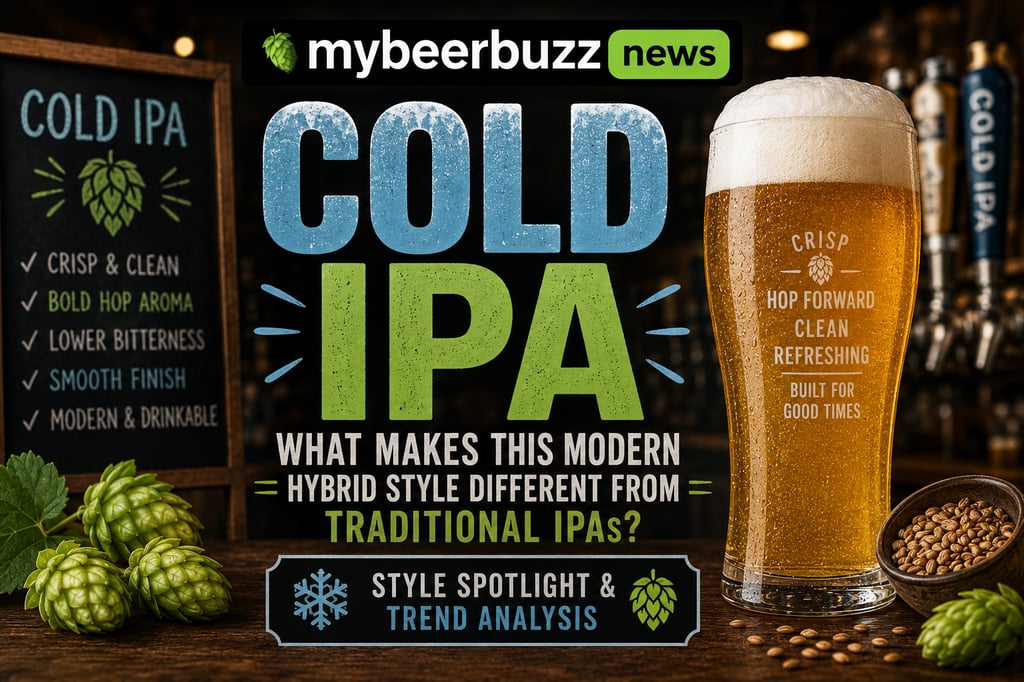
Cold IPA: What Makes This Modern Hybrid Style Different From Traditional IPAs? (Style Spotlight & Trend Analysis)
 Story by:
Bil Corcoran
Table of Contents – Cold IPA
- Introduction: Unpacking the Cold IPA Phenomenon
- Quick Facts Table: Cold IPA vs. West Coast IPA vs. Hazy IPA
- What Is a Cold IPA? Origins and Modern Definition
- The Brewing Mechanics: Rice Adjuncts and Warm Lager Fermentation
- Sensory Profile: Crystal Clarity, Clean Malt Canvas, and Aggressive Hops
- Cold IPA vs. IPL (India Pale Lager): Clearing Up the Confusion
- Food Pairings: Why This Crisp Hybrid Shines with Bold Cuisine
- Conclusion: The Ultimate Hop-Forward Refreshment
- Reader Discussion & Comments
- Frequently Asked Questions (FAQ)
1. Introduction: Unpacking the Cold IPA Phenomenon
The craft beer landscape constantly evolves through experimentation, balancing traditional brewing foundations with modern flavor desires. While the industry spent years bouncing between heavy, sweet pastry stouts and saturated hazy juice bombs, a new hybrid style emerged to capture the attention of adventurous drinkers and homebrewers. Enter the Cold IPA.
Pioneered in the Pacific Northwest, the Cold IPA bridges the gap between the clean, ultra-crisp drinkability of a traditional lager and the aggressive, hop-forward intensity of a modern American IPA.
For craft enthusiasts looking to understand why this style is taking over taproom lists, breaking down the unique ingredients, fermentation techniques, and sensory markers of a Cold IPA provides a clear roadmap to the future of hop-forward brewing.
2. Quick Facts Table: Cold IPA vs. West Coast IPA vs. Hazy IPA
For readers seeking an immediate technical breakdown, the comparison matrix below highlights how a Cold IPA stacks up against traditional West Coast and Hazy variants:
| Feature | Cold IPA | Traditional West Coast IPA | Hazy IPA (NEIPA) |
| Typical ABV | Mid-6% to 7.5% | 6.5% to 7.5%+ | 6.0% to 8.0%+ |
| Yeast Strain | Lager yeast (fermented warm) | Clean American ale yeast | Expressive ale yeast (ester-driven) |
| Grain Bill / Adjuncts | Pilsner malt + 20%–40% rice or corn | Pale malt, crystal malts (minimal adjuncts) | Pale malt, flaked oats, unmalted wheat |
| Clarity | Crystal clear | Clear to brilliant | Opaque, hazy, or turbid |
| Finish | Exceptionally dry, crisp, clean | Dry, firm bitterness | Soft, pillowy, sweet residual finish |
3. What Is a Cold IPA? Origins and Modern Definition
The concept of the Chttps://mybeerbuzz.com/founders-brewing-adding-mortal-bloom-citrus-bite-cold-ipa/old IPA was originally coined and developed by brewmaster Kevin Davey at Wayfinder Beer in Portland, Oregon. Davey sought to create a beer that was “Wester than West Coast”—delivering intense hop character while achieving a level of crisp refreshment that heavy ales could not match.
At its core, a cold IPA is defined by a specific set of process choices rather than just its name. It utilizes lager yeast (Saccharomyces pastorianus), but unlike traditional lagers, it is fermented at warmer, ale-like temperatures. This specific technical choice allows the yeast to drive a clean fermentation profile without throwing off harsh sulfur, creating a pristine, neutral canvas designed entirely to showcase aggressive hop aromatics.
4. The Brewing Mechanics: Rice Adjuncts and Warm Lager Fermentation
What truly sets a cold IPA apart from standard pale ales or lagers is the deliberate manipulation of the grain bill and thermal controls during production.
- The Adjunct Grain Bill: Brewers incorporate 20% to 40% flaked rice or corn into a base of Pilsner malt. Because rice and corn contribute 100% fermentable sugars without adding heavy proteins or complex grain husks, they drastically thin out the body and drive apparent attenuation as high as 88%.
- Warm Lager Fermentation: Fermenting a lager strain at elevated temperatures (closer to standard ale ranges around 65°F) encourages rapid sugar conversion while burning off undesirable sulfur compounds.
- Advanced Dry-Hopping: Drawing inspiration from Italian pilsner techniques, a cold IPA relies heavily on late-stage and active-fermentation dry-hopping (biotransformation), ensuring that explosive tropical, piney, and citrus notes bind cleanly to the beer.
5. Sensory Profile: Crystal Clarity, Clean Malt Canvas, and Aggressive Hops
Pouring a proper cold IPA reveals striking visual and sensory characteristics that differentiate it from other IPA families.
- Appearance: The beer pours brilliantly bright and crystal clear, often displaying a pale golden straw color that reflects its high-attenuation grain bill.
- Aroma and Flavor: The nose bursts with punchy American and New-World hop traits—ranging from dank pine, resin, and grapefruit peel to candied tropical fruit and peach ring candy.
- Mouthfeel and Finish: Because the malt profile is stripped of heavy crystal malts and sweetness, the palate experiences an ultra-dry, crisp, and snappy finish that cleanses the mouth immediately, encouraging another sip.
6. Cold IPA vs. IPL (India Pale Lager): Clearing Up the Confusion
A frequent point of debate among craft enthusiasts is whether a Cold IPA is just a rebranded India Pale Lager (IPL). While both styles incorporate lager yeast, master brewers and style authorities emphasize distinct differences:
- Fermentation and Lagering: An IPL is brewed using traditional lager methods, cold-fermented for weeks, and often conditioned slowly in cold storage tanks. A cold IPA utilizes warm lager fermentation to keep the profile clean, and it bypasses traditional long lagering phases to focus on fresh, aggressive dry-hopping.
- Grain Composition: Traditional IPLs frequently stick to all-malt or specialty barley bills, whereas a cold ipa relies heavily on high percentages of rice or corn adjuncts to achieve its signature lean, highly attenuated body.
7. Food Pairings: Why This Crisp Hybrid Shines with Bold Cuisine
Because a cold IPA balances massive hop intensity with an exceptionally clean, dry, and highly carbonated finish, it functions as one of the most versatile culinary beers on the market.
- Spicy Street Tacos and Asian Cuisine: The bright citrus and pine notes cut effortlessly through spicy salsas, chili heat, and rich umami flavors without clashing.
- Grilled Burgers and Barbecue: The crisp, snappy finish acts as an ideal palate cleanser against fatty barbecue meats, smoky brisket, and sharp melted cheeses.
- Fried Bar Fare: Pair a fresh pour with mozzarella sticks, poutine, or crispy fried chicken to let the beer’s high carbonation scrub away grease between bites.
8. Conclusion: The Ultimate Hop-Forward Refreshment
The rise of the cold IPA demonstrates that the craft beer world continues to find innovative ways to reinvent hop-forward drinking experiences. By cleverly combining lager yeast mechanics, warm fermentation controls, and high-percentage rice adjuncts, brewers have crafted a style that delivers maximum hop expression without the heavy, lingering weight of traditional ales.
Whether you are seeking out pioneering commercial examples or exploring local independent taprooms, adding a cold IPA to your cooler guarantees a crisp, refreshing, and intensely aromatic pour.
9. Reader Discussion & Comments
We want to hear from our community of craft beer enthusiasts and homebrewers!
- Have you tried a cold IPA from your local craft brewery yet?
- Where do you stand on the debate between traditional West Coast IPAs, hazy juice bombs, and this crisp new hybrid style?
Let us know your thoughts, favorite local pours, and tasting notes in the comments below!
10. Frequently Asked Questions (FAQ)
Is a cold IPA served extremely cold, or is that what the name means?
No, the name does not refer to the serving temperature of the beer (though you should still enjoy it chilled). The term “cold” refers directly to the brewing process—specifically the use of lager yeast and warmer-than-traditional lager fermentation temperatures designed to create a clean, crisp finish.
Are all cold IPAs brewed with rice or corn?
While original recipes pioneered by breweries like Wayfinder heavily rely on 20% to 40% rice or corn adjuncts to dry out the body, some modern craft brewers achieve high attenuation and a clean malt canvas through specialized step-mashing, enzyme additions, and all-malt pilsner bills. However, the core goal of a clean, dry, hop-forward finish remains constant.
What alcohol level (ABV) should I expect from a cold IPA?
Most commercial examples of a cold IPA typically land in the mid-6% to 7.5% ABV range, matching the strength of a traditional West Coast IPA while maintaining significantly higher crushability and a drier finish.
zzubreebym




Comments 0
No Readers' Pick yet.