








Svalbard: Guide to the World’s Northernmost Inhabited Island
 Story by:
Bil Corcoran
Story by:
Bil Corcoran
Svalbard is one of the most remote, dramatic, and extreme destinations on Earth — a place defined by polar bears, glaciers, Arctic silence, 24‑hour darkness, 24‑hour sunlight, and a rugged beauty that feels almost extraterrestrial. As the world’s northernmost inhabited island, Svalbard attracts adventurers, photographers, wildlife enthusiasts, and travelers seeking a once‑in‑a‑lifetime Arctic experience. This long‑form guide delivers everything you need to know about traveling to Svalbard, including polar night, midnight sun, weather, flights from Newark Liberty Airport, accommodations, food, groceries, transportation, rules, polar bear safety, and more — all wrapped in an aggressively keyword‑dense, SEO‑optimized format.
Table of Contents
- Quick Svalbard Facts Table
- Where Is Svalbard? Understanding the World’s Northernmost Inhabited Island
- Polar Night in Svalbard: When It Happens and What It Feels Like
- Midnight Sun in Svalbard: Endless Daylight Explained
- Svalbard Weather: Month‑by‑Month Climate Overview
- Best Time to Visit Svalbard
- Flights to Svalbard from Newark Liberty Airport (EWR → LYR)
- Accommodations in Svalbard: Hotels, Guesthouses, and Lodges
- Food, Groceries, and Dining in Svalbard
- Transportation in Svalbard: Do You Need a Rental Car?
- Rules, Laws, and Polar Bear Safety in Svalbard
- Frequently Asked Questions About Svalbard
- Final Recommendation: Follow Cecelia Blomdahl, Chistopher, and Grimm on YouTube
1. Quick Svalbard Facts Table
| Category | Details |
|---|---|
| Location | Arctic Ocean, between mainland Norway and the North Pole |
| Latitude | ~78° North |
| Population | ~2,500 residents (mostly in Longyearbyen) |
| Country | Norway (special treaty zone) |
| Currency | Norwegian Krone (NOK) |
| Main Airport | Longyearbyen Airport (LYR) |
| Climate | Arctic tundra |
| Polar Night | Late October – Mid‑February |
| Midnight Sun | Late April – Late August |
| Primary Wildlife | Polar bears, Arctic foxes, reindeer, walrus |
| Main Settlement | Longyearbyen |
| Electricity | 230V European plugs |
| Language | Norwegian, English widely spoken |
2. Where Is Svalbard? Understanding the World’s Northernmost Inhabited Island
Svalbard is a remote Arctic archipelago located far north of mainland Norway, deep within the Arctic Circle. It is the world’s northernmost permanently inhabited island, with Longyearbyen serving as the northernmost town on Earth with a stable population. Svalbard’s extreme latitude, roughly 78° North — places it closer to the North Pole than to Oslo.
This remote Arctic environment is defined by glaciers, permafrost, polar bears, and dramatic seasonal light cycles. Svalbard is governed by Norway but operates under the Svalbard Treaty, which allows citizens of dozens of countries to live and work there visa‑free.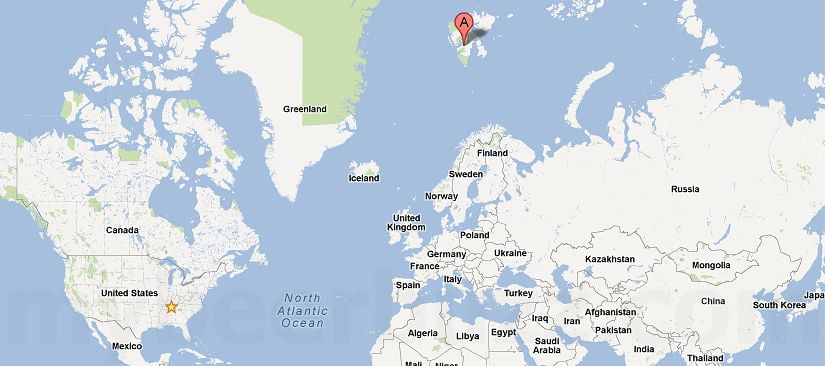
3. Polar Night in Svalbard: When It Happens and What It Feels Like
One of the most defining features of Svalbard is the polar night, a period of complete 24‑hour darkness when the sun never rises above the horizon.
Polar Night Dates in Svalbard
- Begins: Late October
- Deepest darkness: Mid‑November through late January
- Ends: Mid‑February
During the deepest part of polar night, Svalbard experiences:
- Total darkness
- A faint blue twilight at midday (only in early/late polar night)
- Clear views of stars, planets, and the Milky Way
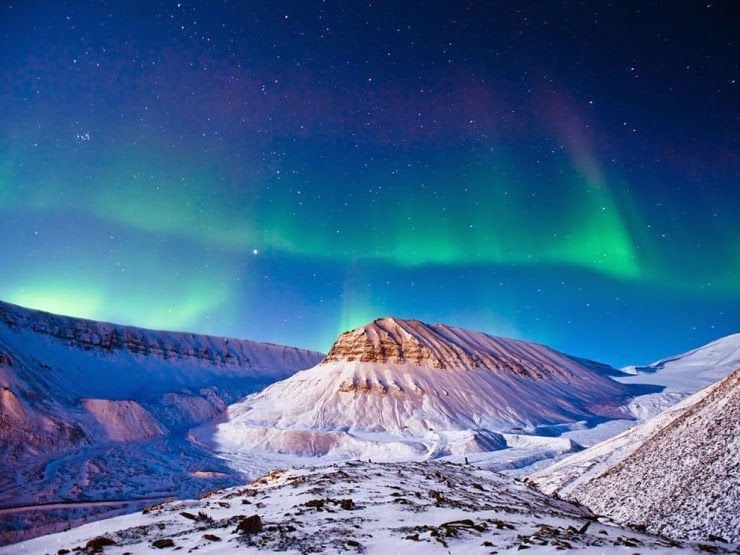
- Frequent Northern Lights (Aurora Borealis)
The polar night is one of the most surreal experiences on Earth, a time when the Arctic becomes a world of quiet, cold, and cosmic beauty.
4. Midnight Sun in Svalbard: Endless Daylight Explained
Opposite the polar night is the midnight sun, when the sun never sets.
Midnight Sun Dates in Svalbard
- Begins: Late April
- Ends: Late August
During this period, Svalbard experiences:
- 24‑hour daylight
- Bright nights perfect for hiking and photography
- Warmer temperatures (relatively speaking)
- Increased wildlife activity
The midnight sun is ideal for outdoor adventures, boat tours, glacier hikes, and wildlife viewing.
5. Svalbard Weather: Month‑by‑Month Climate Overview
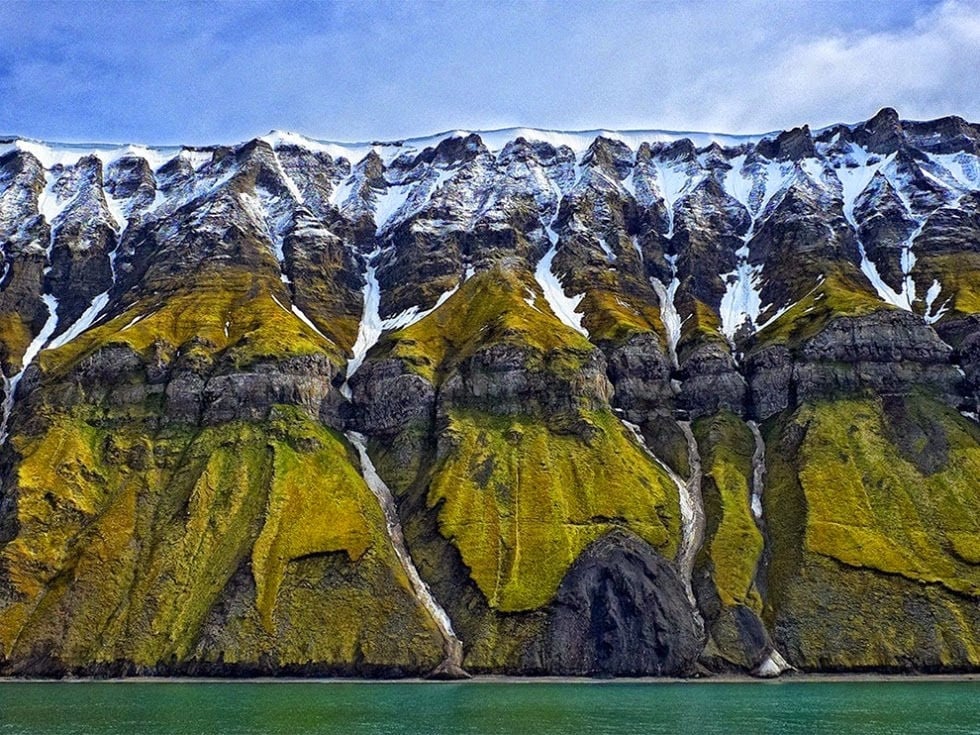 Svalbard’s weather is Arctic, cold, and unpredictable. Even in summer, temperatures remain cool.
Average Temperatures
- Winter: −20°C to −5°C (−4°F to 23°F)
- Summer: 0°C to 10°C (32°F to 50°F)
Month‑by‑Month Snapshot
- January: Deep polar night, −20°C, coldest month
- February: Still dark, slowly brightening
- March: Return of daylight, great for Northern Lights
- April: Transition to midnight sun
- May–August: Midnight sun, mildest weather
- September: Cooling, Northern Lights return
- October: Snow arrives, polar night begins
- November–December: Full darkness, extreme cold
Weather changes rapidly, snow, wind, and fog can appear without warning.
6. Best Time to Visit Svalbard
The “best time” depends on what you want:
For Northern Lights:
- October to March
- Peak viewing during deep polar night
- Svalbard is widely considered one of the best places in the world to see the Northern Lights, thanks to its extreme Arctic latitude, long polar night, and minimal light pollution. Unlike most destinations, where the Aurora Borealis is only visible in the dark hours of night, Svalbard is so far north that you can experience the Northern Lights even during the daytime in the heart of winter — a phenomenon known as the daytime aurora. The peak Northern Lights season in Svalbard runs from late October through March, aligning perfectly with the island’s deep polar night, when the sun remains below the horizon for months. During this period, the sky becomes a canvas for shimmering green, purple, and pink auroral displays that dance above the mountains, fjords, and frozen tundra. Because Svalbard sits directly beneath the auroral oval, the Northern Lights are not only frequent but often intense, making the archipelago a bucket‑list destination for photographers, winter travelers, and anyone seeking a dramatic, high‑latitude Aurora Borealis experience.
For Midnight Sun:
- May to August
For Wildlife:
- Summer: Walrus, birds, Arctic foxes
- Winter: Reindeer, polar bears (outside settlements)
For Photography:
- February–April: Soft light, snowy landscapes
- August: Golden Arctic sunsets
7. Flights to Svalbard from Newark Liberty Airport (EWR → LYR)
Svalbard has no direct flights from the United States. Travelers must connect through Oslo (OSL) or Tromsø (TOS).
Current Spring 2026 Flight Prices from Newark to Svalbard
Based on current search data:
- Round‑trip fares from Newark to Longyearbyen start around $574–$609 depending on travel dates.
- Kayak lists fares as low as $561 for certain September itineraries.
- Skyscanner shows round‑trip fares starting around $586, with one‑way fares from $876.
- Trip.com lists one‑way fares from $644, depending on airline and season.
Typical Route
- Newark (EWR) → Oslo (OSL)
- Oslo (OSL) → Longyearbyen (LYR)
Airlines Commonly Serving the Route
- SAS
- Norwegian Air
- Widerøe (seasonal connections)
Travel Time
- Total travel time: 12–20 hours depending on layovers
- Longest segment: Newark → Oslo (~7 hours)
8. Accommodations in Svalbard: Hotels, Guesthouses, and Lodges
Despite its remote location, Svalbard offers a range of accommodations:
Hotels
- Radisson Blu Polar Hotel — the world’s northernmost full‑service hotel
- Svalbard Hotell | Polfareren — modern, central, popular
- Funken Lodge — upscale, historic, excellent dining
Guesthouses
- Gjestehuset 102 — budget‑friendly, cozy
- Mary‑Ann’s Polarrigg — quirky, rustic, memorable
Lodges & Cabins
- Remote wilderness lodges accessible by snowmobile or boat
- Often used for photography tours and expedition groups
Price Range
- Budget: $80–$150 per night
- Mid‑range: $150–$250 per night
- Luxury: $250–$500+ per night
9. Food, Groceries, and Dining in Svalbard
Svalbard has a surprisingly robust food scene for such a remote Arctic settlement.
Restaurants
- Huset — fine dining, wine cellar
- Gruvelageret — historic, atmospheric
- Kroa — pizza, burgers, comfort food
- Stationen — hearty Norwegian dishes
Groceries
- Svalbardbutikken is the main grocery store
- Prices are higher than mainland Norway but not outrageous
- Alcohol is rationed (you need a resident card to buy certain amounts)
Specialty Foods
- Reindeer
- Arctic char
- King crab
- Local bakery goods
10. Transportation in Svalbard: Do You Need a Rental Car?
Short answer: No — you do NOT need a rental car.
Why?
- Longyearbyen is small and walkable
- There are no roads between settlements
- Most travel outside town requires a guide
- Snowmobiles replace cars in winter
- Tours provide transportation
When a car might help
- If you want to explore the outskirts of Longyearbyen
- If you’re carrying heavy photography gear
But overall, taxis, tours, and walking are the primary modes of transportation.
11. Rules, Laws, and Polar Bear Safety in Svalbard
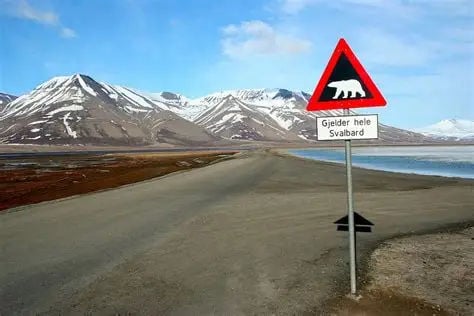 Svalbard has strict rules designed to protect both people and wildlife.
Key Rules
- You cannot leave Longyearbyen without a rifle (or a guide with one) due to polar bear risk
- Polar bears are protected — you must avoid disturbing them
- You must carry emergency equipment when traveling outside town
- No drones in many areas without permission
- No removing artifacts — Svalbard is an open‑air museum
- Respect wildlife distances
Polar Bear Activity
Svalbard has more polar bears than people. They can appear:
- On beaches
- Near settlements
- On snowmobile routes
- Around cabins
- On sea ice
Polar bears are unpredictable, fast, and dangerous. Encounters are rare but serious.
Safety Essentials
- Travel with a certified guide
- Carry a rifle (mandatory outside town)
- Carry flares and deterrents
- Never approach wildlife
- Stay alert near the shoreline
12. Frequently Asked Questions About Svalbard
Is Svalbard safe?
Yes — but only if you follow rules, respect wildlife, and travel with proper equipment.
Do people really carry rifles?
Yes. It is mandatory outside Longyearbyen due to polar bears.
Can Americans visit Svalbard without a visa?
Yes — Svalbard is visa‑free for all nationalities, but you must transit through Norway, which has its own entry rules.
How expensive is Svalbard?
Moderately expensive — similar to Norway, with higher prices for alcohol and imported goods.
Can you see the Northern Lights in Svalbard?
Absolutely — Svalbard is one of the best Northern Lights destinations on Earth.
Is it dark all winter?
Yes — polar night lasts from late October to mid‑February.
Is it light all summer?
Yes — midnight sun lasts from late April to late August.
Can you drive between towns?
No — there are no connecting roads.
Are polar bears in Longyearbyen?
Rarely, but it has happened. Always stay alert.
13. Final Recommendation: Follow Cecelia Blomdahl, Chistopher, and Grimm on YouTube
If you want the most authentic, visually stunning, day‑to‑day look at life on Svalbard, you absolutely must watch Cecelia Blomdahl, her husband Christopher, and their dog Grimm on YouTube. Their channel offers:
- Real Arctic living
- Polar night and midnight sun footage
- Cabin life
- Dog adventures
- Svalbard weather and wildlife
- Stunning drone photography
- Insight into Svalbard culture and community
Their content is the perfect companion to this guide — immersive, honest, and beautifully filmed. If you’re not already excited to visit Svalbard, then after watching a few of Cecilia’s video segments, you definitely will be.




Comments 0
No Readers' Pick yet.