



Beer and Food Pairing: The Ultimate Guide to Matching Styles with Meals
 Story by:
Bil Corcoran
Story by:
Bil Corcoran
Introduction
Beer isn’t just a casual drink for game nights or backyard barbecues—it’s a versatile beverage with a wide range of flavors, aromas, and textures that can elevate any dining experience. Just like wine, beer can complement or contrast with food to create memorable pairings. Whether you’re a craft beer enthusiast or just starting your journey, understanding the basics of beer and food pairing will help you impress guests and enhance your own enjoyment.
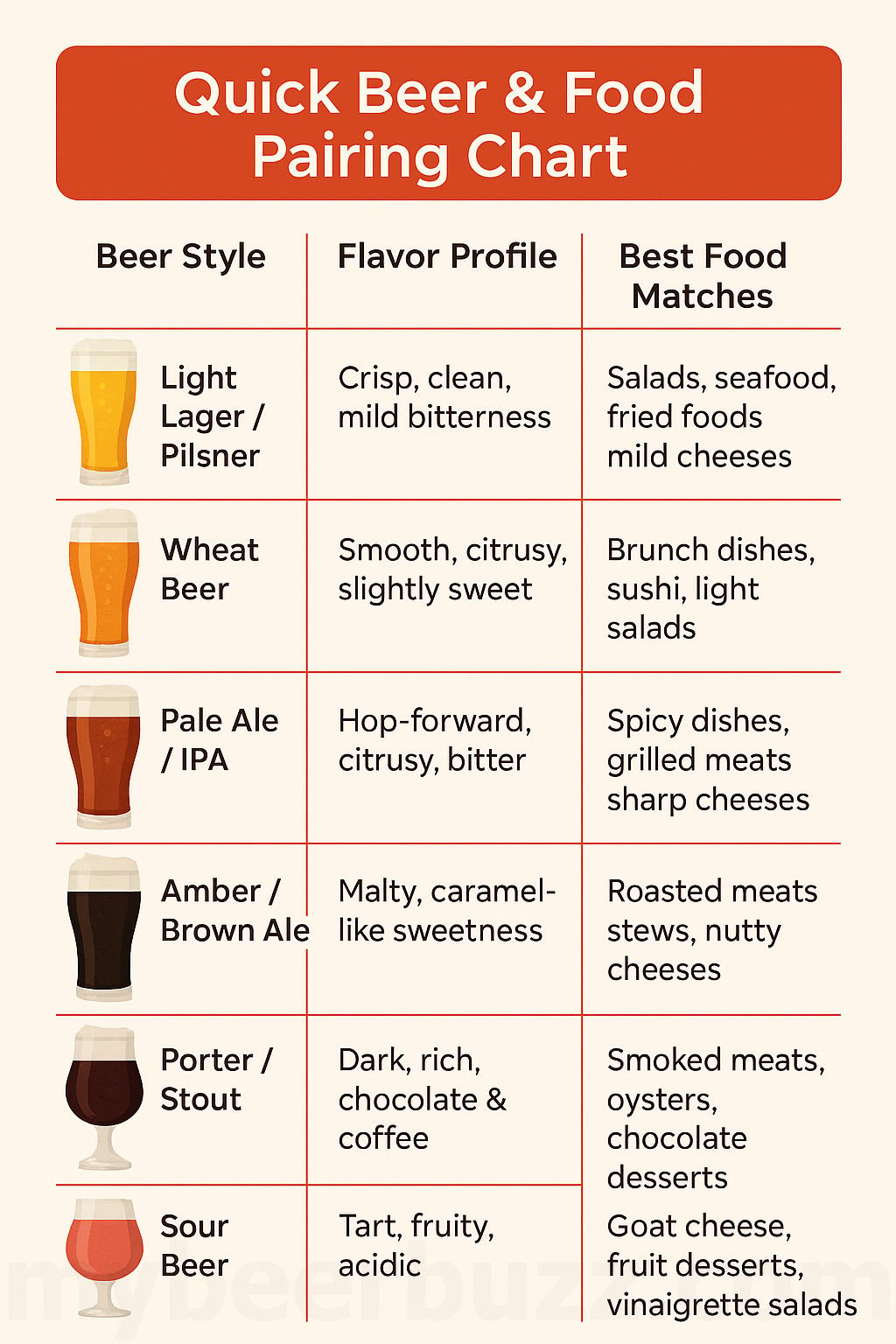
Quick Beer & Food Pairing Chart
Why Pair Beer with Food?
Beer offers a unique spectrum of flavors thanks to its four main ingredients: malt, hops, yeast, and water. These elements create notes ranging from sweet and caramel-like to bitter and citrusy, earthy, or even smoky. When paired thoughtfully, beer can:
Balance flavors: A crisp lager can cut through the richness of fried foods.
Enhance taste: A malty brown ale can amplify the caramelized flavors in roasted meats.
Cleanse the palate: Carbonation refreshes your taste buds between bites.
The goal is harmony—where beer and food complement each other without overpowering.
The Golden Rules of Pairing
Before diving into specific styles, keep these principles in mind:
Match Intensity
Light beers pair best with delicate dishes, while bold beers stand up to hearty meals. For example, a pilsner works with a salad, but a stout pairs better with a rich beef stew.
Complement or Contrast
Complementary pairings highlight similar flavors (e.g., a nutty brown ale with roasted nuts), while contrasting pairings create balance (e.g., a bitter IPA with spicy curry).
Consider the Three Cs
Cut: Beer’s carbonation and bitterness can cut through fat and richness.
Complement: Match similar flavors for harmony.
Contrast: Opposing flavors can create exciting combinations.
Beer Styles and Their Perfect Matches
Here’s a quick guide to popular beer styles and the foods they love:
1. Light Lagers and Pilsners
Flavor Profile: Crisp, clean, refreshing with mild bitterness.
Best With: Salads and light seafood (shrimp, white fish)
Mild cheeses like mozzarella
Fried foods—think fish and chips or tempura
Why It Works: The light body and carbonation cleanse the palate after salty or fried bites.
2. Wheat Beers (Hefeweizen, Witbier)
Flavor Profile: Smooth, slightly sweet, often with notes of citrus or spice.
Best With: Brunch dishes like omelets or eggs Benedict
Fresh salads with citrus vinaigrette
Sushi or light Asian cuisine
Why It Works: The fruity, spicy notes complement delicate flavors without overwhelming them.
3. Pale Ales and IPAs
Flavor Profile: Hop-forward, ranging from floral and citrusy to piney and bitter.
Best With: Spicy dishes (Indian curry, Mexican tacos)
Grilled meats and burgers
Sharp cheeses like cheddar
Why It Works: Bitterness contrasts with spice and richness, while citrusy hops brighten bold flavors.
4. Amber Ales and Brown Ales
Flavor Profile: Malty, caramel-like sweetness with moderate bitterness.
Best With: Roasted chicken or pork
Hearty stews and casseroles
Nutty cheeses like Gruyère
Why It Works: The malt sweetness complements roasted and caramelized flavors in the food.
5. Porters and Stouts
Flavor Profile: Dark, rich, with notes of chocolate, coffee, and roasted malt.
Best With: Grilled or smoked meats
Chocolate desserts or tiramisu
Oysters (a classic pairing!)
Why It Works: The deep flavors mirror the richness of the dish, while sweetness balances bitterness. Matching chocolate with beer is all about roast, cocoa intensity, sweetness, and texture.
6. Sour Beers
Flavor Profile: Tart, fruity, sometimes funky.
Best With: Goat cheese or creamy cheeses
Fruit-based desserts
Light salads with vinaigrette
Why It Works: Acidity cuts through fat and complements tangy flavors.
Pro Tips for Successful Pairing
Experiment: There’s no one-size-fits-all rule. Try different combinations and note what works.
Serve at the Right Temperature: A warm lager or ice-cold stout can ruin the experience.
Mind the Occasion: Casual gatherings call for easy-drinking beers, while formal dinners might warrant complex styles.
Final Thoughts
Beer and food pairing is an art, but it’s also fun and approachable. Start with the basics—match intensity, complement or contrast flavors—and then explore. Whether you’re enjoying a crisp pilsner with fish tacos or a robust stout with chocolate cake, the right pairing can transform a meal into a memorable experience.
So next time you plan a dinner, don’t just grab any beer—choose one that elevates your dish. Cheers to discovering the perfect match!
zzubreebym



Comments 0
No Readers' Pick yet.