




Modern Brewing Innovations: Coffee, Fruit Purée, and Unique Adjuncts Explained
 Story by:
Bil Corcoran
Story by:
Bil Corcoran
Introduction
Craft beer has always been about creativity, but in recent years, brewers have pushed boundaries further than ever before. Gone are the days when hops and malt were the only stars of the show. Today, unusual adjuncts—ingredients added to beer outside the traditional malt, hops, yeast, and water—are redefining what beer can be. From coffee and fruit purée to herbs and even unexpected culinary elements, these additions are creating bold, complex flavors that captivate adventurous drinkers.
What Are Adjuncts and Why Do They Matter?
Adjuncts are non-traditional ingredients used to enhance flavor, aroma, or mouthfeel. Historically, adjuncts like corn or rice were used to lighten body and reduce costs. Modern craft brewing, however, has transformed adjuncts into a playground for innovation. Brewers now use them to create unique sensory experiences, blur style boundaries, and appeal to niche markets.
Coffee: A Roasty Revolution
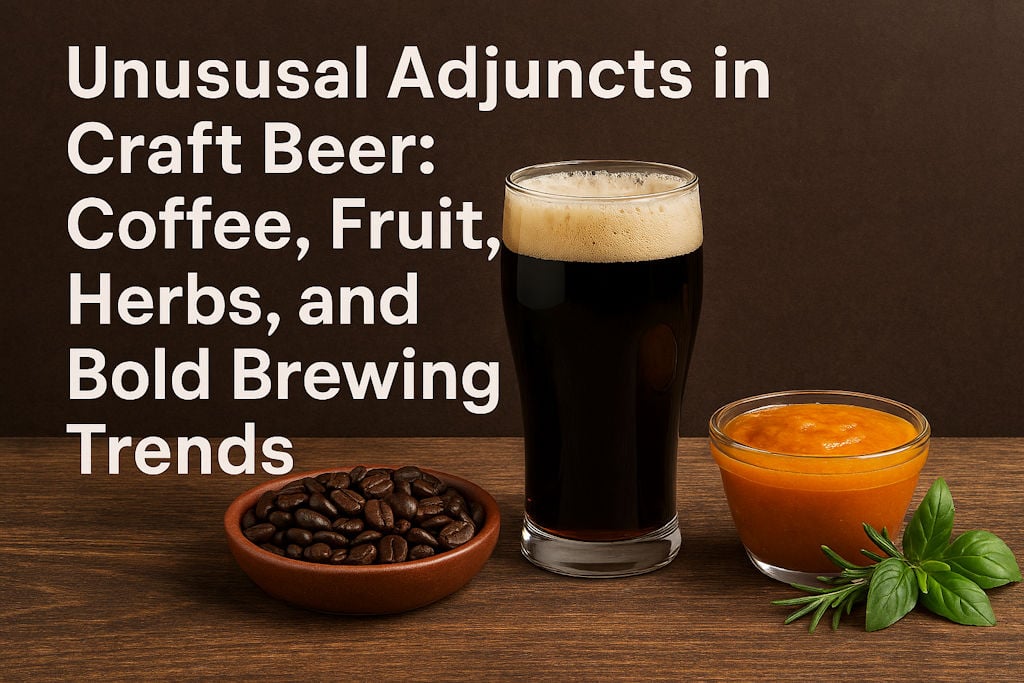
Coffee has become one of the most popular adjuncts in stouts and porters, but its use is expanding into lighter styles like IPAs and lagers. Why coffee? Its rich, roasted notes complement malt sweetness and add depth to darker beers. In lighter styles, cold brew or lightly roasted beans introduce subtle bitterness and aromatic complexity without overpowering the base beer.
Pro Tip for Brewers: Use cold brew or whole beans during fermentation for a smoother, less acidic coffee character. Timing is crucial—too early and the coffee fades; too late and it dominates.
Fruit Purée: A Burst of Freshness
Fruit has long been a staple in Belgian lambics and wheat beers, but modern brewers are experimenting with everything from mango and passionfruit to dragon fruit and prickly pear. Fruit purée offers vibrant color, natural sweetness, and tartness that can balance hop bitterness or enhance sour profiles.
Challenges: Fruit adds fermentable sugars, which can alter ABV and body. It also introduces pectin, potentially causing haze—though in today’s haze-loving market, that’s often a bonus.
Trending Styles: Fruited sours, smoothie-style IPAs, and tropical lagers are leading the charge.
Herbs and Spices: From Garden to Glass
Herbs like basil, rosemary, and mint, along with spices such as cardamom and cinnamon, are finding their way into brewing kettles. These additions can evoke culinary experiences, turning beer into a gastronomic adventure.
Basil in a saison adds a peppery, fresh twist.
Rosemary in a pale ale creates a piney complement to hop bitterness.
Mint in a stout offers a refreshing counterpoint to roasted malt.
Brewer’s Tip: Start small—herbs and spices can quickly overpower delicate beer flavors.
Beyond the Expected: Experimental Adjuncts
The creativity doesn’t stop at coffee and fruit. Brewers are exploring:
Tea: Green tea in IPAs for earthy bitterness.
Cacao nibs: Chocolate notes without sweetness.
Maple syrup or honey: Natural sugars for fermentation and nuanced sweetness.
Vegetables: Beetroot for color, pumpkin for seasonal appeal.
These ingredients challenge traditional definitions of beer and invite drinkers to experience something entirely new.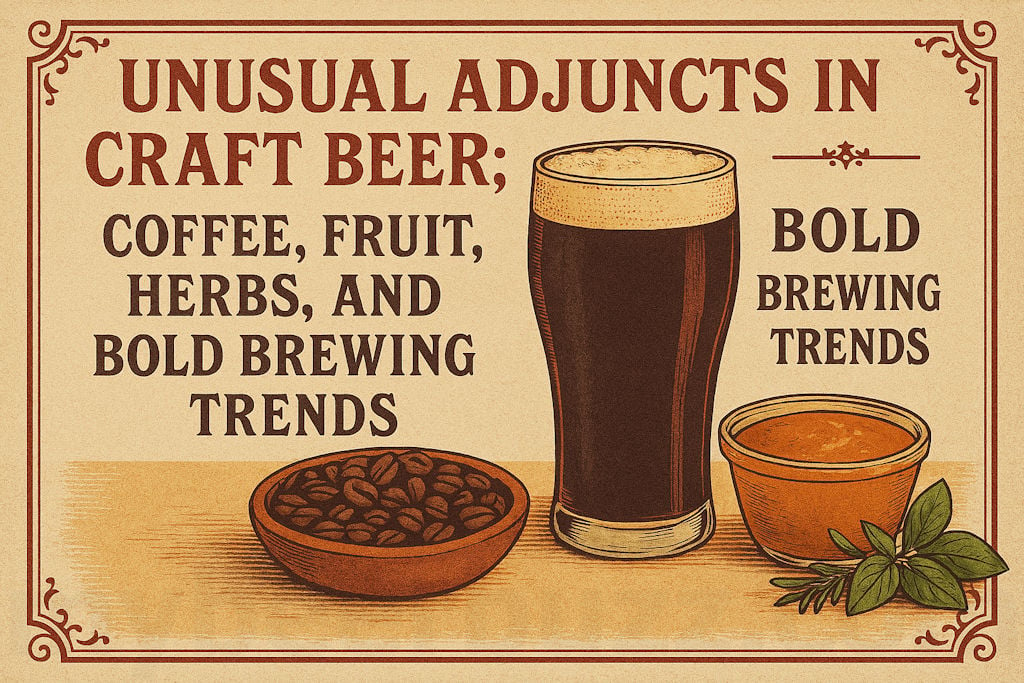
The Art and Science of Balance
While adjuncts offer endless possibilities, balance is key. A successful adjunct beer harmonizes the added ingredient with the base style rather than letting it dominate. Brewers must consider:
Timing: When to add the adjunct—boil, fermentation, or conditioning.
Quantity: Enough to be noticeable but not overwhelming.
Compatibility: Does the adjunct complement or clash with malt and hops?
Why Consumers Love It
Modern drinkers crave novelty and authenticity. Adjunct beers deliver both, offering Instagram-worthy colors, bold flavors, and stories behind each ingredient. They also appeal to crossover audiences—coffee lovers, cocktail enthusiasts, and foodies—expanding beer’s cultural footprint.
Final Thoughts
Unusual adjuncts are more than a trend; they represent a shift toward creativity and personalization in brewing. Whether it’s a coffee-infused stout, a basil-kissed saison, or a mango-packed IPA, these beers invite us to rethink what beer can be. For brewers, the challenge is to innovate without losing balance. For drinkers, the adventure is just beginning.
zzubreebym




Comments 0
No Readers' Pick yet.