



Fresh Beer: The Case For Standardized Freshness Date Coding
 Story by:
Bil Corcoran
Story by:
Bil Corcoran
Back in 2017, I first wrote about the importance of freshness dating for “craft” beer. Given that it has now been eight years since that article was published, I thought it would be interesting to follow up and see what has changed.
Where It Started:
I’m a fairly active consumer of beer, and most of what I consume is what I would describe as “hop-forward.” Back in 2017, I noticed that as I was trying to purchase “fresh” IPAs, the ability for even a beer-educated consumer to figure out when a beer was brewed or packaged was difficult at best. Even with my advantage of reading and posting beer news every day, I still struggled to figure out if a given IPA was fresh or old.
More than once, I found myself with a case of beer that was not as fresh as I thought. Breweries were not necessarily adding date codes, and when they were adding date codes, they were difficult to find, hard to read, or impossible to decode.
This left me thinking that if I can’t figure out what beer is fresh, then the average consumer would not be able to figure it out either. In my opinion, this only leads to consumers getting bad, out-of-date beer, or consumers just avoiding buying that beer altogether.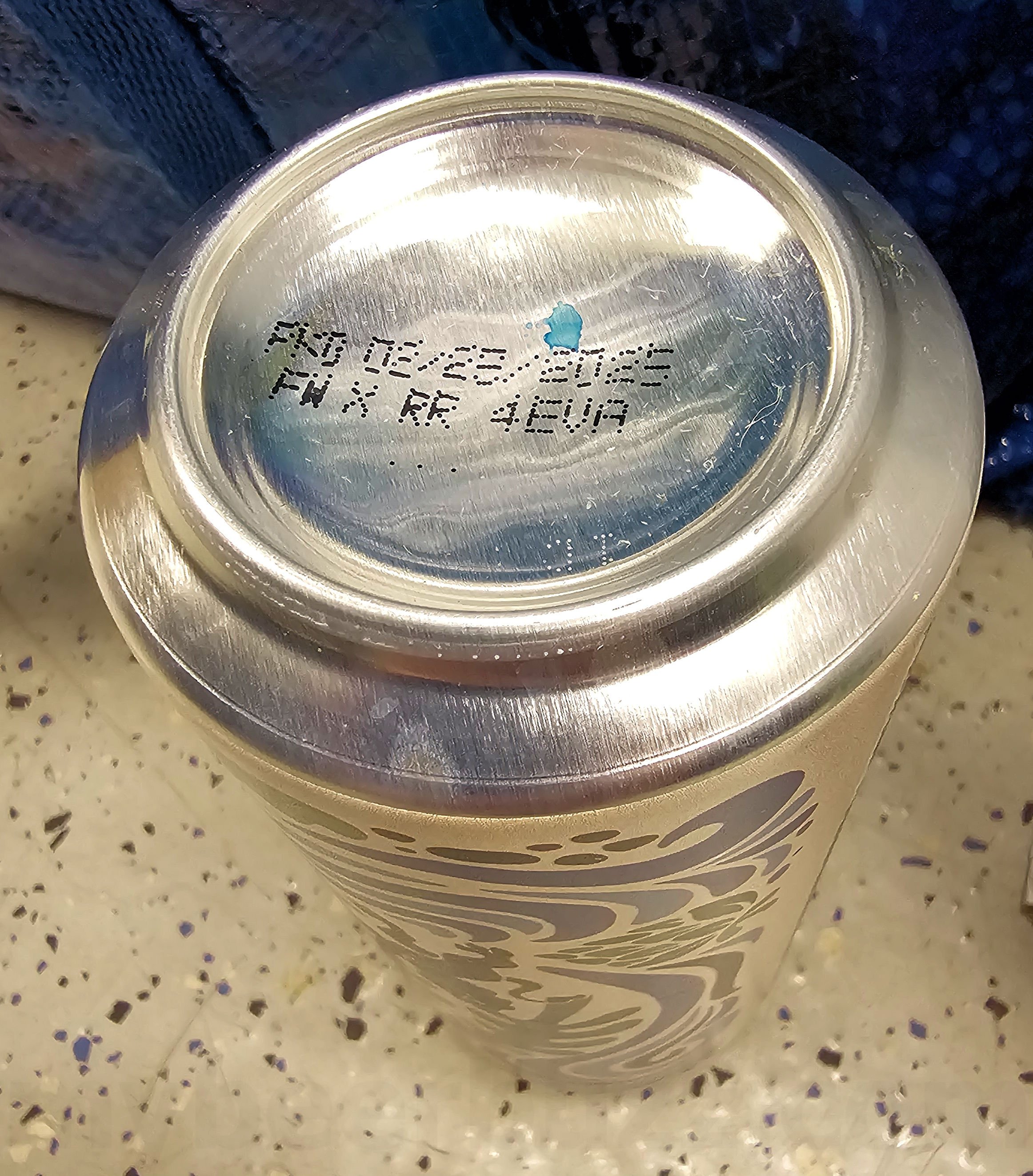
Why Does It Matter:
While I like hoppy beers fresh, this isn’t just a story about making it easier for me to find fresh beer. Freshness dating for me has always been about small and independent beer differentiating itself from big beer. One of the distinct advantages that small and independent breweries have is their ability to produce beer regionally. Most even make this fact a part of their marketing. Compared to big beer, small and independent breweries brew in smaller, more frequent batches, and in theory, they are closer to their regional distribution points and consumers, and because of their size and the competitive nature of brewing beer, they have a vested interest in making sure their beer gets to you and me, at its best.
The fight for market share in the beer industry has become pretty fierce, with over 9000 craft and independent breweries. My recurring nightmare is that a new consumer hears just how great something like Bell’s Two Hearted Ale is, they pop into their local distributor and buy a case, they get home, and the beer is awful. That new consumer doesn’t understand or care that the case they bought is a year out of date. Instead, they think Bell’s Brewery beers are awful, or worse yet, all “craft” beer is awful.
I understand that date coding is less important on something like a barrel-aged imperial stout, but with the proliferation of hoppy beers like IPAs, Double IPAs, Triple IPAs, Hazy IPAs, Dry IPAs, Cold IPAs, and even hoppy pale ales, the need is obvious, and based on the GABF IPA beer categories with the most entries, the time is now to do better.
This freshness advantage is something I had hoped would be an obvious marketing exploit for small and independent breweries, so it’s time to follow up and see how we’re doing eight years later.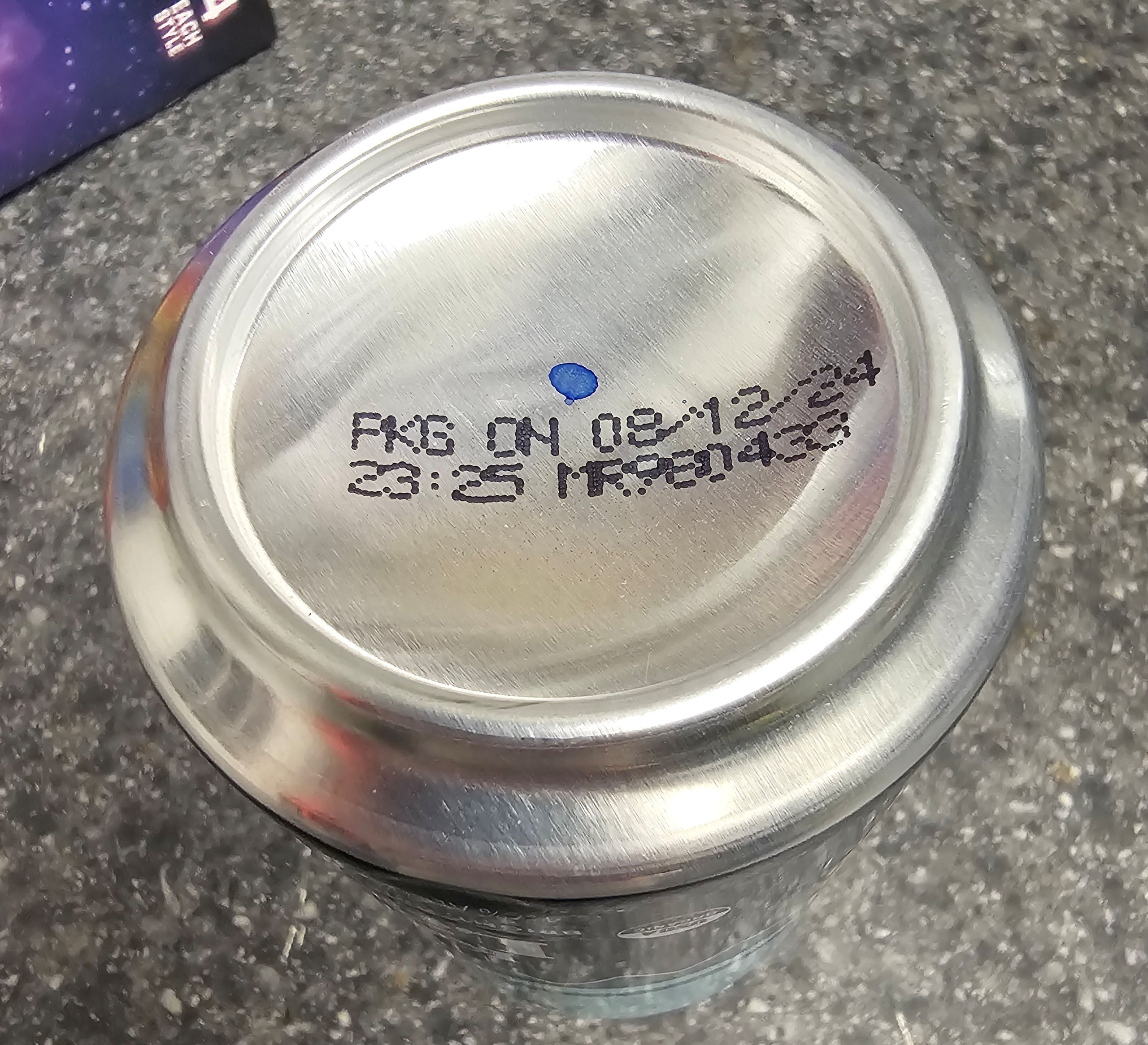
Where We Are Now:
I’d love to follow up on my 2017 article with positive news, and while I have definitely seen some improvement, I’m sad to report that not only is it still difficult to find and interpret date coding, but big beer has actually stepped in and started doing a better job at date coding their beers. Go pick up a bottle of Budweiser and a bottle of Lagunitas and see who has date packaging that is in a more obvious location, and see who has date packaging that is easier to read.
There are multiple problems at play here, and believe me, I’m well aware that date coding is absolutely a budgetary issue with many small breweries. First up, finding the date code can be a challenge. Maybe it’s printed in brown ink with a tiny brown font on a brown bottle, maybe it’s on the bottom of the can. Then package that can or bottle in a six-pack that covers the neck of the bottle or the bottom of the can, and try to find a date. Finally, you then pack those six-pack carriers in a sealed case, and now try to find a date.
I will absolutely admit that I have seen more small and independent breweries date-coding something beyond the can or bottle. I see some six-pack carriers with a date and a few cases with a date, and I’ve found a few innovative peek-a-boo packages that have cutouts allowing you to see the bottom of the cans. While I am still hopeful and positive, I honestly thought the small and independent breweries would do better by now.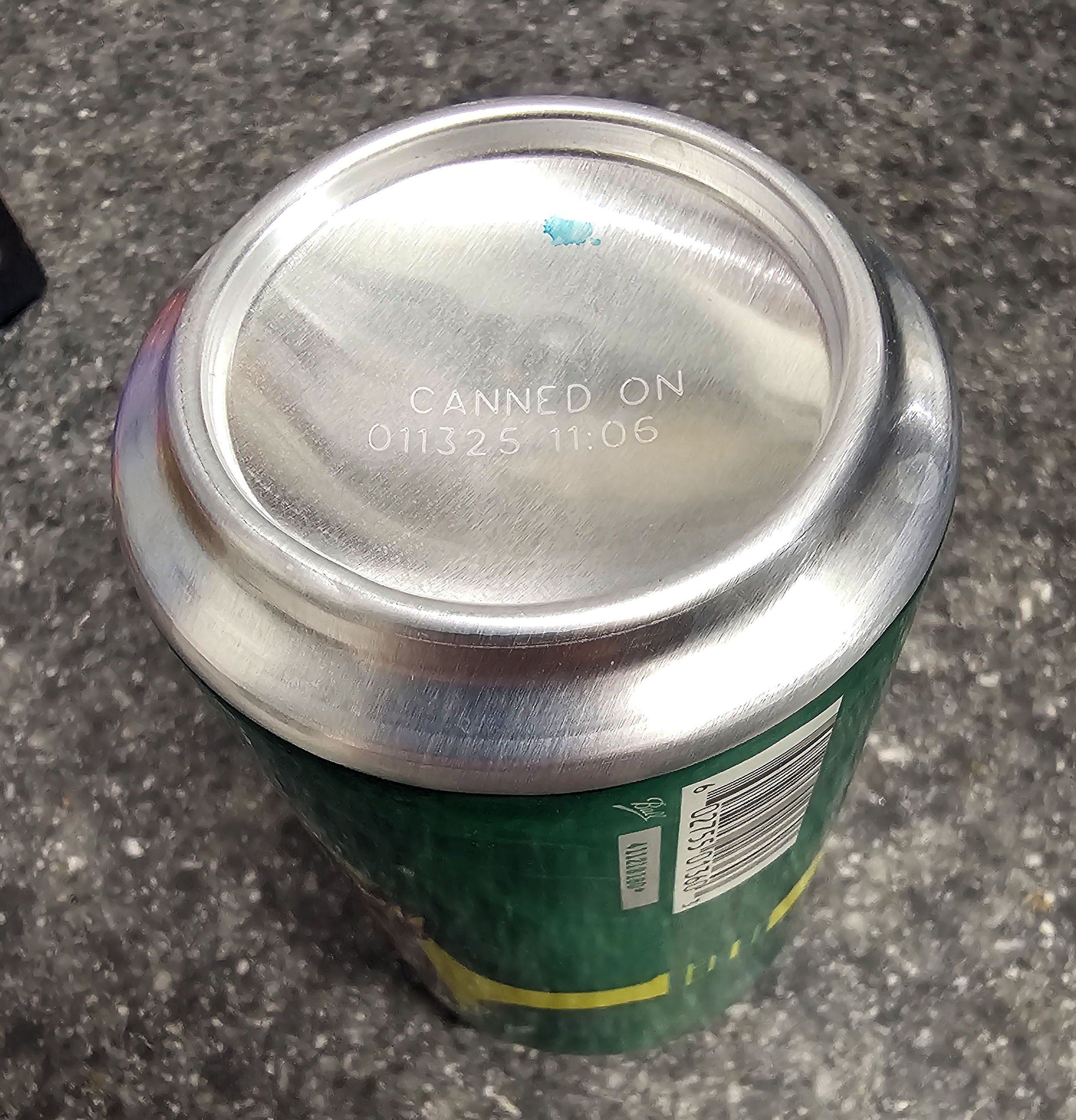
Breaking The Code:
I’m always suspicious when a brewery of any size decides to use no date coding or date coding that feels like it is intentionally difficult to find or read. My thought immediately goes to asking why, and more importantly, I ask myself, what are they trying to hide? Are we honestly better off as an industry if the distributor gets the money, the consumer takes stale beer home, and no one in the retail chain from brewery to consumer is forced to eat the cost of bad beer? Wouldn’t we be better served to remove out-of-date beer before someone purchases it and ultimately never buys beer from that brewery or any “craft” beer again?
With that in mind, it’s time to try to break the code.
First off, we have to understand the different types of dates you may (or may not) find on beer. Some breweries use a “Best By” or “Enjoy By” date on their beer. This date is typically not consistent from brewery to brewery, and most are much more generous about when their beer may be less than fresh. It’s a bit like hearing a new slang phrase for the first time — you might nod along but still have no clue what it actually means. The same way people might Google what does rizz me up mean to decode modern expressions, beer drinkers often find themselves decoding packaging details just to understand when their favorite IPA was brewed. When I asked many of the breweries I report on, the predominant answer was that the “Best By” date was roughly 6 months after the packaging date for hoppy beers, and while I think most hoppy beers start to go off before six months, it’s at least a start to educate consumers.
My favorite date coding is a clear “Packaged On” date. Let me decide if I want to spend a premium price on a beer that may be 5 months old, or if I’d rather it be less than three months old. I’ve tasted enough hoppy beers that for me, once you hit the 4-month mark, the hops are fading. But many people may be OK with a beer at five or six months, so print the packaging date and let us decide for ourselves. Having to guess what a “Best By” date with no standardization is a problem, so if your brewery would prefer to use “Best By” dating, then use both Best By and Packaged On dates.. Tell us when you package the beer, and tell us when you think it would be best to consume.
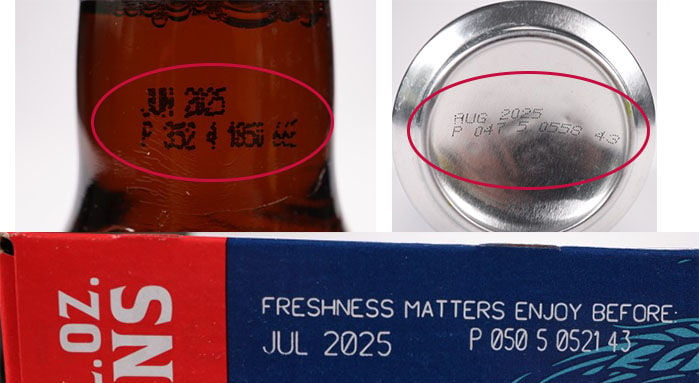
Next, we have to find the date coding. The most reliable place to find the date code, whatever it may be, is the neck of the bottle (for most standard-sized bottles – 12-oz, 16.9-oz) & the bottom of cans. With cans, we’re assuming you can see the bottom of the can through any packaging, and for bottles, quite honestly, the breweries are assuming you carry a flashlight and magnifying glass, and you can access the neck of the bottle inside any packaging. Some breweries add a date on the six, twelve, or fifteen pack carriers; however, it is typically hard to find, and many times it is smeared or camouflaged by the normal printing colors and designs on the box. For cases, it is very hit or miss with date codes. I’m not sure if breweries assume the case is getting split up at retail, or it’s just too costly to print three date locations (can, six-pack & case) for each package, but many times the case packaging gets skipped.
Once you find the date, the fun is only beginning. Some breweries use a simple and standard date format; however, there are still a few breweries that use an actual code. Lagunitas is a great bad example of what a date code can be (see the photo from their website below). Their code uses indicators for the year, followed by a three-digit number that indicates the number of days into the year. In some cases, they also add indicators for the brewery location, but for our discussion, the date is the only portion I pay any attention to. For example, 25033 would be Feb 2nd 2025 (25=the year & 033 indicates 33 days into that year). It’s a variation on the Julian calendar, which, of course, every beer consumer has memorized. My advice would be to just look at the year, and assuming it’s the current year, then with roughly 30 days in most months, you can at least get a ballpark of the real date.
Personally, while I love Lagunitas IPA, I simply don’t buy it anymore. I live by my recommendation of “No Date, No Buy!” I also think that any brewery that doesn’t want me to see when my beer was brewed doesn’t want my money anyway.
Here’s just one example of the complexity. This is from Yuengling Brewery (now try to remember all of this when you’re in a busy beer store trying to read a bottle or can code):
All of D.G. Yuengling & Son, Inc. products are best consumed within 120 days of packaging. The production code can be determined by 1 of 2 ways on all bottles and cans:
(1) An 11-digit number is located on the bottom of the can and on the neck of the bottle on a single line. The first 2 digits are the year in which it was produced. The 3rd, 4th, and 5th digit are the day of the year in the Julian Calendar (For example, beer packaged on February 1st would be stamped with 032 because that’s the 32nd day of the year.) The 6th digit is the producing brewery (#1 is our Pottsville brewery, #2 is our Tampa brewery, #3 is our Mill Creek brewery). The 7th digit is the production line number, and the last 4 digits show the military time it was produced.
(2) The production code is displayed using two lines. Line 1 begins with the first 3 letters of the month in which it was produced. The next 4 digits are the day and year of production. The final number is the week on a calendar year the package was produced (for example, 29 would follow November 16, 2020, as it is the 29th week in a year). Line 2 starts with a letter A through E, which corresponds with the production day of the week (for example, C=Wednesday). The next 4 digits indicate the producing brewery, while the next 2 digits note the production line. The final 6 digits mark the time stamp of the product (hour, minute, second).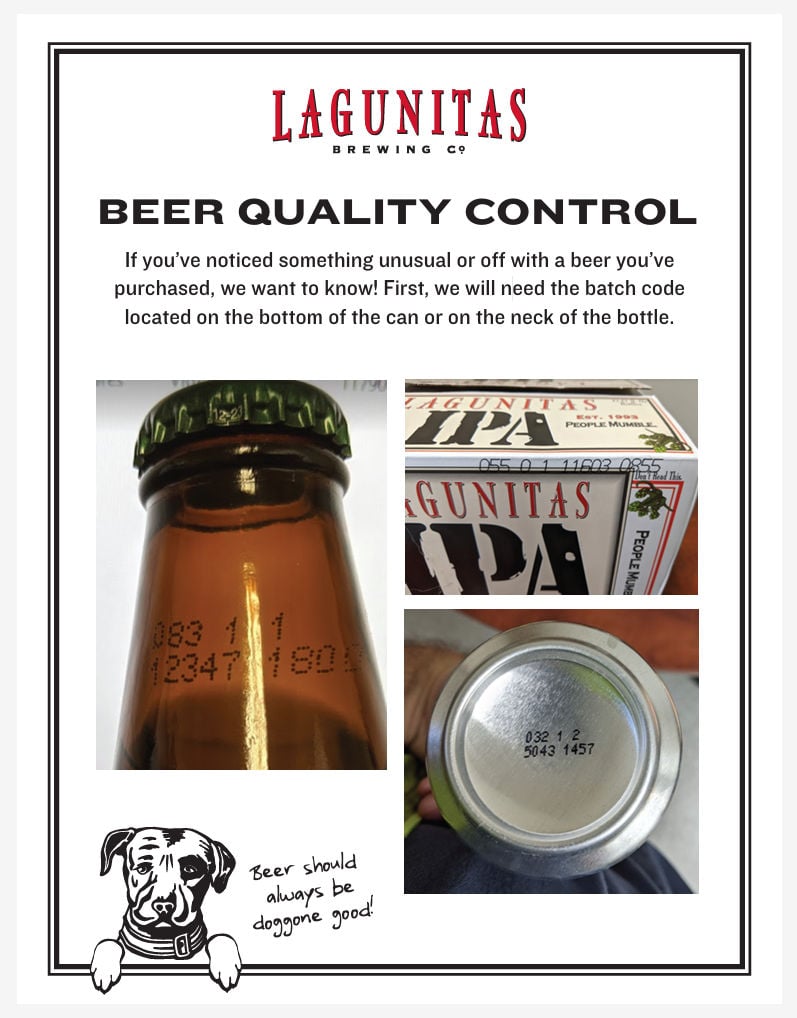
Why Should Date Codes Be Standardized?
This leads me to the topic of this article and why we need standardized date coding.
I hate to even discuss this argument, but I have witnessed out-of-date beer on the shelves of our local beer stores over and over again. When I ask myself why, I can’t come up with an argument to support leaving bad beer on the shelves. As an example, I have a local beer store that either has Bell’s Hopslam on the shelves year-round, or worse yet, they bring out the unsold Hopslam from last year just coincidentally right around the same time this year’s version is released. You can’t convince me that Bell’s Brewery would want year-old Hopslam being sold, so I’m left wondering who thinks it is OK. In the end, either the beer store owner doesn’t understand or doesn’t care, or the distributor doesn’t understand or care that beer does go bad.*
This is where I’m really confused. If you sell out-of-date beer, the consumer will likely have a bad experience and not shop at your beer store again. This affects the beer store and the distributor, so you’d think they’d be motivated to do something about it.
Easily identifiable date codes and even a brewery promotional poster or two, saying that an IPA should be consumed within six months of the packaging date, and a barrel-aged stout may be consumed for years after the packaging date. I believe this would lead to better beer-educated consumers, and while they may not buy the IPA if it’s eight months old, they may then buy the stout because the poster tells them it’s still really good. Yes, you’ll lose some sales, and the “bad” beer will have to go back to someone, but, in the end, you’re cultivating longer-term repeat customers.
*[Editor’s Note]: By “bad” I simply mean that the beer isn’t what the brewer intended for you to drink, and/or the age of the beer has lost most of the hop presence, making it a malt bomb. By no means am I saying old beer is dangerous or will cause illness.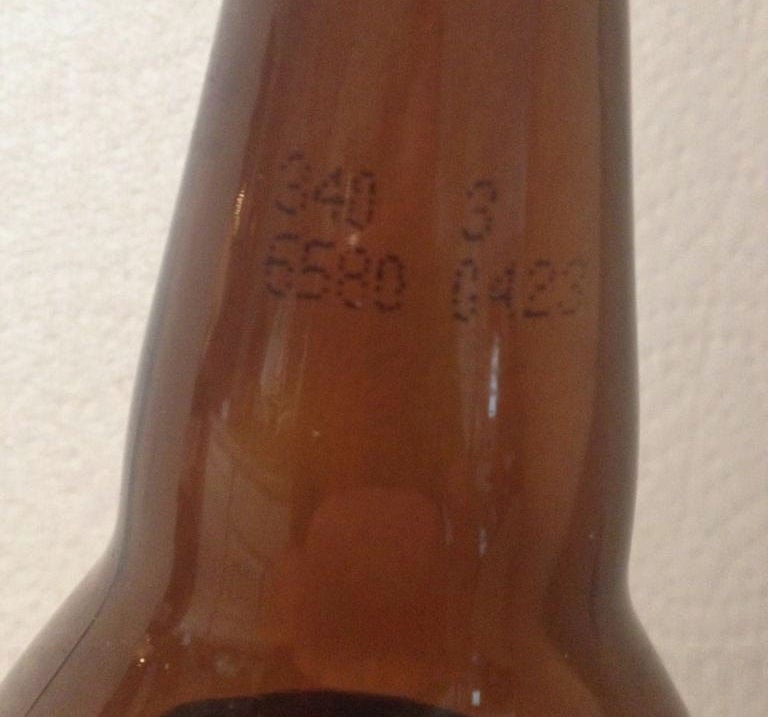
How Should It Be Standardized:
In my opinion, the date coding should be a clearly printed date that the beer was packaged. If you want to also include the “Best By” or “Enjoy By” date as well, then that’s great, but knowing when the beer was packaged is the most important date. No codes, no Julian Calendar, just a clear date that the beer was packaged. This should be the simple standard.
As far as placement, I do think the date should be in a standard location on the can or bottle, and in a clear, readable, smudge-free location. That date should be visible through or on any six, twelve, or fifteen pack carrier, and that date should appear on the case packaging as well. Some breweries have been creative, cutting windows in the multi-packs, allowing you to see the date on the can bottom. Some simply print a second date on the outer packaging. I think both options work; however, there should be some standard placement on packaging that is predictable and visible when the beer is on a crowded shelf or in a crowded cooler.
How This Benefits and Differentiates Small & Independent Beer:
If you’ve followed along with the beer industry over the last eight to ten years, then you’re aware of the chaos that has changed the industry forever. There are now 9000+ small and independent breweries that range from 1-barrel brewhouses in small towns to huge breweries like Yuengling, Boston Beer, and Sierra Nevada (Deciphering Sierra Nevada date codes) in 2013. I’ve witnessed big beer like Anheuser-Busch and MolsonCoors buying out multiple small and independent breweries, only to close or resell them years later.
If you follow the beverage industry in general, then you know that beverages like cider, mead, seltzer, hop water, RTD canned cocktails, Non-Alcoholic beverages, and even THC-based beverages are nibbling away at the market share of beer…and most of them really need to worry about freshness dates like beer.
It used to be clear where the battle lines were between big beer and small, independent beer, but that line is blurred to the point that I would argue that most consumers don’t even know who brews their beer, let alone who owns it.
With that in mind, it is my opinion that small and independent breweries need every advantage they can get. To me, small breweries have smaller brewing teams and a much more hands-on approach to brewing beer. They touch the beer every day, they know many of their consumers who drink their beer, and because many are regional, they also have a closer relationship with their distributors and consumers. This should be an advantage.
With that in mind, taking the time to date code their beers and doing a more accurate and detailed date coding will benefit the brewery, the consumer, and the beer world in general. Taking the time to produce retail posters will help educate the consumers and hopefully grow your sales and increase your customer base.
Every time a consumer buys an out-of-date beer, we all lose. The Brewery loses a customer because the beer they bought was awful, so all of their beer must be awful. The retail shop loses a customer who may not return to buy any beverage after a bad experience, and ultimately, the distributor loses the future sales to that consumer, as well as potentially creating an issue with the brewery or retailer they represent and sell to. Multiply that number by every person and website that this consumer complains to, and the number rapidly grows into a much bigger problem.
It is time for small and independent breweries to help create and adhere to a standardized date coding process.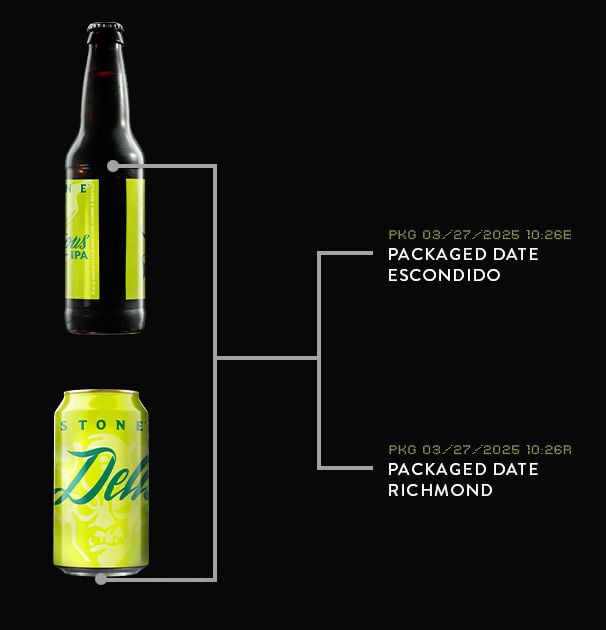
Where should bad beer go?
This question is really where the rubber meets the road for date coding. It’s all well and good to establish a date code standard and label your packaging properly, but what happens next is equally important. Who is responsible for monitoring dates, and what happens to the beer that is out of date?
I found that the TTB made recommendations in 2012 relative to the return policy for freshness-dated beers, but it doesn’t seem to have helped in the last 13 years.
In my opinion, the bigger picture here is that encouraging consumers to buy your beer and growing your beer-loving audience is more important than the money lost on beer that doesn’t sell. I am not in favor of the brewery taking the hit because I truly believe that once the beer leaves their hands, it’s up to the distributor and retailer to sell it and to be aware of dates. Retailers can discount beer as it ages, and distributors can pull it from the shelves when it’s out of date. For the most part, this is clearly not happening, at least not in the areas where I shop for beer. Retailers need to do a better job of discounting beer that’s approaching expiration, and distributors need to do a better job of removing it.
I realize this is an oversimplification of the process and that there are a lot of expired beers sitting on the beer shelves just waiting to be purchased by an unsuspecting consumer. What if retailers and distributors could cooperate on a solution? Retailers identify beer that is out-of-date, and distributors pull that beer, and unfortunately, incur the loss.
What about identifying or creating some sort of beer recycling program? What if old beer could be donated or sold to distilleries to make into spirits? What about other uses for older beer? Is there a farming application or some other way to use old beer?
I do believe there are enough creative minds out there between the brewery, distributor, and retailer to find some solutions. For now, in my opinion, it’s just easier to leave the bad beer on the shelves, but if we keep that practice up, we’ll find ourselves ten years down the road with 900 small and independent craft breweries instead of 9000, and big beer, seltzers, ciders, RTDs, and THC drinks will have eaten our craft beer lunch.
Now What?
This article signals a new beginning for the issue of freshness date coding in small and independent breweries. It’s clear to me that we’ve improved date coding over the last eight years since my original article, but the beverage field is much more competitive, and we need to do more. For this reason, I’m calling on breweries, distributors, and retailers to start talking about this issue instead of burying their heads in the sand. I’m also calling on the Brewers Association to revisit the issues of date coding and, hopefully, establish a meaningful and reasonable standard for date coding of beer to ensure the consumer is drinking the beer that the brewmaster intended for you to drink.
In checking the Brewers Association website, the only reference I can find to date coding is this statement from February 2019:
“The Brewers Association believes all craft beer should use some form of a date or lot code to ensure products are clearly coded for traceability.”
This seems to be geared only toward protecting the brewery and not really geared toward benefiting or encouraging the consumer. I realize they are the “Brewers” Association and not the beer consumer association, but in my opinion, this statement doesn’t go far enough.
Summary:
What started as a personal quest to find fresh beer has led me to my above complaints and recommendations. It’s clear that small and independent breweries are engaged in a beverage battle with not only big beer but also an abundance of other beverages in an already crowded beverage market. It is time to establish a meaningful date coding standard that dictates what dates should be used (packaging date or packaging date and Best By date), and where those dates should be printed (ideally in the same place on bottles, cans, six-packs, and cases). By doing this, we are creating a more educated consumer and hopefully a customer who buys a fresh beer and returns to the retailer over and over again to buy beer.
It’s time to establish a date standard that protects the consumer, educates the consumer, and benefits the brewery, retailer, and distributors. Drop me a comment and let me know if you agree, disagree, or if you have any suggestions.



Comments 0
No Readers' Pick yet.