



The Farm-to-Glass Movement: How Local Ingredients and Sustainable Brewing Are Changing Craft Beer
 Story by:
Bil Corcoran
Story by:
Bil Corcoran
Introduction
In recent years, the craft beer industry has embraced a powerful trend that goes beyond taste—it’s about connection, sustainability, and authenticity. Known as the farm-to-glass movement, this approach emphasizes sourcing local ingredients and adopting eco-friendly brewing practices. Much like the farm-to-table philosophy in food, farm-to-glass brewing celebrates transparency, community, and environmental responsibility. But what does this movement mean for breweries and beer lovers alike? Let’s dive in.
What Is Farm-to-Glass Brewing?
Farm-to-glass brewing is a commitment to using locally grown ingredients—from hops and barley to fruits, herbs, and even honey—in beer production. It’s about shortening the supply chain, reducing carbon footprints, and supporting local farmers. Instead of importing hops from overseas or sourcing malt from distant suppliers, breweries partner with nearby farms to create beers that reflect the flavors of their region.
This movement isn’t just about ingredients; it’s about storytelling. Every pint becomes a narrative of place and people, connecting drinkers to the land where their beer was born.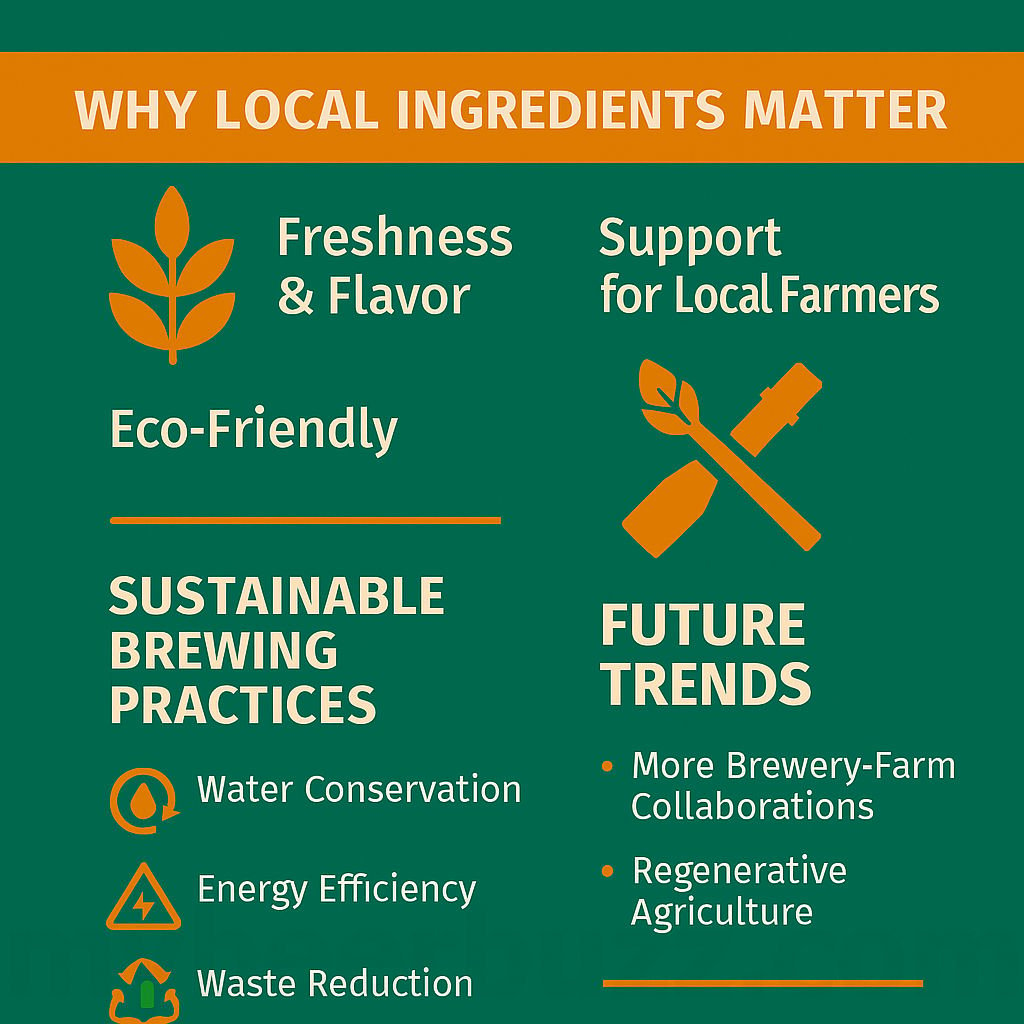
Why Local Ingredients Matter
1. Freshness and Flavor
Local sourcing means ingredients spend less time in transit, preserving their freshness and potency. Fresh hops impart vibrant aromas, while locally malted grains add depth and character. Seasonal fruits and herbs allow brewers to craft unique, limited-edition beers that showcase regional terroir.
2. Supporting Local Economies
By buying from nearby farms, breweries inject money into local communities. This creates a symbiotic relationship where farmers grow specialty crops for brewers, and brewers promote agricultural diversity.
3. Sustainability
Transporting ingredients across continents consumes fuel and generates emissions. Farm-to-glass brewing minimizes these impacts, making beer production more eco-friendly. Many breweries also adopt organic farming practices, compost spent grains, and recycle water to further reduce their environmental footprint.
The Role of Sustainable Brewing Practices
Farm-to-glass isn’t just about sourcing—it’s about responsible brewing. Sustainability initiatives include:
Water Conservation: Breweries are finding ways to reuse water in cleaning and cooling processes.
Energy Efficiency: Solar panels, heat recovery systems, and LED lighting help reduce energy consumption.
Waste Reduction: Spent grains often go to local farms as animal feed, closing the loop between brewing and agriculture.
Packaging Innovations: Lightweight cans, recyclable materials, and refillable growlers cut down on waste.
These efforts resonate with consumers who value brands that prioritize the planet.
Breweries Leading the Charge
Across the U.S. and beyond, breweries are embracing farm-to-glass principles. Examples include:
Hill Farmstead Brewery (Vermont): Known for sourcing grains and hops from local farms and using sustainable brewing methods.
Scratch Brewing Co. (Illinois): Famous for incorporating foraged ingredients like mushrooms, herbs, and tree bark into their beers.
Urban Roots Brewing (California): Partners with regional farmers to create beers that highlight local agriculture.
These breweries prove that sustainability and creativity go hand in hand.
Consumer Demand for Transparency
Today’s drinkers want more than great taste—they want authenticity. Labels that highlight local sourcing, organic certification, and eco-friendly practices attract conscious consumers. Breweries that share their sustainability story on packaging and social media build trust and loyalty.
The farm-to-glass movement also aligns with broader trends like slow food, craft spirits, and locally roasted coffee, creating a lifestyle centered on mindful consumption.
Challenges and Opportunities
While farm-to-glass brewing offers many benefits, it’s not without challenges:
Cost: Local ingredients can be more expensive than bulk imports.
Seasonality: Limited availability of certain crops requires creative recipe planning.
Scale: Large breweries may struggle to source enough local ingredients for mass production.
However, these challenges present opportunities for innovation. Breweries can experiment with seasonal releases, collaborate with farmers on specialty crops, and educate consumers about the value of local sourcing.
The Future of Farm-to-Glass
As sustainability becomes a priority for consumers and businesses alike, farm-to-glass brewing is poised for growth. Expect to see:
More collaborations between breweries and farms
Increased use of regenerative agriculture
Greater transparency through QR codes and digital storytelling
Expansion into other beverages like cider and kombucha
This movement isn’t just a trend—it’s a shift toward a more responsible and connected way of brewing.
Final Thoughts
The farm-to-glass movement represents the best of craft beer: creativity, community, and care for the planet. By choosing beers made with local ingredients and sustainable practices, drinkers support a future where every pint tells a story of place and purpose.
So next time you raise a glass, ask yourself: Where did this beer come from? If the answer is “close to home,” you’re part of a movement that’s making brewing better for everyone.
zzubreebym



Comments 0
No Readers' Pick yet.