





Best Beer and Chocolate Pairings: 15 Combinations + How to Pair Them
 Story by:
Bil Corcoran
Story by:
Bil Corcoran
Beer and chocolate pairings sound more complicated than they actually are. People hear the phrase and picture some overly staged tasting where everyone is trying hard to detect “notes” of something. In practice, it’s much more straightforward and a lot more fun. The best beer and chocolate pairings usually come down to a few easy rules: matching dark, milk, or white chocolate with the right beer style, knowing when bitterness and sweetness help each other, and avoiding the combinations that turn sharp, heavy, or just plain weird.
That is what this guide is here to do. We’re breaking down which beer styles work best with different kinds of chocolate, which pairings are easiest for beginners, what to avoid, and which combinations are actually worth trying first. You do not need rare bottles, a formal tasting setup, or an advanced palate to figure this out. Start with a few smart pairings, pay attention to how the flavors change from bite to sip, and the pattern shows itself pretty fast.
Ultimately, this guide is built around practical at-home pairings that actually taste good, not gimmicky combinations dressed up as clever ideas. Keep reading for a pragmatic guide on how to select your beer and chocolate pairings, and our list of fifteen beginner-friendly combinations that you can try for yourself at home or with friends.
Best Beer and Chocolate Pairings (Quick Picks Table)
If you’re looking for the best beer and chocolate pairings to try right away, start with these proven combinations. Pick one row, pour a small glass, and taste it both ways: bite first, then sip, then sip first then bite. You’ll feel the difference immediately.
|
Best for |
Beer pick |
Chocolate pick |
Why it works |
Beginner-friendly? |
|---|---|---|---|---|
|
Best beginner pairing |
Brown ale |
Milk chocolate |
Toasty malt + creamy sweetness, easy balance |
Yes |
|
Best dark chocolate match |
Imperial stout |
Dark chocolate (70%+) |
Roast and cacao line up, bitterness gets smoothed out |
Usually |
|
Best milk chocolate match |
Porter |
Milk chocolate with hazelnuts |
Nutty, roasty, and soft in a complementary way |
Yes |
|
Best “wow” contrast pairing |
Saison |
White chocolate + citrus |
Peppery Saison spice lifts sweet creaminess |
Sometimes |
|
Best dessert-night pairing |
Milk stout |
Brownies or chocolate cake |
Dessert pairing that still tastes balanced |
Yes |
|
Best for sharing at a party |
Amber/red ale |
Mixed truffles (salt, vanilla, fruit) |
Flexible and forgiving across fillings |
Yes |
|
Best fruit-forward pairing |
Cherry sour |
Dark chocolate (plain or fruit-filled) |
Cherry tastes like a delightful sauce on cacao |
Sometimes |
|
Best “I love hops” option |
Hazy IPA |
Salted dark chocolate |
Citrus can work if bitterness behaves |
No |
Why Beer and Chocolate Pairings Work Together
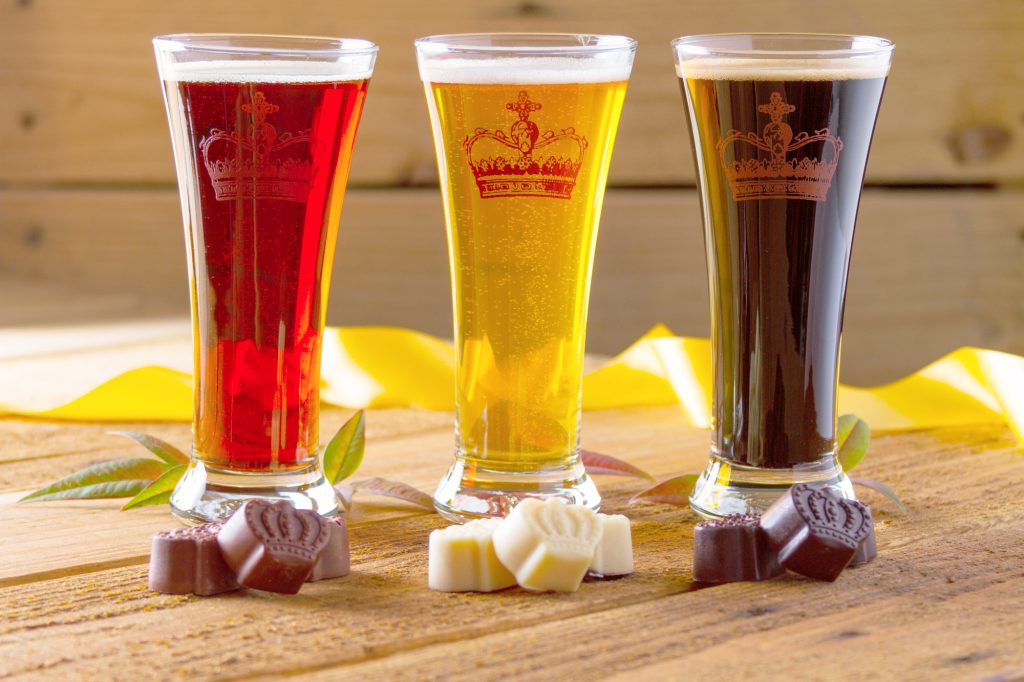
Beer and chocolate pairings work because they follow the same core principles used in professional food pairing: balance, intensity matching, and texture contrast. Whether you’re talking about a steak dinner or a donut, the essentials of pairing always apply. If you want to go deeper on the subject, David Nilsen’s book Pairing Beer & Chocolate is one of the clearest resources out there.
Balance: Sweetness vs Bitterness, Roast vs Creaminess
Chocolate has natural bitterness (cacao) plus sweetness (sugar). Beer has bitterness (hops and roast) plus sweetness (malt). When you match them well, the bitterness stops feeling sharp and starts feeling “dark” in a pleasant way.
Intensity Matching: Don’t Let One Steamroll the Other
A delicate milk chocolate can be dominated by a huge, boozy stout. A light lager can get lost under a heavy 85% dark bar. Match intensity first, and half the battle is over.
Texture: Chocolate Fat Smooths Sharp Edges; Carbonation Resets Your Palate
Chocolate melts and coats your mouth. That makes rough edges feel rounder. Beer bubbles cut through that coating and reset your palate, so you don’t feel like you’re chewing your way through a dessert marathon.
How to Pair Beer and Chocolate
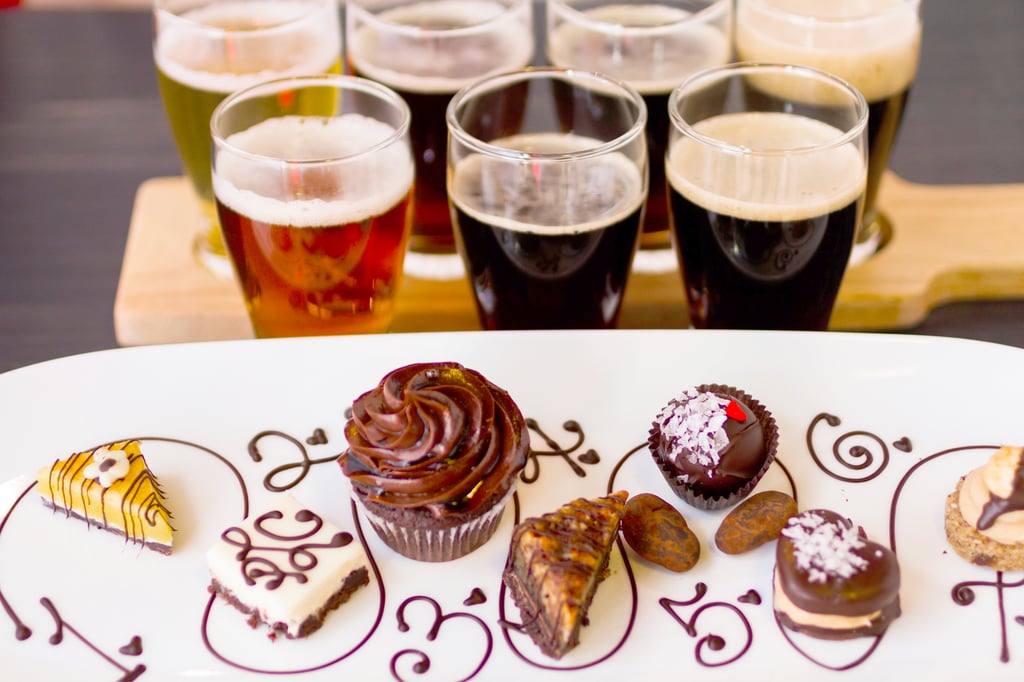
Pairing beer and chocolate is about matching intensity, balancing sweetness and bitterness, and choosing whether flavors should complement or contrast. Start by matching intensity so nothing gets overpowered. Then use a complement for comfort or contrast for a unique sensory experience.
How We Built These Pairings
We built these pairings around a few simple rules that hold up almost every time. Match intensity first so one side does not steamroll the other, keep an eye on sweetness versus bitterness, and use things like fruit, salt, nuts, or spice when a pairing needs a bridge. From there, it is just a matter of tasting both ways. Bite first, then sip. Sip first, then bite. Usually one order tells you a lot faster whether the pairing actually works or just sounded good on paper.
The Rule of Thumb (Fast + Memorable)
Match intensity first. Then choose complement or contrast. That’s the whole game in one sentence. A handy shortcut:
- Darker, roastier beers often work best with darker, roastier chocolate.
- Lighter beers often work best with milk chocolate or white chocolate.
- But watch bitterness. Too much hop bitterness can fight sweetness fast.
Complement vs Contrast
Complement pairings feel like harmony:
- Roast with roast
- Caramel with caramel
- Nutty with nutty
- Vanilla with vanilla
- Brown sugar with brown sugar
Contrast pairings feel like fireworks:
- Bright citrus beer with salted dark chocolate
- Crisp beer with creamy milk chocolate
- Tart fruit beer with dark chocolate
- Peppery spice beer with white chocolate
What to Avoid
|
Bad match |
Why it fails |
Better swap |
|---|---|---|
|
West Coast IPA + very sweet milk chocolate |
Bitterness and sweetness can clash fast and turn harsh |
Brown ale + milk chocolate |
|
High-acid sour + plain milk chocolate |
The acidity can make the chocolate taste sharp or awkward |
Fruited sour + dark chocolate with fruit or salt |
|
Too-cold imperial stout + dark chocolate |
The cold mutes aroma and flattens the flavors that make the pairing work |
Imperial stout served at room temp, not ice-cold, with 70% dark chocolate |
How to do a 5-Minute Tasting at Home
Do this once, and you’ll never feel lost again.
- Pour small: You’re doing beer pairings, not a full pint commitment.
- Bite first, then sip: Chocolate coats the mouth; beer shows contrast and texture.
- Sip first, then bite: Beer sets the baseline; chocolate changes the finish.
- Cleanse with water, not chips: Chips bring salt and oil that hijack everything.
- Trust your hunch: If the aromas feel like they belong together, you’re probably close.
Serving temp tip, no numbers needed: don’t serve your dark beers ice-cold. Let them loosen up so the chocolate notes show.
Best Beer Styles for Dark, Milk, and White Chocolate Pairings
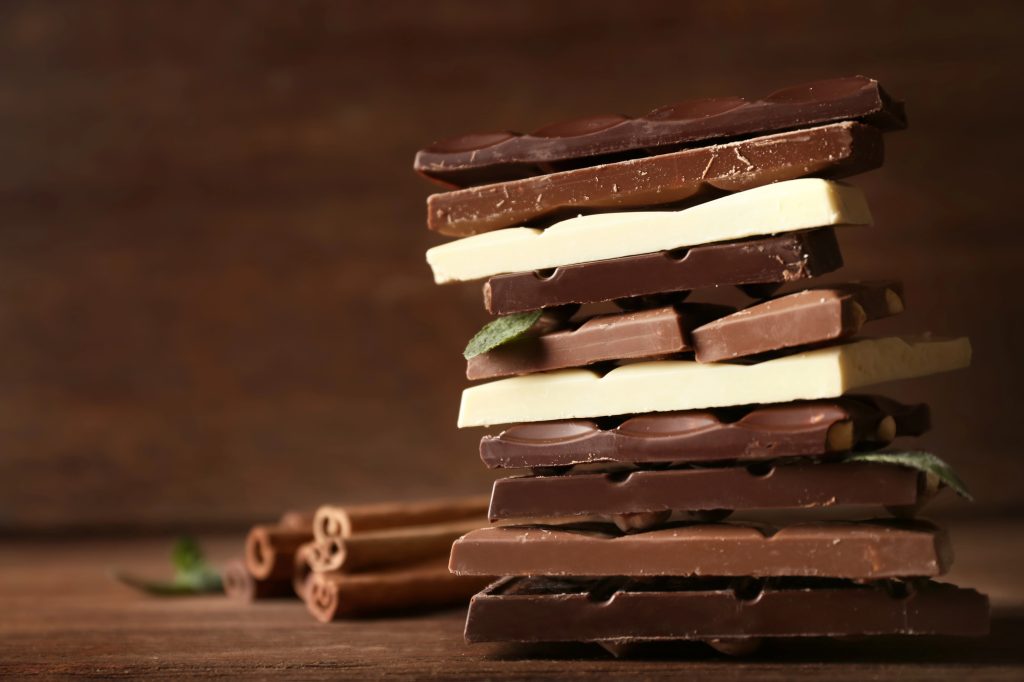
Not every chocolate wants the same thing from a beer. Dark chocolate can handle some weight. Milk chocolate usually does better with something softer and more rounded. White chocolate is its own deal entirely, because now you are dealing more with sweetness and creaminess than actual cacao bite. Start with the chocolate, then pick the beer from there. That tends to go better than grabbing a bottle first and trying to force the match.
Best Beers for Dark Chocolate
Dark chocolate is where stout and porter make the most sense, and not just because they’re the most obvious combination. Roast, coffee, toffee, dark fruit, a little bitterness, all of that tends to line up naturally with darker chocolate, especially once you get into bars around 70% cacao and up. Imperial stout is the big, flashy option, but a good porter or oatmeal stout can get you there without feeling like dessert turned into a chore.
The thing to watch is force. If the beer is huge and the chocolate is aggressively bitter, the whole pairing can get a little exhausting in a hurry. Usually the better move is a beer with some depth and some sweetness still intact, paired with a dark chocolate that tastes rich rather than severe.
Best Bets: imperial stout, porter, oatmeal stout, English barleywine
Best Beers for Milk Chocolate
Milk chocolate is a friendlier target, but it can also get run over fast. Brown ale is probably the cleanest answer here. Porter works too, especially if there are hazelnuts, caramel, or peanut butter involved, and amber or red ale can be a great middle-ground option when you want something malty without dragging roast into everything.
Milk chocolate is the hardest pairing to mess up. Its depth and sweetness give you some cushion; the beer does not have to be perfect, and the pairing logic reveals itself pretty quickly. If you have a well-stocked beer fridge and a chocolate bar in the pantry, odds are you already have enough on hand to craft a decent pairing.
Best Bets: brown ale, porter, amber ale, red ale
Best Beers for White Chocolate
White chocolate has a unique, usually sweet flavor, which makes it more challenging to pair with beer. It is sweet, creamy, and a little heavy if the beer does not bring some lift. That is why pilsner, clean lager, witbier, and saison are recommended to pair with white chocolate. You want contrast, distinctive flavors, and enough of an “explosion” In your mouth to keep the pairing from feeling flat.
This is also the pairing people tend to underestimate. Done right, it is not cloying at all. It can actually feel pretty sharp and refreshing, especially if there is citrus, spice, or a dry finish in the beer. White chocolate does not need something heavier. It needs something that keeps it bursting with zest.
Best Bets: pilsner, clean lager, witbier, saison
15 Best Beer and Chocolate Pairings to Try
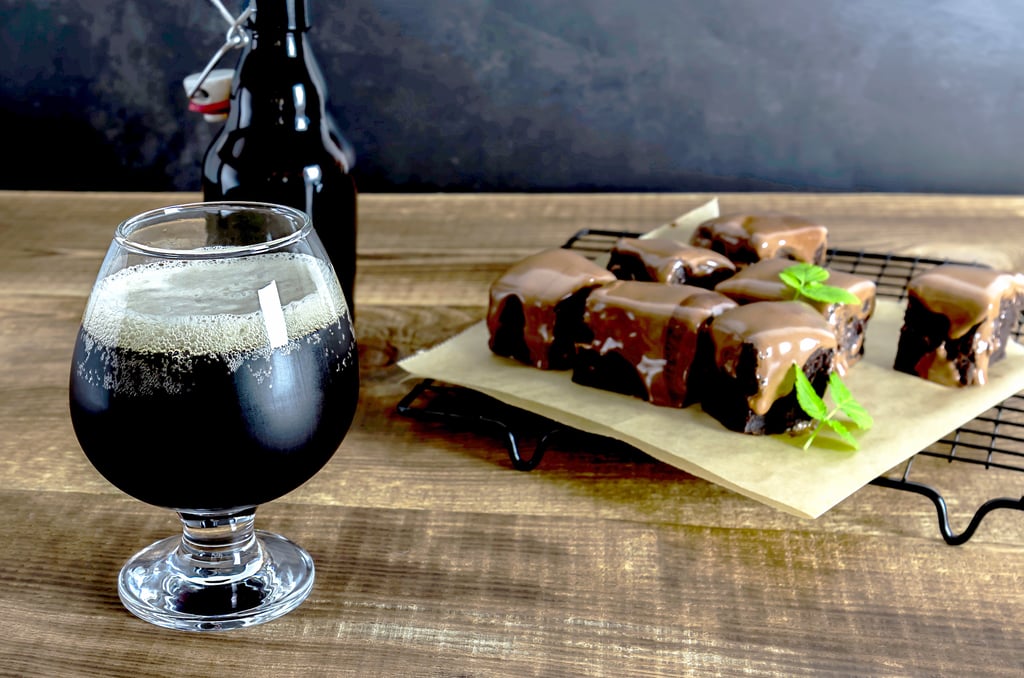
You’ve got the rules. Now for the fun part: actual pairings you can try without hunting down rare bottles or overthinking it. Start with a beer you already like, pair it with the right chocolate, and see what happens in the glass. Each pairing uses both widely available beer styles as well as chocolate that will be easy to source. These are some of the best beer and chocolate pairings you can try at home using widely available beer styles and chocolate.
1) Imperial Stout + Dark Chocolate
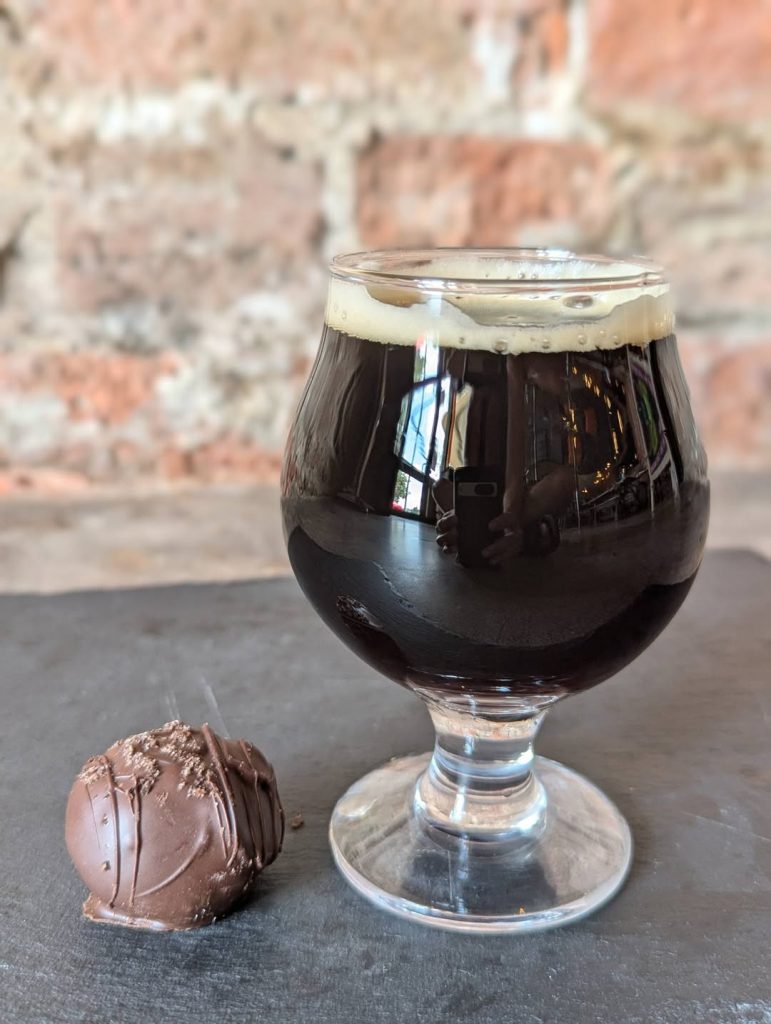
Like a dark chocolate truffle paired with espresso, this combination amplifies roast and cocoa while smoothing bitterness. The first sip lands roasty and firm, then the chocolate rounds it out, pulling the whole thing deeper into cocoa territory.
- Why it works: Roast meets cacao, sweetness smooths bitterness
- Pro tip: Start with plain dark chocolate before you add fillings
2) Milk Stout + Salted Dark Chocolate
Creamy stout up front, then the salt flips a switch, and the chocolate tastes darker and more intense. The finish is cocoa, vanilla, and a soft roasted edge.
- Why it works: Salt lifts flavors, creamy beer softens the edges
- Pro tip: One small square is enough. This pairing blooms on the finish.
3) Brown Ale + Milk Chocolate with Hazelnuts
This tastes like chocolate-covered hazelnuts with a little extra toast. The brown ale keeps the whole thing soft and nutty instead of pushing it toward bitterness.
- Why it works: Nutty malt and nutty chocolate stack in a good way
- Pro tip: If the chocolate is very sweet, pick a drier brown ale.
4) Amber Ale + Milk Chocolate with Toffee
This lands like caramel candy, toasted bread, and a square of milk chocolate all at once. It leans sweet, but a smooth amber keeps it from getting syrupy. Amber lagers will also work for this pairing.
- Why it works: Malt sweetness mirrors candy sweetness without extra roast
- Pro tip: Avoid hoppy ambers here. You want smooth, not sharp.
5) Porter + Milk Chocolate with Peanut Butter
Peanut butter first, chocolate second, and the porter ties it together with a “baked” roasted taste. The finish is basically a peanut butter cup. While there are lots of peanut butter porters out there, try to avoid them so that each element in the pairing can stand on its own.
- Why it works: Porter brings chocolate-adjacent roast without overwhelming
- Pro tip: If you’re drinking a chocolate-and-peanut-butter beer or a peanut-butter-and-chocolate beer, pair it with a simpler milk chocolate bar so it doesn’t get too heavy.
6) Pilsner + White Chocolate
White chocolate melts like sweet vanilla cream, and then the pilsner comes in and wipes the slate clean. It’s a dessert that doesn’t sit on your tongue all night. A light lager or kölsch could also do the trick.
- Why it works: Carbonation and dryness keep white chocolate from becoming too cloying
- Pro tip: This is a great “after dinner, I still want something” pairing.
7) Witbier + White Chocolate with Citrus
Orange peel and soft wheat hit first, then the white chocolate pulls it in a creamsicle direction without making it feel like candy. The trick is keeping the citrus light-handed.
- Why it works: Citrus brightens sweetness, wheat softness keeps it gentle
- Pro tip: Keep citrus subtle. Too much turns it into candy territory.
8) Saison + White Chocolate with Ginger
The saison brings peppery spice, the ginger wakes it up, and the white chocolate smooths it all out. The finish is dry and clean, so you want another sip. Shoot for a saison on the drier side for maximum contrast.
- Why it works: Spice cuts sweetness, dry finish keeps it clean
- Pro tip: If the saison is very dry, pick richer white chocolate for balance.
9) Kriek + Dark Chocolate with Cherry
Tart cherry shows up first, then the dark chocolate turns it into something close to Black Forest cake. The finish is bright, sharp, and just rich enough to keep it from going jammy.
- Why it works: Cherry tastes like a dessert sauce on cacao
- Pro tip: Add a tiny pinch of salt to the chocolate if the sourness is sharp.
10) Raspberry Sour (Framboise) + Dark Chocolate with Raspberries
Bright berries up front, then the chocolate makes it taste like jam got folded into cocoa. It ends clean and zippy instead of heavy. The boldness of the dark chocolate will stand up well to the tartness of the sour.
- Why it works: Fruit bridges acidity and cacao depth
- Pro tip: Avoid plain milk chocolate with high-acid sours. It usually clashes.
11) Belgian Dubbel + Dark Chocolate with Orange
Dubbel gives you dried fruit and brown sugar, and the orange chocolate does what orange chocolate always does: makes everything feel cozy. The finish is warm, lightly spiced, and dessert-like.
- Why it works: Dried fruit and brown sugar notes in the beer love the deeper citrus notes in oranges
- Pro tip: This is a “slow sip” pairing. Let it linger.
12) Oatmeal Stout + Chocolate Vanilla Truffle
Silky stout texture plus vanilla truffle equals chocolate cream with a gentle roasted backbone. It’s smooth, not bitter, and it lingers on the tongue.
- Why it works: Silky textures meet creamy filling, roast stays polite
- Pro tip: Let the truffle melt a little before sipping.
13) Coffee Stout + Milk Chocolate with Caramel
Espresso roast hits, then caramel milk chocolate turns it into a mocha with training wheels. The finish is coffee and cocoa, not burnt, not sharp.
- Why it works: Coffee, caramel, and chocolate are a built-in trio
- Pro tip: If the roast is intense, choose a richer chocolate to cushion the bitterness.
14) Hazy IPA + Bitter Salted Dark Chocolate (80% Cocoa or More)
This one is a little riskier, but when it works, it really works. The salt keeps the citrusy hop edge from turning harsh, and the finish lands somewhere between cocoa and grapefruit peel.
- Why it works: Citrus can play against cacao if bitterness stays controlled
- Pro tip: If it tastes harsh, swap IPA for pale ale or saison.
15) Barleywine + Dark Chocolate with Nuts
Big malt sweetness and dried fruit meet dark chocolate, turning into an after-dinner dessert in liquid form. The nuts add crunch, and the finish lasts forever.
- Why it works: Big malt sweetness matches intensity; nuts add crunch and depth
- Pro tip: Pour smaller than you think. This is rich on rich.
Beer and Chocolate Desserts That Work
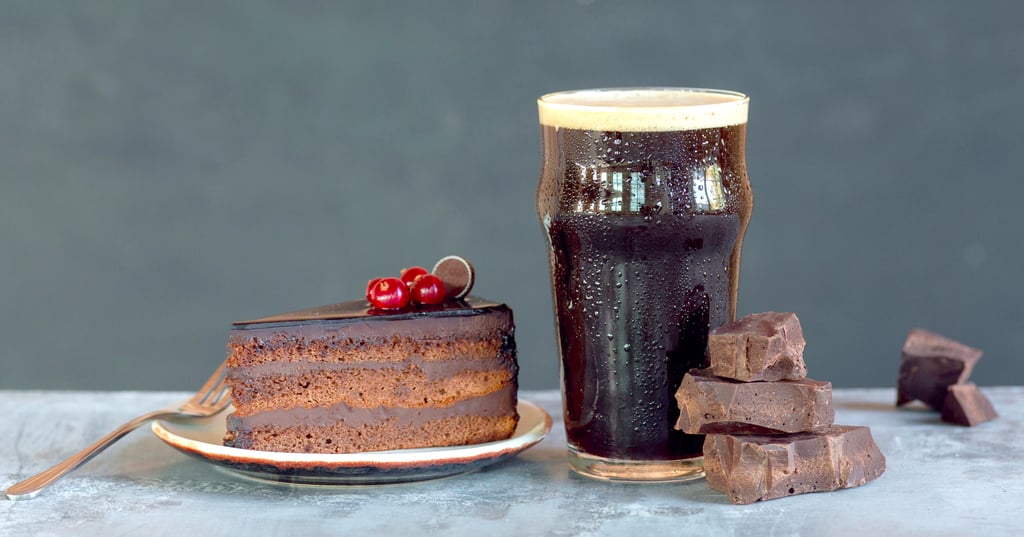
Desserts are also an ideal candidate for beer pairings, especially chocolate-forward desserts. All of the same pairing rules from before still apply, but now we are trying to work with the dessert as a whole rather than just the chocolate. Keep reading for our list of recommended beer and dessert pairings.
Brownies
Brownies are dense. They do best with beers that either match richness or cut it cleanly.
- Best matches: Milk stout, porter, brown ale
- Why it works: Roast echoes chocolate, carbonation refreshes the palate
- Don’t ruin it: Avoid super-bitter beers with frosting-heavy brownies
Truffles
Truffles change the rules because fillings matter.
- Salted truffles: Stout or porter
- Spice truffles: Dubbel or saison
- Fruit-filled truffles (cherry, raspberries): Fruited sour
- Vanilla truffles: Oatmeal stout, brown ale, or a smooth porter
Chocolate Cake
Chocolate cake is one of the most common desserts you’ll find at special occasions. Reaching for the right beer can be the perfect way to elevate the celebration.
- Fudgy dark cake: Stout or porter
- Lighter cake or very sweet slices: Amber/red or brown ale
- Quick warning: Avoid aggressive bitterness with thick frosting. It can turn medicinal.
Finally, chocolate and beer pairings don’t have to be confined to sweets and dessert. If you are making a chili recipe with chocolate and beer, the ultimate goal is depth of flavor, not sheer sweetness factor. A malty amber ale, brown ale, porter, or lighter stout will usually play nicely with chili, while a hop-forward beer can make the dish taste harsher than it needs to. More savory chocolate dishes like mole are also ideal for beer pairings.
Where to Experience Pairings Firsthand
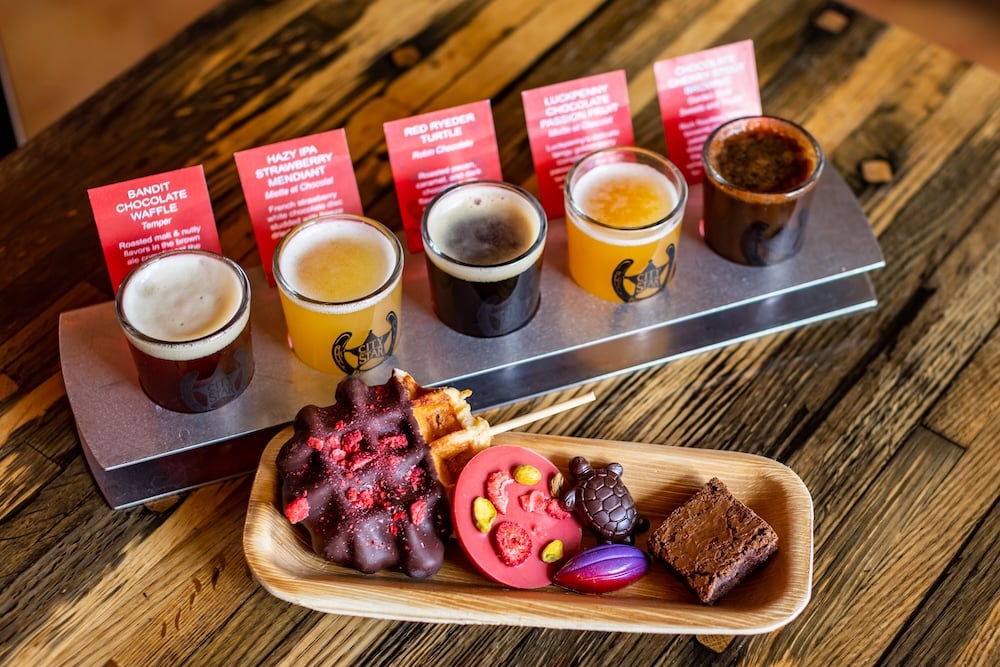
If you would rather try beer and chocolate pairings before buying a sky-high stack of chocolate bars and a plethora of pricey bottles, here’s the best way to start: One good brewery, one good chocolatier, and a few small pours will usually teach you more than a long list of pairing rules ever could. The point is not to sample everything in sight, but rather to see how a specific beer changes when you take a bite of the right chocolate next to it.
Belgium gets romanticized for the combination of beer and chocolate, and for obvious reasons. If you are looking into a Belgian beer and chocolate tour, Brussels is the ultimate destination. Great beer and great chocolate are everywhere in Belgium’s capital city, and the best tours do more than just hand you a drink and a truffle and call it a day. They slow the pours down, keep the pairings intentional, and make sure each chocolate is matched to a specific beer for a clear reason.
You don’t need a passport to try this, though. Even at your local watering hole, the easiest move is to ask what they would pour with salted dark chocolate, milk chocolate, or fruit-filled dark chocolate. If they are willing to do a small pour next to a square or two, even better. That is usually enough to tell whether the pairing has real chemistry or is just a nice idea on paper.
Your Beer and Chocolate Pairings Game Plan
Beer and chocolate pairings do not have to be perfect. The real goal is finding a few combinations you would actually want to come back to. If you want the short version, this is the easiest way to stay in the good zone:
- Pick intensity. Do not let one steamroll the other.
- Choose complement or contrast. Harmony if you want comfort, contrast if you want a little spark.
- Fine-tune with salt, nuts, or fruit. Those are usually the easiest bridge ingredients.
If you want the easiest way to try this at home, start here:



Comments 0
No Readers' Pick yet.