





Best Cities for Vegetarians & Vegans in 2025
 Story by:
Bil Corcoran
Story by:
Bil Corcoran
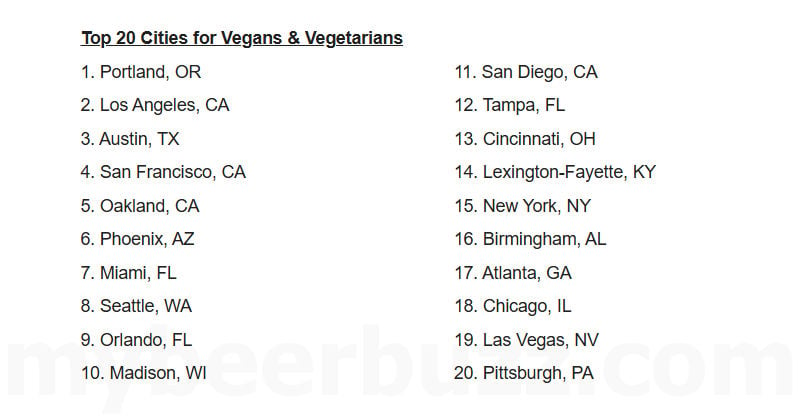
With Oct. 1 being World Vegetarian Day and Nov. 1 being World Vegan Day, and with about 18 million U.S. adults having a vegetarian or vegan diet, the personal-finance company WalletHub today released its report on 2025’s Best Cities for Vegans & Vegetarians, as well as expert commentary.
To determine the best and cheapest places for following a plant-based diet, WalletHub compared the 100 largest cities across 17 key indicators of vegan- and vegetarian-friendliness. The data set ranges from the share of restaurants serving meatless options to the cost of groceries for vegetarians to salad shops per capita.
Best vs. Worst
Scottsdale, Arizona, has the highest share of restaurants serving vegetarian options, which is 14.2 times higher than in Laredo, Texas, the city with the lowest.
Scottsdale, Arizona, has the highest share of restaurants serving vegan options, which is 55.3 times higher than in North Las Vegas, Nevada, the city with the lowest.
San Francisco has the most community-supported agriculture programs (per square root of population), which is 26.5 times more than in Houston, Texas, the city with the fewest.
Atlanta, Georgia has the most salad shops (per square root of population), which is 17.2 times more than in Santa Ana, California, the city with the fewest.
To view the full report and your city’s rank, please visit:
https://wallethub.com/edu/best-cities-for-vegans-vegetarians/39706/
“While vegetarians and vegans are still a relatively small share of the population, businesses are recognizing their impact on their market. Just look at businesses like McDonald’s and Burger King incorporating Beyond Meat and Impossible burgers into their menus, for example. With meat prices rising significantly faster than vegetable prices, too, we may see a lot more people taking a foray into a vegetarian or vegan lifestyle in the near future.”
–
“Portland is the best city for vegans and vegetarians in 2025, and its residents eat this type of food 148% more often than the U.S. average. In addition, the city also has the second-highest number of affordable restaurants with vegan and vegetarian options that have at least 4.5 stars on Yelp. Portland also has the ninth-most farmers markets, third-most organic farms, fourth-most community gardens and fourth-most vegetable nurseries and gardening shops per capita.”
– Chip Lupo, WalletHub Analyst
Expert Commentary
What tips do you have for a person who wants to become a vegetarian? How can they make the transition smoother?
“There are so many grades of vegetarian from left-over to pescatarian to one who only eats dairy to pure vegetarian. Start with one day a week or vegetarian and quickly work up to 7 days cooking your favorite dishes for multiple days to make the time costs lower until you create your own pattern. Try to prepare all meals at first also so you do not get caught by all the additive-laden fast foods sold around you. Let alone learn which parts of a store to only visit to focus on your key purchases and evade all the tantalizing ultra-processed food. And shift early to healthier breakfasts like steel cut oats with some berries or fruit.”
Barry M. Popkin – Distinguished Professor, University of North Carolina at Chapel Hill
“Transitioning to a vegetarian diet is smoother when done gradually. Reducing meat intake one meal (or one day) at a time, exploring new recipes, and learning to build balanced meals with legumes, grains, and vegetables can help. Clarifying your personal reasons for choosing a plant-based lifestyle can deepen your sense of purpose and help sustain long-term motivation and commitment.”
Dr. Casey Colin, DCN, RDN, LDN, FAND – Director, Nutrition and Dietetics Undergraduate Programs; Associate Professor, University of North Florida
What tips do you have for a person who wants to have a vegetarian/vegan lifestyle while on a budget?
“A vegan/vegetarian diet is extremely healthful and can even cost the same as or less than a diet that includes meat. Focus on pantry stables such as legumes such as lentils and beans which can be purchased dried or canned. Whole grains, oat-based products and fruits and vegetables are also cost effective – especially when purchased as canned or frozen (which are just as nutritious as fresh), or purchased in season.”
Marjorie Freedman, MS, PhD – Retired Professor, San Jose State University
“While folks may perceive a vegetarian/vegan diet to be more costly than an omnivorous eating pattern, data tend to indicate that plant-based, and particularly vegan consumers, spend less on food than those incorporating animal products into their diets. If you have ever listened to financial, debt-free guru Dave Ramsey he is often quoted as telling people to eat ‘rice and beans’ while they are building their financial foundation, and for good reason. These two foods are not only low-cost but they are also ‘complementary protein’ sources, meaning that when combined they contain all of the essential amino acids that our body requires. The key for keeping costs down on vegetarian/vegan diets is the same for omnivorous eating patterns. Make a list, check for store discounts and coupons, lean on the bulk bins, shop for seasonal produce and limit reliance on ready-to-eat or ready-to-heat convenience items, and you will very likely be able to lower your grocery bill.”
Tanya M. Halliday, PhD, RD – Associate Professor, University of Utah, Health
What are the most common mistakes people make when being on a vegan or vegetarian diet, and how can they avoid them?
“A common mistake can be missing out on important nutrient(s)- this can be avoided by proper meal planning and the assistance of a Dietitian can help!”
Elizabeth Natale – Assistant Clinical Professor, Merrimack College
“Common challenges include depending too heavily on convenience items that may lack nutritional balance, overlooking essential nutrients like protein, vitamin B12, and iron, and not consuming enough calories. To support a healthy plant-based diet, individuals should focus on a diverse range of whole plant foods, consider supplements or fortified products when needed, and include sources of healthy fats and vitamin C-rich foods to enhance nutrient absorption.”
Dr. Casey Colin, DCN, RDN, LDN, FAND – Director, Nutrition and Dietetics Undergraduate Programs; Associate Professor, University of North Florida






Comments 0
No Readers' Pick yet.