



Is Craft Beer Saturated? Market Trends, Growth Challenges, and the Future of Small Breweries
 Story by:
Bil
Story by:
Bil
Introduction
The craft beer industry has transformed the beverage market over the past two decades. What started as a niche movement driven by passionate homebrewers has grown into a multi-billion-dollar craft beer market, with thousands of breweries operating across the United States and beyond. But as shelves become crowded and tap lists overflow with IPAs, stouts, and sours, a pressing question emerges: Has the craft beer market reached saturation?
The Rise of Craft Beer
The craft beer boom began in the early 2000s, fueled by consumers seeking flavor, authenticity, and local connections. Breweries like Sierra Nevada, Dogfish Head, and Stone Brewing paved the way for innovation, introducing bold styles and experimental ingredients. By 2020, the U.S. boasted over 8,000 breweries, according to the Brewers Association—a staggering increase from fewer than 1,500 in 2000.
This growth was driven by several factors:
Changing consumer preferences: Drinkers moved away from mass-produced lagers toward unique, artisanal options.
Local pride: Supporting neighborhood breweries became a cultural trend.
Social experience: Taprooms offered community spaces that big brands couldn’t replicate.
However, rapid expansion often brings challenges. Today, the craft beer landscape looks very different than it did a decade ago.
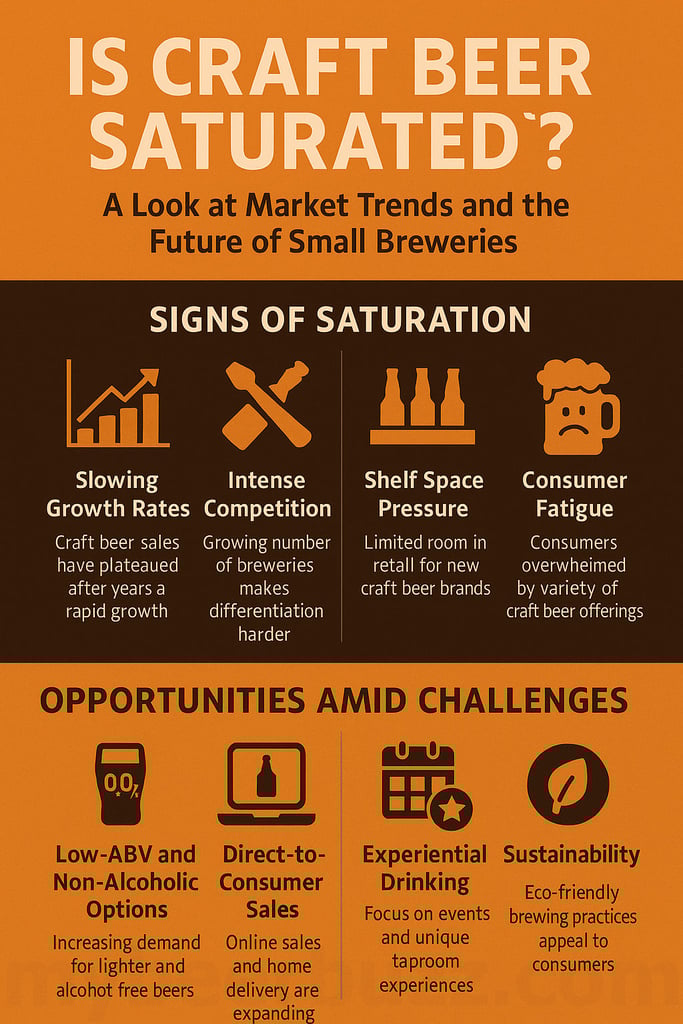
Signs of Saturation in the Craft Beer Market
While craft beer sales remain strong, indicators suggest the market is tightening:
Slowing Growth Rates
After years of double-digit growth, craft beer sales have plateaued. According to industry reports, growth has hovered around 1–2% annually since 2019, compared to 10% or more in earlier years.
Intense Competition Among Breweries
With thousands of breweries vying for attention, differentiation is harder than ever. Many regions are oversaturated, making it difficult for new entrants to gain traction.
Shelf Space Pressure
Retailers have limited space, and big brands often dominate distribution channels. Smaller breweries struggle to secure placements, especially in national chains.
Consumer Fatigue
The novelty of craft beer has worn off for some drinkers. While enthusiasts still chase rare releases, casual consumers may feel overwhelmed by endless choices.
The Impact on Small Breweries
For small craft breweries, saturation means tighter margins and increased risk. Opening a brewery is no longer a guaranteed success story. Rising costs for ingredients, labor, and compliance add to the pressure. Many breweries rely heavily on taproom sales, but competition for foot traffic is fierce.
Some breweries have closed their doors, while others pivot to survive. Strategies include:
Diversification: Adding hard seltzers, non-alcoholic beers, or even coffee to broaden appeal.
Collaborations: Partnering with other breweries or local businesses to create buzz.
Opportunities Amid Challenges
Despite saturation concerns, opportunities remain for those who innovate and adapt. Here are key trends shaping the future of craft beer:
Low-ABV and Non-Alcoholic Options
Health-conscious consumers are driving demand for lighter, alcohol-free beers. Breweries that master these styles can tap into a growing segment.
Direct-to-Consumer Beer Sales
Online ordering and home delivery surged during the pandemic and remain popular. Breweries embracing e-commerce can expand their reach beyond local markets.
Experiential Drinking
Breweries that offer more than beer—think live music, food pairings, and immersive events—create lasting customer loyalty.
Sustainability in Brewing
Eco-friendly practices resonate with modern consumers. Breweries that prioritize sustainability can stand out in a crowded field.
Is the Craft Beer Bubble Bursting?
While the craft beer boom has slowed, it’s not collapsing. Instead, the market is maturing. Like any industry, growth eventually levels off, and weaker players exit. For consumers, this means fewer but stronger breweries, offering higher-quality products and experiences.
For aspiring brewers, the message is clear: passion alone isn’t enough. Success requires strategic planning, financial discipline, and a willingness to evolve. The craft beer story isn’t ending—it’s entering a new chapter.
Final Thoughts
So, is craft beer saturated? In many ways, yes—but that doesn’t spell doom. It signals a shift from explosive growth to sustainable business models. Breweries that embrace innovation, community, and adaptability will continue to thrive, even in a crowded market.
zzubreebym




Comments 0
No Readers' Pick yet.