



Beer Around the World: A Cultural Tour of Iconic Beer Styles and Their Origins

 Story by:
Bil
Story by:
Bil
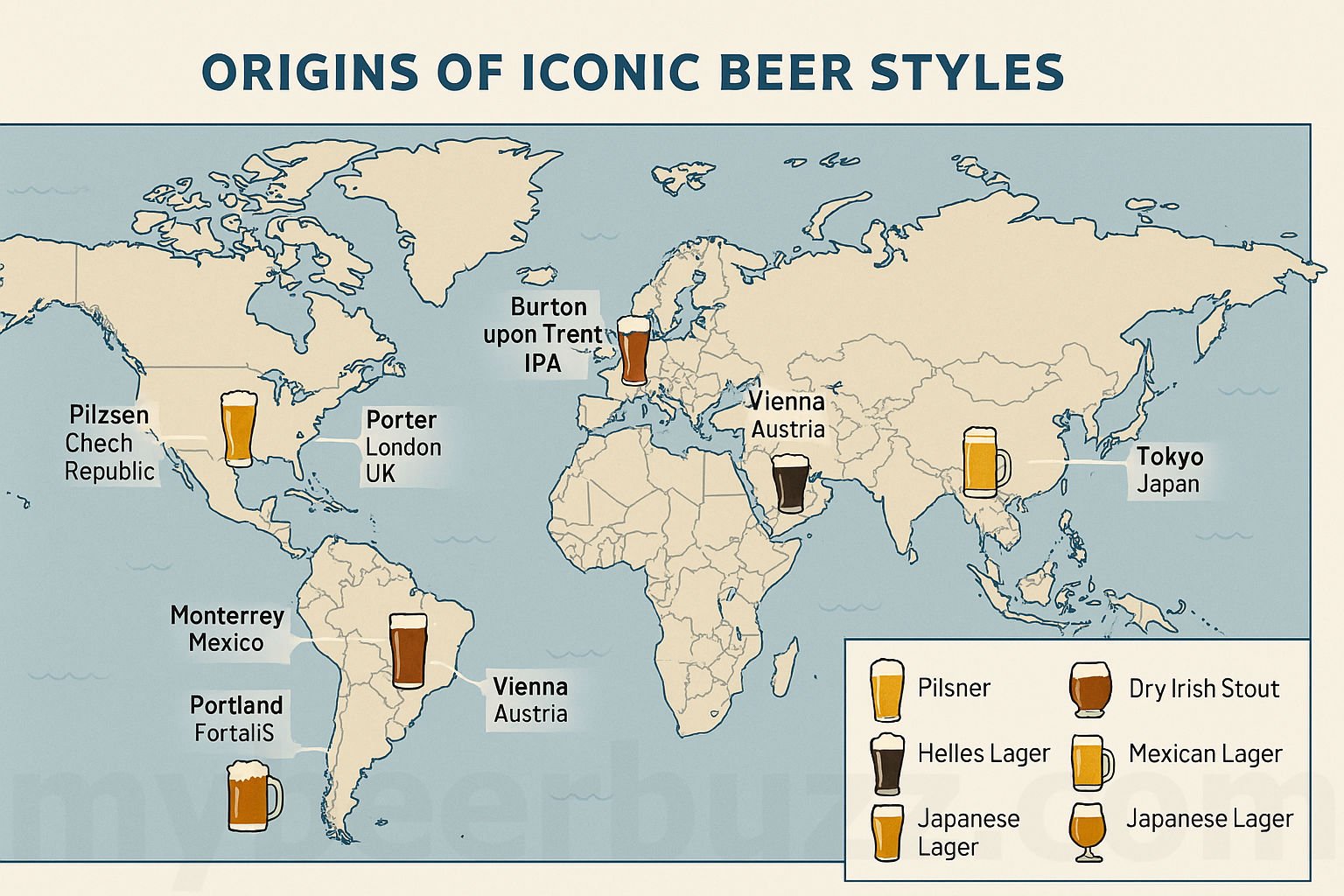
Beer is more than a beverage—it’s a cultural ambassador. Across continents, beer styles reflect local traditions, ingredients, and history. From crisp German lagers to bold American IPAs, each glass tells a story of its homeland. Let’s take a global journey through iconic beer styles and their fascinating origins.
Germany: The Birthplace of Lager and Purity Laws
Germany is synonymous with beer excellence. The country’s brewing heritage dates back centuries, anchored by the Reinheitsgebot, or Beer Purity Law of 1516, which limited ingredients to water, barley, and hops.
Iconic Style: Pilsner and Helles Lager
These golden lagers are clean, crisp, and refreshing—perfect for showcasing German precision.
Cultural Note: Beer gardens and Oktoberfest embody Germany’s communal beer culture, where tradition meets celebration.
Belgium: A World of Complexity
Belgium is a paradise for beer lovers seeking variety and depth. Monastic brewing traditions gave rise to Trappist ales, still crafted by monks today.
Iconic Styles: Dubbel, Tripel, and Quadrupel
Rich, fruity, and often high in alcohol, these beers are brewed with artistry and patience.
Cultural Note: Belgian beer is often served in unique glassware, emphasizing presentation and ritual.
United Kingdom: The Home of Ale
British brewing history is steeped in tradition, with ales dominating the scene.
Iconic Styles: Bitter, Porter, and Stout
Porter originated in 18th-century London, while stout evolved as a stronger variant. Guinness, though Irish, owes its roots to this British innovation.
Cultural Note: The pub remains a cornerstone of British social life, where cask-conditioned ales are enjoyed at cellar temperature.
Ireland: The Stout Legacy
Ireland’s brewing fame rests on one name: Guinness.
Iconic Style: Dry Irish Stout
Characterized by roasted barley and creamy texture, Irish stout is a global symbol of Irish hospitality.
Cultural Note: St. Patrick’s Day celebrations worldwide often feature pints of Guinness as a cultural emblem.
Czech Republic: The Original Pilsner
The Czech city of Plzeň gave birth to the Pilsner in 1842, revolutionizing beer with its golden clarity and crisp bitterness.
Iconic Style: Czech Pilsner
Balanced and slightly malt-forward compared to German versions, it remains a benchmark for lagers globally.
Cultural Note: Beer is deeply ingrained in Czech life—the country consistently ranks among the highest in per-capita beer consumption.
United States: The Craft Beer Revolution
America transformed beer culture with its craft brewing movement.
Iconic Styles: American IPA, Imperial Stout, and Sour Ales
IPAs, bursting with hop aroma and bitterness, became the flagship of U.S. craft beer. Brewers experiment with everything from fruit infusions to barrel aging.
Cultural Note: Taprooms and beer festivals celebrate innovation, making the U.S. a hub for experimental brewing.
Japan: Precision and Pairing
Japanese brewing emphasizes balance and food compatibility.
Iconic Style: Japanese Lager
Light, crisp, and clean, these beers complement sushi and delicate flavors.
Cultural Note: Beer is central to social gatherings, often paired with izakaya dining and served in frosty mugs.
Mexico: Refreshing Tradition
Mexican beer culture blends European techniques with local tastes.
Iconic Styles: Vienna Lager and Mexican Lager
Originally influenced by Austrian brewers, Mexican lagers are light, smooth, and perfect with lime.
Cultural Note: Beer is a staple at fiestas and beachside gatherings, often enjoyed with spicy cuisine.
Why Beer Styles Matter
Each beer style reflects geography, climate, and culture. German lagers thrive in cool cellars, Belgian ales in monastic halls, and American IPAs in a landscape of creativity. Exploring these styles isn’t just about taste—it’s about understanding the world through its brews.


Comments 0
No Readers' Pick yet.